Subtotal R0,00


National News/ 23 March 2025, 19:11pm/Sipho Gumede
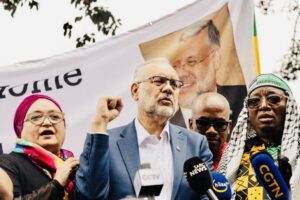 Ebrahim Rasool addressing supporters in Cape Town on Sunday: Image Supplied
Sipho Gumede: Ebrahim Rasool, the former South African ambassador to the United States, arrived back in the country on Sunday to a jubilant reception at Cape Town International Airport.
His return follows a dramatic expulsion ordered by the U.S President Donald Trump, which declared him persona non grata amid escalating tensions between the two nations.
As Rasool and his wife, Rosieda, emerged from the arrivals terminal, they were met by a throng of supporters who had gathered to celebrate his arrival. The atmosphere was electric, requiring a police escort to help the couple navigate the enthusiastic crowd, which chanted and waved banners in support of the ambassador.
In a passionate address to his supporters, Rasool expressed a defiant stance regarding the circumstances of his expulsion. “A declaration of persona non grata is meant to humiliate you,” he proclaimed through a megaphone. “But when you return to crowds like this, and with warmth … like this, then I will wear my persona non grata as a badge of dignity.” He emphasized that although the situation was not of their choosing, he returned home “with no regrets.”
Rasool’s expulsion came in the wake of strained diplomatic relations, exacerbated by accusations from President Trump’s administration that South Africa was adopting an anti-American posture. Trump issued an executive order last month that cut all funding to the country, alleging its government is “supporting the Palestinian group Hamas and Iran, and pursuing anti-white policies at home.”
The South African government has responded robustly, filing a case with the International Court of Justice (ICJ) in December 2023, alleging that Israel has violated obligations under the Genocide Convention during its military actions in Gaza. This case has since garnered support from over ten other countries, amplifying South Africa’s position on the global stage.
During his address, Rasool reiterated the importance of mending ties with the United States. “We don’t come here to say we are anti-American,” he clarified to the crowd. “We are not here to call on you to throw away our interests with the United States.” He underscored the historical bonds between the people of South Africa and the U.S., highlighting that these ties have endured even when official relations soured during the apartheid era.
Reflecting on his abrupt departure from Washington, Rasool expressed disappointment that he could not return with trade deals that would benefit South Africa. The renewal of the Africa Growth and Opportunity Act (AGOA), a significant trade agreement, hangs in the balance, and Rasool lamented the missed opportunity to secure such advancements at a time when the country faces pressing economic challenges.
“We would have preferred to come here to say to you, we’ve won for you AGOA, but we could not win it by withdrawing our case in the International Court of Justice against Israel, because as we stand here, the bombing has continued and the shooting has continued,” he said, clearly indicating the moral complexities involved.
Despite the personal and diplomatic challenges he faced, Rasool conveyed a message of hope and resilience. He stated that the expulsion should not sever South Africa’s long-standing relationship with the American people. “We don’t come here to say that we are anti-American or that we have no need for America,” he affirmed, emphasizing the enduring connections that transcend political disagreements.
Rasool’s comments mark his first public statements since being declared persona non grata, a rare and significant diplomatic action. U.S. Secretary of State Marco Rubio labeled Rasool a “race-baiting politician” in a social media post, which drew attention to Rasool’s earlier remarks regarding the Trump administration’s policies on diversity and immigration.