Subtotal R0,00


Politics / 19 June 2025, 07:52am/ Sipho Gumede

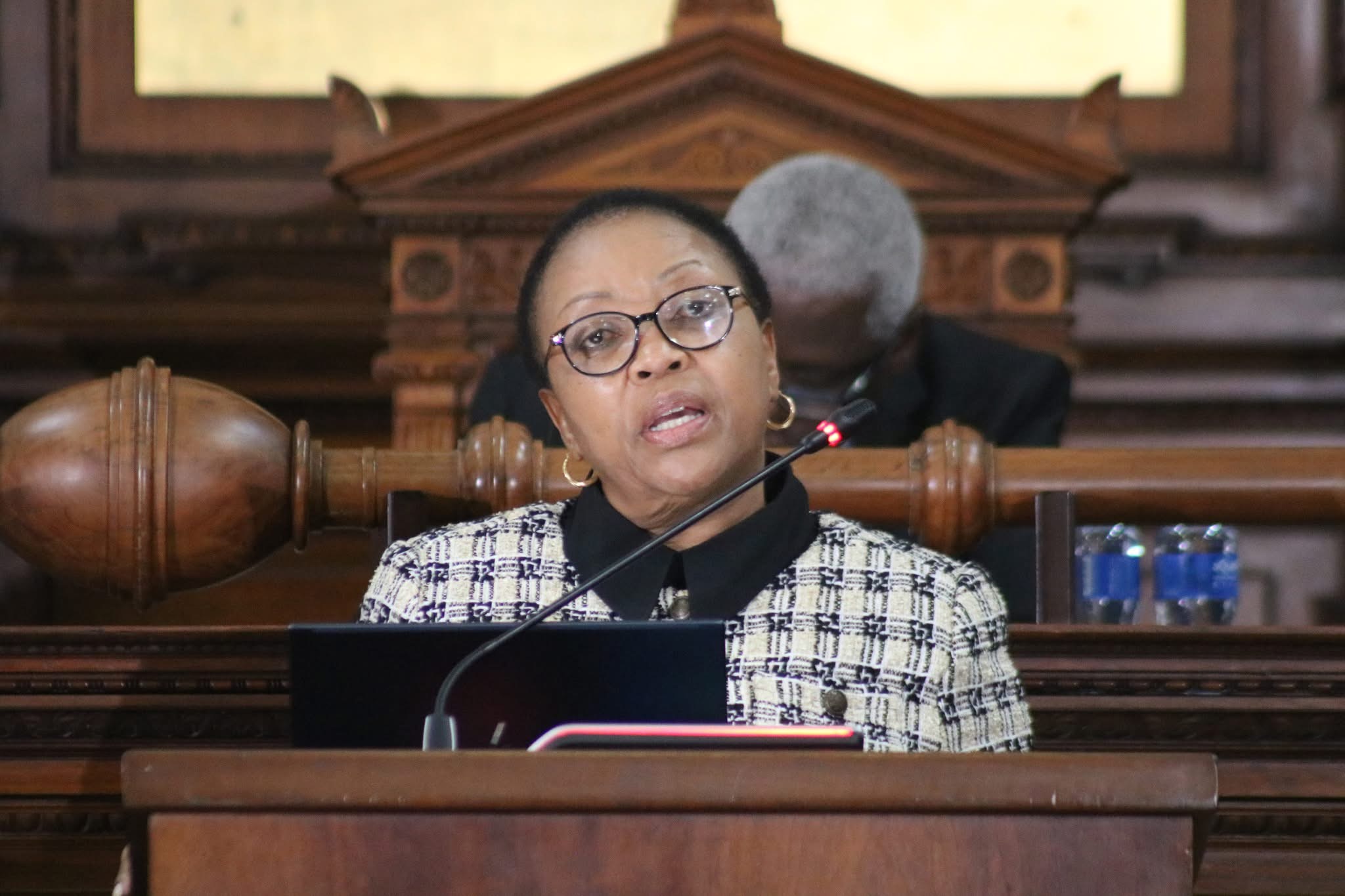
Zwelinzima: Image Supplied
By Sipho Gumede: The Johannesburg High Court has sharply criticized Standard Bank for its aggressive and arguably unjustified attempt to foreclose on the residential property of Zwelinzima Vavi, one of South Africa’s most prominent trade union leaders. The ruling emphasizes the crucial principle that foreclosure must be proportionate, especially when it involves a valuable property in Sandton.
Standard Bank’s legal team sought to obtain a court order to seize Vavi’s high-end residence in Sandton, claiming that he and his wife had fallen behind on their mortgage payments. The bank’s application included a request for a money judgment and approval to execute against the primary residence, which could have resulted in the home’s repossession and sale.
According to court documents, the bank asserted that Vavi owed approximately R1.68 million on his mortgage, with arrears of over R85,000 — roughly four months’ worth of mortgage installments. These arrears, accumulated roughly three years prior, had since been reduced significantly. Court filings reveal that Vavi had diligently serviced his bond and reduced the arrears from nearly R170,000 to R85,000 over the years, with the latest statements indicating consistent payments over the past 18 months.
Delivering his judgment, Judge Wilson emphasized the importance of fairness and proportionality in foreclosure proceedings. He stated:
“A court asked to authorise foreclosure against a debtor’s primary residence must be satisfied that to do so would be proportionate. Foreclosure is generally proportionate when there is little meaningful prospect of the debt secured against the residence being recovered in some other way, and when the interest of the creditor in obtaining payment outweighs the interest of the debtor in retaining ownership of their home (Gundwana v Steko Development CC 2011 (3) SA 608 (CC), paragraph 54).”
The judge clarified that, despite the property’s status as an “upmarket residence,” the fundamental legal principle remains unchanged:
“The fact that the property is, on the face of it, an expensive dwelling in a well-heeled suburb makes no difference to the fundamental inquiry, but cases in which it would be disproportionate to authorise execution of a proven mortgage debt against such a property are likely to be rare. This is such a case.”
He further pointed out that the bank had failed to demonstrate why foreclosure was necessary at this stage:
“Standard Bank has placed nothing before me that explains why execution against the Vavis’ home is a proportionate means of recovering the arrears.”
A notable aspect of the case involved the significant legal costs claimed by Standard Bank — over R160,000. The court expressed concern that:
“Standard Bank has tied the resolution of this dispute to the settlement of those costs. It is at least possible that the Vavis have baulked at paying legal costs of twice the value of their current arrears.”
The court questioned whether such legal costs were justified, especially given the recent payment record of the Vavis:
“It seems to me that the Vavis would be entitled to rehabilitate the loan agreement by paying their arrears and then debating the reasonableness of those costs with Standard Bank as a separate issue.”
The court ultimately concluded that, given the current evidence, foreclosure would be disproportionate. The judgment read:
“Nevertheless, in the absence of more information, I cannot presently conclude that foreclosure against the Vavis’ home is a proportionate means of liquidating their arrears. The application will be postponed sine die. Standard Bank may renew the application if and when it adduces evidence that foreclosure would be proportionate.”
The ruling underscored that each party would bear their own costs for now, leaving the door open for the bank to reapply with further evidence.
This case highlights systemic issues within South Africa’s banking sector, where aggressive foreclosure tactics have often left struggling homeowners destitute. Critics argue that banks frequently initiate legal actions even when borrowers demonstrate genuine efforts to settle their debts, impose legal costs far exceeding the debt owed, and fail to engage in meaningful dialogue beforehand.
Earlier this year, Judge Wilson himself condemned Standard Bank for “high-handed” tactics in another case involving a homeowner who had managed to catch up on arrears just months before legal action was taken. A separate case in Roodepoort was dismissed when a homeowner tried to do the same, illustrating a pattern of heavy-handedness.
The Vavi case adds fuel to a growing movement demanding systemic reform. Advocate Douglas J. Shaw, leading a class action against South Africa’s major banks, argues that:
“You cannot trust banks to do what most people would see as ‘the right thing.’ They often act irresponsibly, pursuing foreclosure even when homeowners are willing to cooperate, and doing so in ways that are unfair and exploitative.”
Despite reforms like the 2017/18 regulation to prevent homes from being sold at drastically undervalued sheriff auctions, Shaw reports that many homes still fetch only 50-70% of their market value, often leaving owners liable for residual debts and homeless for years.