Subtotal R0,00

Business/ 12 June 2025, 12:22pm/Sipho Gumede
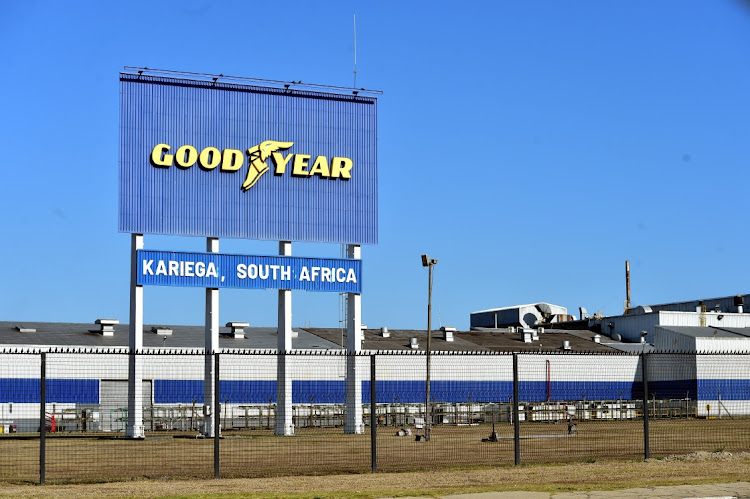
By Sipho Gumede: Goodyear has officially announced the closure of its longstanding manufacturing plant in Nelson Mandela Bay. The decision, confirmed by the tire giant earlier this week, marks a significant setback for the region’s economy and the thousands of workers whose livelihoods are intertwined with the factory’s operations.
Since opening its doors in 1947, the plant has been a cornerstone of local industry, directly employing approximately 900 workers. Beyond its immediate workforce, the factory’s influence ripples through a broader network of support services—ranging from catering and security to logistics and maintenance—employing countless other residents in the area.
The company’s announcement comes as part of a strategic overhaul of its operations across Europe, the Middle East, and Africa (EMEA). Goodyear, a global leader in tire manufacturing, is restructuring its footprint to adapt to evolving market demands and economic realities, a move that has inevitably led to the shutdown of its South African manufacturing facilities. While the company will continue to maintain a sales and distribution arm in South Africa, along with its established Hi-Q retail network, the decision marks the end of an era for local production.
Goodyear South Africa operates under the umbrella of Goodyear Tyre & Rubber Holdings, situated within the company’s Emerging Markets division. The plant has gained recognition for producing a diverse array of high-quality tires, serving segments from passenger vehicles and SUVs to trucks, off-road vehicles, and even aircraft.
The company’s closure was accompanied by a formal restructuring process, which adheres to South Africa’s Labour Relations Act. The process will be overseen by the Commission for Conciliation, Mediation, and Arbitration (CCMA), with Goodyear emphasizing its commitment to supporting affected employees “fairly and responsibly.” In a public statement, the company expressed appreciation for its South African staff, stating, “This proposal is in no way a reflection of the commendable efforts or the years of dedication of our South Africa team, for which we are grateful. We recognize our responsibilities towards our employees and their families and are firmly committed to acting fairly and providing them with appropriate support.”
However, the news has met with fierce criticism from labour unions, particularly the National Union of Metalworkers of South Africa (NUMSA). The union has voiced grave concerns about the broader economic fallout, warning that the plant’s closure could trigger a ripple effect across the local economy.
NUMSA spokesperson Phakamile Hlubi-Majola highlighted the potential wider impact, saying, “This decision is not just going to affect the jobs of workers at Goodyear directly, but also the many jobs linked to its value chain. There are smaller companies that provide services to Goodyear, and the closure of that plant means those companies are also likely to be affected. So we are actually likely to see far more than 900 jobs being impacted.”
With Eastern Cape already grappling with the country’s highest unemployment rate of 41.9%, the shutdown poses a dire threat to regional stability. The factory’s closure could undermine business confidence, depress household incomes, and hinder economic recovery efforts in the province.
While Goodyear has not publicly disclosed detailed reasons for the closure, industry analysts point to a combination of global economic challenges, rising operational costs, and fierce competition from low-cost tire imports—particularly from Asia.
Denise van Huyssteen, CEO of the Nelson Mandela Bay Business Chamber, underscored the structural issues facing local manufacturing. She cited logistical hurdles, inadequate municipal services, and escalating costs for utilities as critical obstacles that have eroded the factory’s competitiveness. “Tyre manufacturers are under immense pressure from these environmental and infrastructural challenges,” she explained. “The influx of cheap imports adds further strain to an already difficult situation.”
Similarly, Nduduzo Chala of the South African Tyre Manufacturers Conference pointed out the increasingly competitive landscape. The conference, which includes South Africa’s four major tire producers—Bridgestone, Dunlop, Goodyear, and Continental—has been vocal about the unfair trading environment.
Chala noted that recent efforts to impose anti-dumping duties on Chinese tires, which took over a year to implement, were a step toward leveling the playing field. “The market has been plagued with an unfair trade environment. It is a question of producers vs importers, and low-cost products have been introduced into the market,” he said. “It was a very unfair trading environment,” he added, “but there are always loopholes, and the Chinese companies are now shifting operations to Thailand, Cambodia and Vietnam. We then had to do the same for these countries.”