Subtotal R0,00

Gauteng/ 09 September 2024, 13:00pm/ Lijeng Moruthane
By Lijeng Moruthane: The water sector in Gauteng, South Africa’s most populous province, faces increasing water insecurity due to a lack of maintenance, upgrades, and changing demographics.
Craig Sheridan, a water expert, discusses this in the latest issue of the South African Journal of Science, highlighting the importance of mobilizing society to fully embrace water reuse, including the recycling of treated sewage, to address the issue.
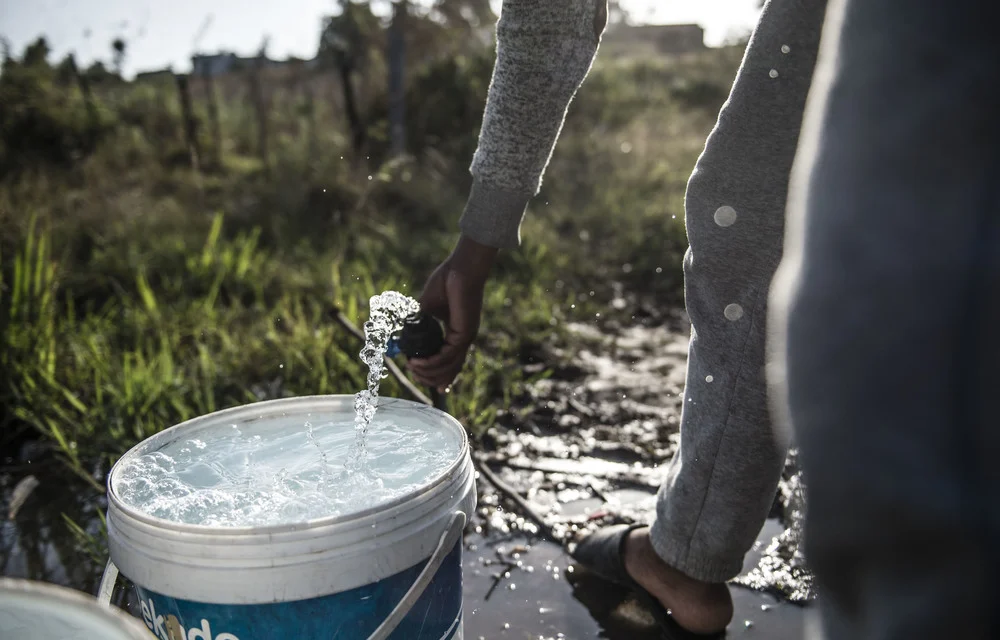
South Africans have grown accustomed to electricity load-shedding since 2007, but Sheridan warns that water-shedding has now become a significant problem in areas like Gauteng, particularly in Johannesburg.
He states, “Unfortunately, ‘shedding’ has moved beyond electric power and firmly into the domain of water supply.”
South Africa has developed effective water systems, such as dams and inter-basin transfer schemes, ensuring water security for Johannesburg and Gauteng.
However, Sheridan, who holds the Claude Leon Foundation chair in water research and is the director of the Centre in Water Research and Development at the University of the Witwatersrand, notes that recent events have led to the regular occurrence of intermittent water supply in Johannesburg.
This has created serious consequences, such as increased costs for water storage infrastructure like tanks and booster pumps, damage to the water distribution network, and compromised water quality.
Water scarcity occurs when demand exceeds supply, Sheridan explains. The Department of Water and Sanitation (DWS) allocates water based on population and available storage, selling it to bulk utility Rand Water, which treats and distributes it to municipalities like Johannesburg Water.
However, there is a mismatch between what the department supplies and the actual needs, resulting in water insecurity, especially in areas that experience frequent outages.
Johannesburg, located at a high altitude and without natural water sources, relies entirely on imported water. Although additional dams are being built in Lesotho under the Lesotho Highlands Transfer Scheme, these projects have been delayed by eight years.
During this time, Gauteng’s population grew by 25%, from 12 million to 15 million, while the province’s water storage capacity remained unchanged. This has contributed to the growing water insecurity, particularly during the summer of 2023-2024 when water outages became routine in higher-elevation and older suburbs.
The situation in Johannesburg reflects broader systemic issues, including leaking water pipes and incomplete maintenance. Sheridan explains that in older suburbs, leaking pipes often result in water shutoffs during repairs, which are sometimes poorly executed, leaving open excavations and unresolved leaks.
“This is happening across all suburbs now,” he says. He also draws attention to the cholera outbreak in Hammanskraal, Pretoria, which claimed over 30 lives in 2023, highlighting the consequences of water system failures.
Audit reports such as the Blue and Green Drop indicate that both drinking water treatment plants and wastewater treatment facilities across South Africa are increasingly dysfunctional.
In Johannesburg, nearly 50% of the water supply is lost due to theft or leaks, meaning half of the water allocated to the city is wasted. This, combined with the rising population, has put immense pressure on the system, leading to the depletion of potable water reservoirs.
Load-shedding further exacerbates the issue, as power outages affect pumping stations, resulting in prolonged water shortages, especially in higher-lying areas.
Sheridan emphasizes that while it’s possible to survive without electricity, water is essential for survival. The high cost of purchasing bottled water makes it unaffordable for many, and for those who grow food in their gardens, the lack of water devastates food security, particularly in poorer communities.
Sheridan warns that with limited space left for new dams, South Africa’s water security will likely worsen after 2028, especially if current social, political, and engineering practices continue.
Climate change is also driving up water demand due to higher temperatures and more extreme weather events, such as storms that damage water infrastructure.
Despite these challenges, Johannesburg continues to consume more water per capita than any other province. Sheridan urges a shift in water economics, proposing steeper tariffs on excessive water use to curb consumption.
He also calls for urgent investment in maintenance and infrastructure improvements, particularly in cities like Johannesburg.
Looking forward, Sheridan suggests global solutions may be necessary, such as water transfers from the Congo or Zambezi regions, and once the energy crisis is resolved, desalination could become a viable option.
However, the future will likely involve direct reclamation of sewage into potable water as the global population approaches 10 billion people.
He stresses the importance of further research into removing pathogens and contaminants from wastewater to ensure the safety of reclaimed water.
Lastly, Sheridan emphasizes the need for civic education to overcome the “yuck” factor associated with drinking treated sewage, noting that South Africans are already consuming water contaminated by wastewater treatment plant outflows.
“This is made all the worse by our failing wastewater treatment works,” he concludes.