
Subtotal R0,00

News/ 05 January 2026, 07:55am/Mpho Mokoena
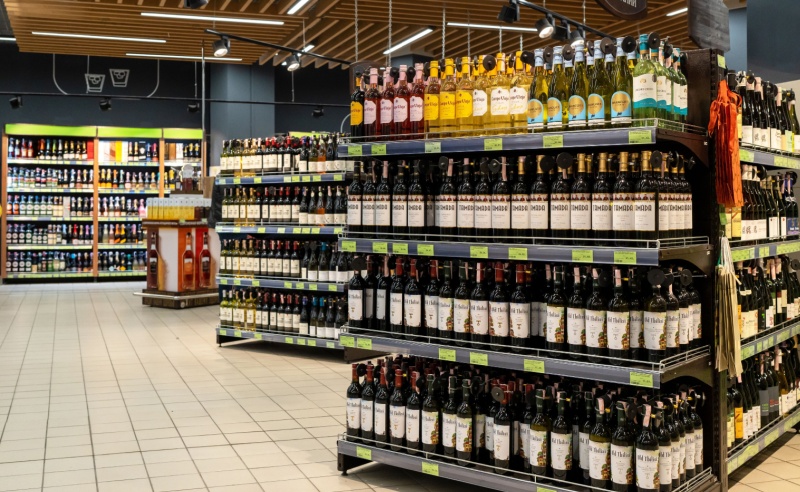
By Mpho Mokoena: South Africa’s year-end countdown has a price tag — and it’s not just the cost of a party outfit or petrol to the coast. In the days just before New Year’s Eve, South Africans collectively spend “well over R1bn a day” on alcohol, according to the harm-reduction campaign Rethink Your Drink.
The campaign, run by the DG Murray Trust, says the spike is not a mystery of holiday mood — it is the outcome of how the country’s liquor economy is designed to behave at the exact moment when public services are stretched thin.
Kashifa Ancer, the campaign’s manager, says everyday drinking already represents an enormous national outlay. South Africans spend about R150bn a year on alcohol, she said — money going into beer, wine, spirits and ready-to-drink products sold through retail stores, taverns, bars and restaurants.
That works out, on average, to about R414m per day.
But the festive period, Ancer argues, flips that baseline into a high-speed spending surge.
“In the days leading up to New Year’s Eve, this spending is reported to nearly triple, pushing daily alcohol sales to well over R1bn a day,” said Ancer.
And the spike, she says, reveals more than consumer appetite — it exposes the incentives and loopholes of the broader system.
“When alcohol sales surge like this, it shows how our liquor system is set up. The rules allow alcohol to be sold and promoted most aggressively at the times when communities and services are already under pressure.”
For retailers and producers, December trading is a peak-season windfall. But for emergency rooms, police stations and child protection services, the campaign argues it can be the start of a costly cascade.
Ancer said “while festive trading boosts profits, the knock-on costs fall on families and public services, from hospitals and policing to child protection”.
The campaign says this is precisely why it is pushing for tougher guardrails.
“Rethink Your Drink is calling for stronger pricing and trading rules so that predictable harm is no longer treated as inevitable every festive season.”
On the annual spending estimate, Ancer cited market researcher Trade Intelligence and explained that the calculation is drawn from formal market monitoring.
“When that daily figure is annualised, it equates to about R150bn per year in consumer spending on alcohol. These figures are drawn from market intelligence and retail category analysis used in public reporting to illustrate the scale of alcohol purchasing in South Africa, particularly during peak periods.”
The sharpest spike, she added, is concentrated in the narrow window between Christmas and New Year — not spread evenly across December.
Ancer said weekly alcohol spending nearly triples between December 25 and January 1. She pointed to a previous parliamentary disclosure as another indicator of scale: early last year, deputy social development minister Ganief Hendricks told parliament about R7.7bn was spent on alcohol during that period.
Yet even those billions may be an undercount, because the most detailed datasets track formal and licensed channels best — leaving gaps where illegal and informal sales thrive.
“The Trade Intelligence estimates are strongest for formal and licensed sales channels. Informal and illegal sales, including unlicensed shebeens and counterfeit products, are not comprehensively captured in retail datasets.
A Euromonitor study commissioned by the alcohol industry has found that illicit alcohol represents a significant share of consumption in South Africa, with estimates suggesting nearly one in five drinks consumed is illicit and that the illicit market is worth tens of billions of rand annually.”
The campaign says the harm shows up fastest in healthcare — particularly where the system has the least room to absorb shock.
“The South African Medical Association has warned that increased alcohol consumption during the festive season places severe strain on hospitals, especially emergency units and trauma centres.“
In practice, that translates into overcrowded casualty wards, longer waits, and staff stretched beyond capacity.
“Practically, this shows up as higher trauma caseloads, overcrowding, longer waiting times and pressure on already limited staff and resources. This pressure is closely followed by road safety and policing, with increased alcohol-related crashes, injuries, violence and public disorder.”
Rethink Your Drink says the answer is not a moral panic or a ban — but a targeted effort to make heavy drinking harder to fuel at scale.
“Our recommendations are aligned with the World Health Organisation’s evidence-based Best Buys and its Safer strategies to reduce alcohol-related harm. Priority measures include increasing the price of alcohol through excise tax reform and a minimum price per unit of pure alcohol, known as minimum unit pricing.”
Beyond price, the campaign wants alcohol to be less available and less aggressively sold, including reducing outlets, limiting trading hours, and banning oversized containers.
“The campaign doesn’t oppose alcohol consumption entirely. It targets the conditions that make excessive drinking widespread, especially among young people and in under-resourced communities.“
For Ancer, the festive season is not an unpredictable burst of bad behaviour. It is a repeated national experiment with the same inputs — cheap alcohol, high availability, intense promotion — and the same outcomes.
“December and New Year function as a recurring stress test for South Africa’s liquor system. When alcohol is so cheap, more available and more aggressively promoted at peak moments, the resulting pressure on hospitals, roads and policing is not unexpected. It is predictable. Our view is that this predictability makes the case for prevention-focused policy that reduces harm upstream, rather than relying mainly on crisis response after damage has already occurred,” Ancer said.







