
Subtotal R0,00

Crime/16 March 2026, 13:25pm/Sipho Gumede
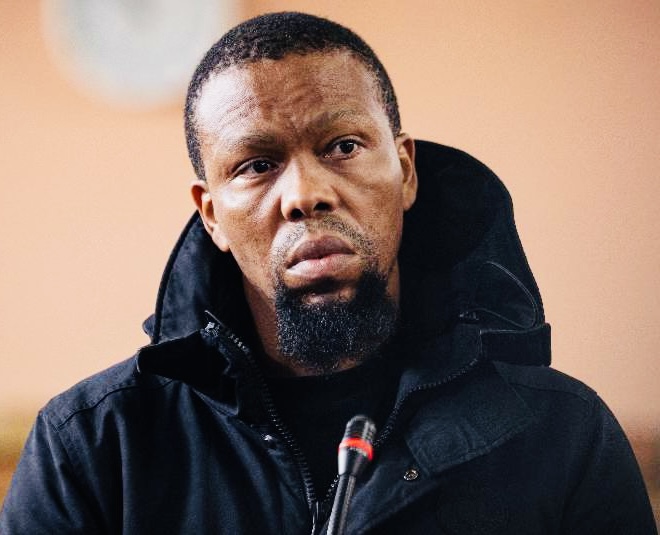
Matipandile Sotheni: Image Supplied
By Sipho Gumede: Long before the arrest, before the packed courtroom, and before the police declared they were closing in on the man they believe pulled the trigger, there was a warning buried in testimony that now reads with eerie force.
It was not a warning shouted in public, but one spoken from inside a world of fear, pressure and alleged cover-up — a world in which, as Marius van der Merwe told the Madlanga Commission, refusing to comply could mean becoming the next body.
Now Van der Merwe, known as Witness D, is dead, and the case surrounding his killing has become far more than a murder prosecution. It has become a stark measure of the danger faced by those who come forward with allegations that cut close to power, policing and criminal networks.
Police say Matipandile Sotheni, a 41-year-old former police Special Task Force member, was the gunman who shot and killed Van der Merwe outside his Brakpan home on 5 December, in full view of his wife and children. They allege that Wiandre Pretorius drove the vehicle from which the fatal shots were fired.
Sotheni appeared briefly in the Brakpan Magistrate’s Court on Monday morning following his arrest over the weekend, dressed in black, before the matter was postponed to 25 March for a bail application.
The charges against him are severe: murder, conspiracy to commit murder, attempted murder, and the unlawful possession of a firearm and ammunition. Yet the weight of the case lies not only in the charges themselves, but in the timing.
Brigadier Athlenda Mathe said Van der Merwe had started being trailed at the end of November, shortly after he appeared before the Madlanga Commission, where he was known as Witness D. In the police version, that timeline is not incidental. It is central.
Speaking after the court appearance, Mathe said investigators had identified Sotheni as the shooter who executed Van der Merwe from the passenger seat of a Suzuki Swift that allegedly belongs to his girlfriend. Police believe the same vehicle was used when Witness D was followed in the days leading up to his murder.
It was, Mathe said, a drive-by shooting, one that in the State’s view required unusual skill. Only a highly-trained gunman, she said, would have been able to make those shots from a moving vehicle. Two shots were fired.
Police have also revealed that, according to their investigation, Pretorius was the driver. His name already carried significance because Van der Merwe had implicated him in the 2022 torture and murder of 51-year-old Emmanuel Mbense.
Pretorius died by suicide in February this year, just days after he survived a hit at his Boksburg home. Mathe said Pretorius had been their main suspect in the murder of Van der Merwe, and the charge sheet alleges he also took Sotheni to point out Van der Merwe’s house before the shooting.
The police say they have “overwhelming evidence” that places both Sotheni and Pretorius at the crime scene. “We are confident we have the shooter, the gunman that pulled the trigger that killed Witness D,” Mathe said, while stressing that investigators were still following other leads because several more suspects may have had a hand in the killing.
They are also still searching for the murder weapon, said to be an Ak-47. Search-and-seizure warrants have been obtained for several properties where police believe the rifle may have been hidden.
When Sotheni was arrested in Johannesburg, police claim he was found in possession of hundreds of rounds of ammunition of different calibres, including R5 and 9mm rounds. The State says it will rely on tracker data, cellphone analysis, witness statements and other evidence linking the accused to the murder.
But what gives the case its deeper national significance is not just who is accused. It is who the victim was in the weeks before he died.
Van der Merwe’s testimony before the Madlanga Commission implicated several people, including suspended Ekurhuleni Metropolitan Police Department deputy chief Julius Mkhwanazi. It was a matter-of-fact but deeply disturbing account of the events that he said surrounded the death of Mbense at a Brakpan home on 15 April 2022.
According to Witness D, Mbense was tortured, with a plastic bag repeatedly held over his face so that he could not breathe. He said Mbense admitted that he was involved in the robbery of a warehouse, and apparently tried to bribe the officers with R500 000 in cash that he had in the house.
Van der Merwe went on to testify that after Mbense died, Mkhwanazi arrived in the early morning hours wearing a tracksuit and, after meeting with EMPD officers at the scene, said they “needed to throw the suspect’s body into a mine shaft or dump it into a dam”.
Then came the passage that now hangs over the entire case like prophecy. “It was quite clear at this stage that it was expected of me to dispose of the deceased’s body… I really didn’t have a chance to agree.
I felt like I was being forced. At this stage, I felt that I was being outnumbered, as the decision was made already and we’re dealing with a very serious and dangerous situation at this stage already. So l interpreted it as, if I don’t comply, then I would probably be next,” Witness D testified.
He said he followed the instructions given to him and followed one of the EMPD officers to a dam in Nigel, where the body was disposed of. After police found the body a short while later, he said he was called to a meeting with the officers and officials involved, where everyone was assured that “the chief (Mkhwanazi) will cover them”.
That testimony did not simply place Van der Merwe in the role of observer. It placed him in the dangerous position of insider witness, someone claiming direct knowledge of alleged torture, the disposal of a body, and promises of protection from above.
If police are correct that he was followed shortly after testifying and then killed days later, the implications are profound. This becomes not only a murder case, but a test of whether a witness who steps into the light can survive the shadows that follow.
Sotheni’s own history sharpens the unease. According to Mathe, he joined the South African Police Service in 2005 and joined its elite Special Task Force in 2010 before resigning in 2019.
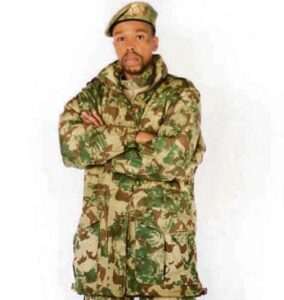
Matipandile Sotheni: Image Supplied
He allegedly later worked in the private security industry, serving as a bodyguard for a prominent family in Houghton before working for an associate of that family. Police say the hit on Van der Merwe was a side job.
He had also been involved in a prolonged legal fight with SAPS. In 2020, after losing a Labour Court case, Sotheni was allegedly suing over remuneration for scarce skills in a dispute that dragged on for five years.
He claimed the Special Task Force head wanted him out of the unit because he was a union representative, and alleged that he was bullied until he cracked.







