Subtotal R0,00

KwaZulu-Natal / 23 June 2025, 08:35am/ GoodWill Mathebula
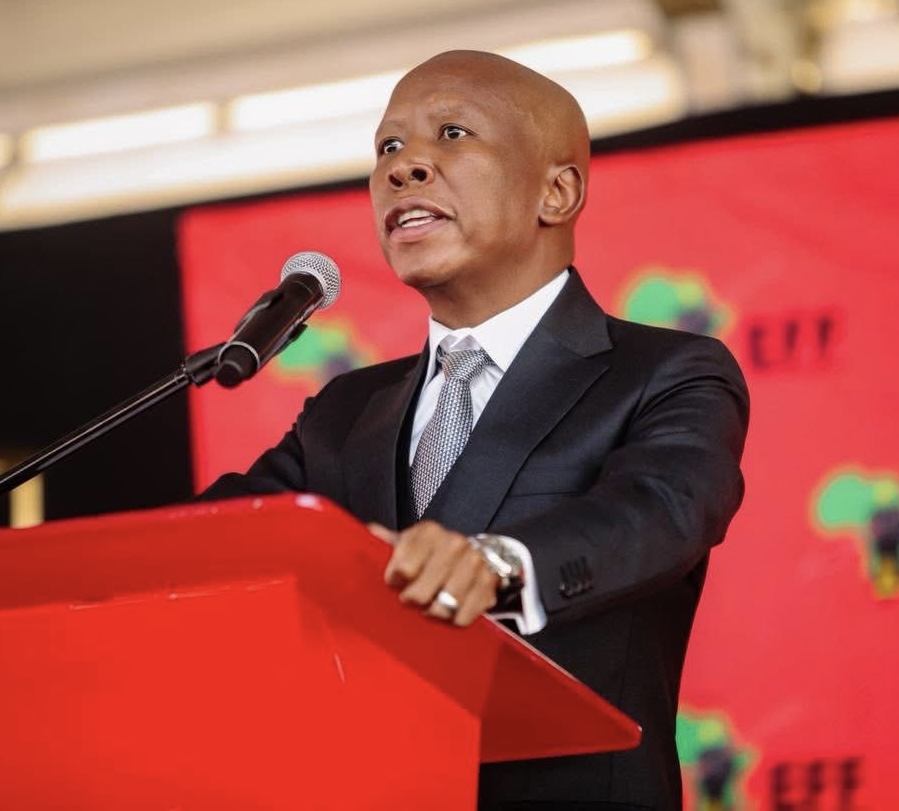
Economic Freedom Fighters (EFF), Leader Julius Malema: Image Supplied
By GoodWill Mathebula: The leader of the Economic Freedom Fighters (EFF), Julius Malema, pledged unwavering support to the families of ten young victims who tragically lost their lives in a devastating bus accident near Vryheid last Monday night.
The accident occurred when a bus transporting supporters from Umlazi collided with a long-haul truck, resulting in a catastrophic crash that claimed the lives of ten promising young individuals. The community gathered in mourning, paying tribute to the fallen and reflecting on the broader issues of safety, systemic neglect, and the fight for justice.
Amidst the sea of mourners, Malema took the podium to express his deepest condolences and to promise tangible support to the grieving families. “To the families of these young heroes, we say you are not alone. Your loss is our loss. Your tears are our tears. Your children are not forgotten,” he declared passionately.
Malema emphasized the significance of honoring those who have fallen, stating, “We must continue to be disciplined and die in the revolution, because to die in a revolution must be an honour, and so we will honour all of these young heroes.” He vowed that the families would receive practical assistance, including the construction of proper houses equipped with all necessary facilities, as well as boreholes to ensure access to clean water. “If there is no water in those yards, will make sure we put boreholes to restore the dignity of those families,” he assured.
The EFF leader underscored that these young lives were not mere statistics but embodied dreams, potential, and hope for the future of South Africa. “These children were warriors,” he said. “They fought in the battlefield of life, not drowning in drugs or alcohol but standing tall in the fight for land, justice, and dignity.”
Malema condemned the normalization of premature death within black communities, urging the nation to confront the systemic issues perpetuating such tragedies. “Our children are not born to die on dangerous roads; they are born to build, create, and lead,” he proclaimed. “Their deaths must serve as a wake-up call. We must fix our roads, regulate the transport industry, and hold those responsible accountable.”
He called on collective resilience, encouraging the community and the nation to transform grief into action. “We must continue to fight for land and justice, because this land belongs to us—to our grandchildren,” Malema asserted.
In a poignant moment, the leader listed the names of the victims—Sbongakonke Mathe (17), Ntombi Ndlovu (19), Lungani Mbatha (25), among others—highlighting their youth, promise, and the bright futures cut short. “They were full of life, courage, and the spirit of resilience,” he said. “Their deaths are a reminder that we must do more to protect our youth from preventable tragedies.”
Malema drew powerful historical parallels, invoking the spirit of 1976 youth protests and revolutionary figures like Thomas Sankara and Burkina Faso’s President Ibrahim Traoré. “Our young people are the future of Africa,” he declared. “They are the leaders, fighters, and builders of tomorrow. We must inspire them to continue the fight for liberation, dignity, and justice.”
Beyond mourning, Malema criticized the government’s failures in infrastructure, transport regulation, and social services. “We cannot accept a country where young lives are sacrificed on the roads simply because of neglect and corruption,” he stated, emphasizing the urgent need for comprehensive reforms to prevent future tragedies.
He linked the tragedy to broader national struggles—poverty, unemployment, and systemic inequality—calling on South Africans to unite in the fight for a more just society. “Our fight is not only for land and dignity but for a future where no child dies prematurely due to avoidable circumstances,” he affirmed.
Adding a global dimension to his speech, Malema expressed solidarity with oppressed peoples worldwide. He condemned apartheid Israel’s actions in Gaza, voiced support for Iran’s sovereignty, and celebrated African revolutionary leadership. He paid homage to Burkina Faso’s President Ibrahim Traoré as a symbol of youthful resistance and principled leadership, urging South Africa’s youth to draw inspiration.
Malema concluded with a call to action: “Honor the memory of our fallen members by fighting for a safer, fairer nation. Their lives must not be in vain. We owe it to them to build a South Africa where every child can dream and live fully.”