Subtotal R0,00

KwaZulu-Natal/ 15 October 2025, 10:23am /Staff Writer
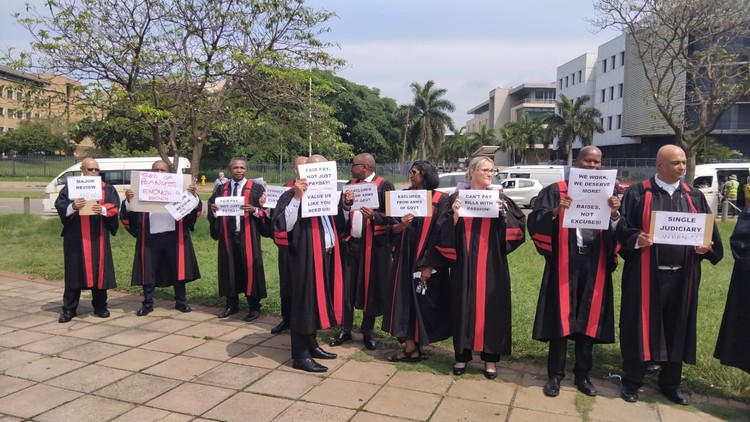
 Durban Magistrates Protest for Better Pay and Resources: Image Supplied
By Staff Writer: More than a dozen magistrates staged a lunchtime protest outside a Durban court on Monday, raising alarm over deteriorating working conditions and what they describe as stalled salary adjustments. Clad in their distinctive red and black robes, the judiciary’s officials laid down their gavels to join the demonstration, which they say was timed to avoid disrupting court proceedings.
The protesters handed out a petition during the demonstration, outlining their demands for better working conditions, a defined salary adjustment timeline, and a pension fund for magistrates, among other issues. They claim the state has repeatedly ignored their pleas for higher pay and improved facilities.
Scelo Zuma, spokesperson for the group, voiced the core complaints: “No one seems to be interested in our demands. The working conditions are not impressive at all.” He described a workload that has increased as magistrates take on more research and administrative tasks, arguing that compensation has not kept pace.
The group contends that magistrates currently earn R1.1-million a year, but they believe the figure should be at least R1.5-million. They also highlighted broader systemic issues, including delays in implementing salary adjustments and deteriorating working conditions.
Former Constitutional Court judge Edwin Cameron weighed in on the matter, noting that magistrates do a substantial share of the courts’ hard work under often unappealing conditions. He described magistrates as “under-recognised and under-remunerated” and called the pay differential between judges and magistrates “unconscionable.” Cameron suggested reforms in title to reflect roles more accurately, proposing that magistrates should be termed regional court judges and district court judges.
Magistrate Anitha Hariram spoke of safety concerns arising from shared facilities, such as bathrooms, with members of the public, and described office layouts as easily accessible to the public. “I had to bring my own router to connect to the internet because we don’t have one in our offices,” Hariram said, underscoring the lack of basic office supplies that compound the challenges of daily work.
Betty Rawheath, a magistrate with four decades in the judiciary, expressed a persistent hope that their complaints would reach higher authorities. “We have been having so many talks, but it seems as if our grievances fall on deaf ears,” she said, reflecting the sense of frustration shared by many protesters.
Despite their grievances, the magistrates emphasized their continued commitment to upholding the Constitution and the Bill of Rights. They stressed that their protest was aimed at drawing attention to systemic issues within the Department of Justice and the Office of the Chief Justice, rather than diminishing their duty to serve the public.