Subtotal R0,00

Western cape/ 22 November 2024, 13:50pm/ Lijeng Moruthane
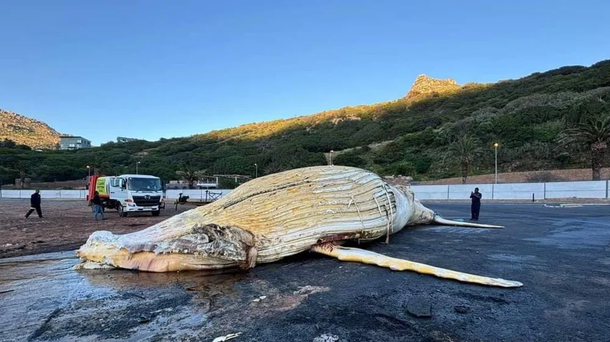
Officials transport a deceased humpback whale through Cape Town, removing it from Hout Bay beach to prevent hazards: Image Supplied
Lijeng Moruthane: Decomposing whales can pose significant challenges for coastal communities, and Cape Town’s beaches are no exception.
When a whale washes ashore, its decaying body can become a serious issue, attracting sharks, creating unpleasant odors, and even causing explosions due to gas buildup in the carcass.
These hazards were made evident this past Sunday when a humpback whale was spotted being removed from Hout Bay’s beach on its way through Constantia.
Officials acted swiftly to dispose of the whale, ensuring it wouldn’t create a dangerous or unpleasant situation for beachgoers.
The city’s protocols are in place to prevent the myriad complications that come with whale strandings, which are not uncommon along the Western Cape.
Strandings can occur for various reasons, from navigation errors and old age to attempts to escape predators like orcas.
While the sight of the whale being moved through the streets may have caught the attention of locals, it was the potential danger posed by the decomposing carcass that had authorities on high alert.
As one local explained, when whales decompose, their bellies fill with gas, causing them to distend and potentially explode, sending pieces of whale flying for miles.
Such events, though rare, have occurred in the past and are a serious risk for those nearby.
This particular whale’s journey also sparked humor among some locals, with one joking that climate change had forced the whales to “rely on flatbed trucks for overland transport.”
Despite the lighthearted comments, the reality is that beached whales are usually moved to designated landfills or processed for research purposes, as was the case with this one.