
Subtotal R0,00

International/06 May 2026, 08:03am/ Staff Writer
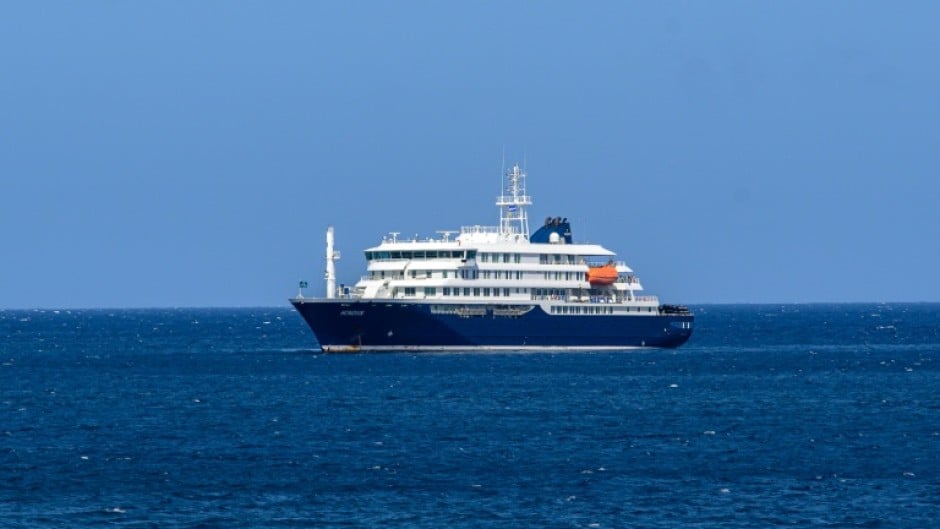
By Staff Writer: A cruise ship caught in a growing international health scare is preparing for a dramatic medical evacuation off Cape Verde, after a deadly hantavirus outbreak left three people dead and several others ill.
Dutch operator Oceanwide Expeditions said two seriously sick crew members will be flown to the Netherlands for “urgent medical care”, alongside a third person who had close contact with a German passenger who died on Saturday. Once that evacuation is complete, the MV Hondius is expected to resume its voyage north to Spain’s Canary Islands.
The ship, currently anchored off Praia, the capital of Cape Verde, has become the focus of urgent international efforts involving local authorities, Spain’s health ministry and the World Health Organization.
Spain’s health ministry said the vessel was expected to reach the Canary Islands in “three to four days”, though it did not name the port. “Once there, the crew and passengers will be duly examined, cared for, and transferred to their respective countries,” the ministry said.
Officials added that the WHO had identified the Canary Islands as “the closest place with the necessary capabilities” to handle the medical response.
WHO representative in Cape Verde Ann Lindstrand confirmed the next step, saying that once the evacuation is completed, the MV Hondius “can continue its route”.
Oceanwide Expeditions said the ship would sail north “to the Canary Islands, either Gran Canaria or Tenerife, which will take three days of sailing”.
The cruise had set out from Ushuaia, Argentina, on April 1 and was bound for Cape Verde. According to the WHO, there were 88 passengers and 59 crew members on board, representing 23 nationalities.
The outbreak’s origins remain unclear, adding to the alarm. WHO epidemic and pandemic preparedness and prevention director Maria Van Kerkhove said the exact virus species has not yet been confirmed, though she noted the agency had been told “there are no rats on board” the vessel.
South African scientists are now sequencing samples, and Van Kerkhove said “our working assumption is that it is the Andes virus” — the only hantavirus known to have caused human-to-human transmission in earlier outbreaks in South America.
“We do believe that there may be some human-to-human transmission that is happening among the really close contacts,” she said.
So far, two hantavirus cases have been confirmed, including one fatality and a British passenger now in intensive care in Johannesburg. The WHO said there are also five more suspected cases. Of the seven total confirmed and suspected infections, three people have died. One patient in Johannesburg remains critically ill, while three people still on board have shown milder symptoms, including one who is now asymptomatic.
One of the victims, a Dutch woman, had already left the ship at Saint Helena and travelled to Johannesburg, where she died on April 26.
The WHO is still trying to work out how the virus first appeared on the ship. The earliest known fatal case developed symptoms on April 6.
The Hondius has been under intense scrutiny since Saturday, when the WHO was alerted that the rare disease — usually spread by infected rodents through urine, droppings and saliva — might be linked to the deaths of three passengers. As more people fell ill, passengers and crew were placed in isolation after Cape Verde refused the ship permission to dock.
What began as an expedition voyage has now turned into a floating medical mystery — and a race to contain an outbreak in the middle of the Atlantic.







