
Subtotal R0,00


Politics/ 11 September 2024, 14:10pm/ Lijeng Moruthane
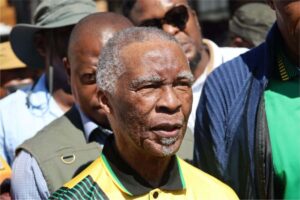
Former president Thabo Mbeki: Image Supplied
By Lijeng Moruthane: Immigrants in South Africa, along with political analysts, have criticized former President Thabo Mbeki’s recent statement suggesting that the 2008 xenophobic violence in Johannesburg was planned.
Mbeki made these controversial remarks while addressing students at the Thabo Mbeki African School of Public and International Affairs at Unisa in Pretoria.
The 2008 attacks, which claimed 62 lives, began in Alexandra, north of Johannesburg, and spread across the country.
Mbeki cited an intelligence report alleging that the violence targeted Zimbabweans to force them to return home and vote against Robert Mugabe’s Zanu-PF party, paving the way for the Movement for Democratic Change (MDC) led by Morgan Tsvangirai.
Many viewed Mbeki’s comments as an attempt to suggest that South Africa is not inherently xenophobic.
Amir Sheikh, chairperson of the African Diaspora Forum, responded by acknowledging South Africa’s reputation for hospitality but warned of a growing hostility toward foreigners.
“Certain political figures with populist, right-wing ideologies, as well as opportunistic local leaders and vigilante groups, have contributed to this sentiment,” Sheikh said.
He added that the government’s failure to address socioeconomic challenges could result in recurring attacks on migrants, threatening their lives and livelihoods.
Brian Kajengo, a Zimbabwean resident in South Africa for over two decades, also refuted Mbeki’s claims. He urged the government to confront the root causes of xenophobia rather than dismissing the issue.
“What the former president said is not true. Those were genuine xenophobic attacks, and they were deeply painful for foreign nationals in the country,” Kajengo said.
Political analysts similarly condemned Mbeki, accusing him of shielding the country from confronting its xenophobia. Independent political analyst Goodenough Mashego argued that Mbeki’s remarks were harmful to the country.
“His statements are dangerous and don’t move the country forward,” Mashego said, noting that South Africans believed foreigners, particularly Zimbabweans, were taking jobs that should belong to them.
He also questioned the existence of the intelligence report Mbeki referenced, given that Mbeki was no longer president of the ANC when the attacks occurred in 2008.
Professor Ntsikelelo Breakfast of Nelson Mandela University criticized the government’s denial of its failure to address xenophobia, stating it has caused significant diplomatic strain.
“Mbeki’s comments are ill-timed and insensitive, especially since people lost their loved ones in these attacks,” Breakfast said. He also pointed out that Mbeki was booed at Robert Mugabe’s funeral, partly due to the 2008 violence.
“We are accused of double standards because while our foreign policy champions human rights, we fail to protect those of foreign nationals in our country,” Breakfast concluded.







