Subtotal R0,00


Eastern Cape/ 01 July 2025, 09:32am/Mpho Mokoena
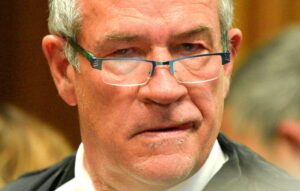
Advocate Marius van Zyl (pictured above), who is representing retired SADF Lieutenant General Christoffel Pierre ‘Joffel’ van der Westhuizen at the Cradock Four inquest: Image Supplied
By Mpho Mokoena: The long-standing quest for justice surrounding the 1985 murders of the Cradock Four, the presiding judge in the reopened inquest has issued a subpoena compelling the South African National Defence Force (SANDF) to explain its refusal to fund legal representation for retired Lieutenant General Christoffel Pierre “Joffel” van der Westhuizen. The Deputy Director of Litigation for SANDF, Masilo Brian Lekoloana, is scheduled to appear before the Eastern Cape High Court in Gqeberha today, Tuesday, July 1, 2025.
The move follows mounting concerns that the refusal to fund Van der Westhuizen’s legal team could significantly hinder the progress of the inquest, which aims to investigate allegations that security forces were involved in the murders of the anti-apartheid activists known as the Cradock Four — Fort Calata, Sicelo Mhlauli, Sparrow Mkonto, and Matthew Goniwe.
Judge Thami Beshe, who is overseeing the proceedings, issued the subpoena after Van der Westhuizen’s counsel, Marius van Zyl, raised concerns over the legal funding impasse. Van Zyl stated that the SANDF’s legal department had refused to provide financial support, claiming that Van der Westhuizen had acted outside the scope of his duties during the events of 1985.
Van der Westhuizen, 83, was the commanding officer of the Eastern Province Command and a member of the Joint Management Committee—a structure of the State Security Council (SSC)—at the time of the murders. Records reveal that on June 7, 1985, he ordered an urgent communication, a signal transmitted to the SSC’s Secretariat, which explicitly called for the “permanent removal” of Goniwe and others from society.
*“Personal for General Van Rensburg.
Telephone conversation Gen Van Rensburg/Brig Van der Westhuizen of 7 June ’85 refer.
Names as follows: Matthew Goniwe, Mbulelo Goniwe (brother or nephew of above), Fort Calata.
It is proposed that the above-mentioned persons, as a matter of urgency, be permanently removed from society.
Wide reaction can be expected locally as well as nationally as a result of the importance of these persons, especially the first mentioned, for the enemy.”*
In a previous inquest held in 1994, Judge Neville Zietsman found that there was a prima facie case indicating that members of the security forces, including Van der Westhuizen, were responsible for the murders. The earlier findings suggested that the signal’s intent was to facilitate the killing of the four activists.
The current inquest, which resumed on June 2, 2025, is the third since the case was reopened. During this session, Van der Westhuizen’s lawyer declared that his client would deny authorizing the killings. Van der Westhuizen, who did not seek amnesty before the Truth and Reconciliation Commission, is scheduled to testify from October 13 to October 24, 2025.
However, the process faces obstacles. Van der Westhuizen’s legal team fears that without proper funding, his testimony could be delayed indefinitely. The Foundation for Human Rights has expressed concern that his health is deteriorating and that the victims’ families are eager to hear from him before it is too late.
Despite a directive from Judge Beshe urging the SANDF to review the funding denial with urgency, the Defence Force’s legal department has dismissed the request, labeling the issue as non-urgent. The court has thus far refused to allow evidence implicating Van der Westhuizen to be presented while he remains unrepresented.
Advocate Howard Varney, representing the families of the Cradock Four, emphasized the diminishing prospects for justice: “Most of those involved are no longer alive, and delays only deepen the wounds of the victims’ families.”
The dispute underscores ongoing tensions surrounding accountability for apartheid-era crimes. As the inquest approaches a critical juncture, the court’s intervention highlights the importance of ensuring that all relevant witnesses can participate fully in the pursuit of truth.