Subtotal R0,00

Economy/ 13 February 2025, 15:10am/ Lijeng Moruthane
COSATU’s Matthew Parks delivers a presentation at the DIRCO meeting: Image Supplied
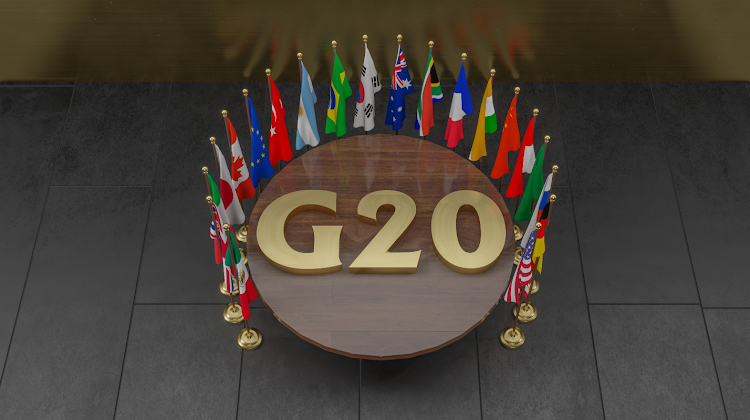
By Lijeng Moruthane: South Africa’s Labour20 (L20) platform, a key part of the country’s G20 presidency, has come under scrutiny for being dominated by the Congress of South African Trade Unions (COSATU), a political ally of the African National Congress (ANC).
Critics argue that the actions of the organization do not serve the broader interests of South Africa, often prioritizing the demands of its own members over the nation’s stability and progress.
During a recent meeting of Parliament’s Portfolio Committee on International Relations and Cooperation (DIRCO), it was revealed that COSATU’s presentation to the committee was made by its parliamentary coordinator, Matthew Parks, who spoke from behind an ANC flag.
This overt politicization raised concerns over the platform’s impartiality and whether it truly represents all South African workers or merely the interests of one political faction.
While COSATU represents South Africa’s largest union body, it is also an active member of the tripartite alliance supporting the ANC, which critics claim has a significant influence on policy-making.
Ryan Smith MP, Deputy Spokesperson on International Relations & Cooperation for the Democratic Alliance (DA), voiced strong opposition to COSATU’s role in the Labour20 platform. “COSATU does not hold the monopoly on labour issues in South Africa and should not be the sole representative on labour concerns in our G20 presidency,” Smith said.
Smith and others argue that COSATU’s influence has contributed to the organization operating in a way that reflects its political interests, often exacerbating divisions within South African society. These actions, they say, have had negative consequences for job creation and the country’s broader economic stability. “None of this advances job creation or the rights of the millions of South Africa’s unemployed,” Smith added.
Further criticisms suggest that the G20 presidency, which claims to emphasize interconnectedness across societal and environmental contexts, is being undermined by DIRCO’s preference for ANC-aligned, left-leaning organizations.
“This seeming preference by DIRCO for left-leaning and ANC-aligned organisations to take part in the many working groups under South Africa’s G20 presidency not only goes against our claimed G20 philosophy but does not honour or reflect South Africa’s new political reality of coalition governance at a national level,” Smith explained.
The DA has long advocated for South Africa’s G20 platforms to be more inclusive and reflective of the country’s political diversity.
In a letter to President Cyril Ramaphosa, the party emphasized the need for Labour20 (L20) and Business20 (B20) platforms to adopt innovative, data-driven solutions that prioritize sustainable governance and the collaboration of local and international experts. According to Smith, these platforms must address not only South Africa’s domestic challenges but also broader, global issues that can drive real, sustainable economic growth.
The DA has formally written to DIRCO Minister Ronald Lamola, calling for invitations to be extended to a wider array of organizations to participate in the Labour20 and Business20 platforms.
Among those named were the National Employers Association of South Africa (NEASA), the Centre for Development and Enterprise (CDE), the Brenthurst Foundation, the South African Institute of Race Relations (IRR), Sakeliga, and the Centre for Risk Analysis.