
Subtotal R0,00


News/23 January 2026, 07:00am/Sipho Gumede
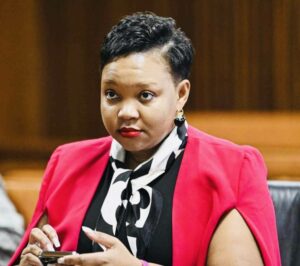
Moroadi Cholota: Image Supplied
By Sipho Gumede: South Africa’s fight against cross-border crime faces a make-or-break moment on Friday morning, when the Constitutional Court delivers judgment in a case that could redraw the country’s extradition playbook — and determine whether a central accused in the Free State asbestos scandal remains out of reach of prosecution.
At issue is not only the fate of Moroadi Cholota, former personal assistant to ex-Free State premier Ace Magashule, but a deeper constitutional question: Who, in law, is empowered to ask a foreign country to hand over a suspect — the National Prosecuting Authority (NPA) or the minister responsible for international relations?
The answer may decide whether Cholota — and others like her — can be prosecuted at all after being brought home through a process now under attack.
Cholota was extradited from the United States in August 2024 to face corruption and money laundering charges linked to the long-running Free State asbestos matter, a case that has shadowed Magashule and implicated businessman Edwin Sodi.
But in a dramatic turn in 2025, the Free State High Court set her free — not on the strength of evidence, but on a legal technicality with potentially massive consequences. The court ruled it did not have jurisdiction to try her, because the very process that brought her back to South Africa was unlawful.
Central to that decision was who initiated the extradition request.
For years, the NPA has made extradition requests as part of routine prosecutorial work. But a 2024 Supreme Court of Appeal judgment — in the case of Johnathan Schultz, a South African accused of stealing and selling raw metals while living in the US — disrupted that settled practice.
In Schultz’s case, the Supreme Court found the power to make an extradition request lies with the minister, not the NPA, even though prosecutors had long performed that function in practice.
When Cholota challenged her return to South Africa, Judge Phillip Loubser followed the same reasoning. He ruled that because Cholota’s extradition request was made by the NPA’s Free State office, it was unlawful — meaning her extradition had “no basis,” and the case against her could not proceed in that court.
Friday’s Constitutional Court judgment will bring finality to the dispute and clarify whether the Supreme Court’s view stands — and what that means for prosecutions that depend on extradition.
If the Constitutional Court confirms that only the minister may request extradition, it could validate the argument that Cholota’s return was legally defective from the start — a finding that would likely keep her out of the dock unless the State can restart the process properly, if that is even possible.
If the court finds the NPA does have the power (or that the process remains valid despite who signed the request), Cholota’s legal escape hatch could close — and the State may regain ground in a case that has become emblematic of South Africa’s struggle to prosecute politically connected corruption.
The Constitutional Court’s decision will effectively determine whether Schultz and Cholota get to keep their freedom — and, just as critically, whether South Africa’s prosecutors can continue to pursue suspects who flee abroad without first routing every request through the political head of international relations.
In a country where major corruption cases often collapse on procedure rather than proof, Friday’s ruling will be watched as a test of whether the justice system can reach beyond borders — and still land on firm constitutional footing.







