Subtotal R0,00

Western Cape/ 14 December 2025, 15:48pm/ Staff Writer
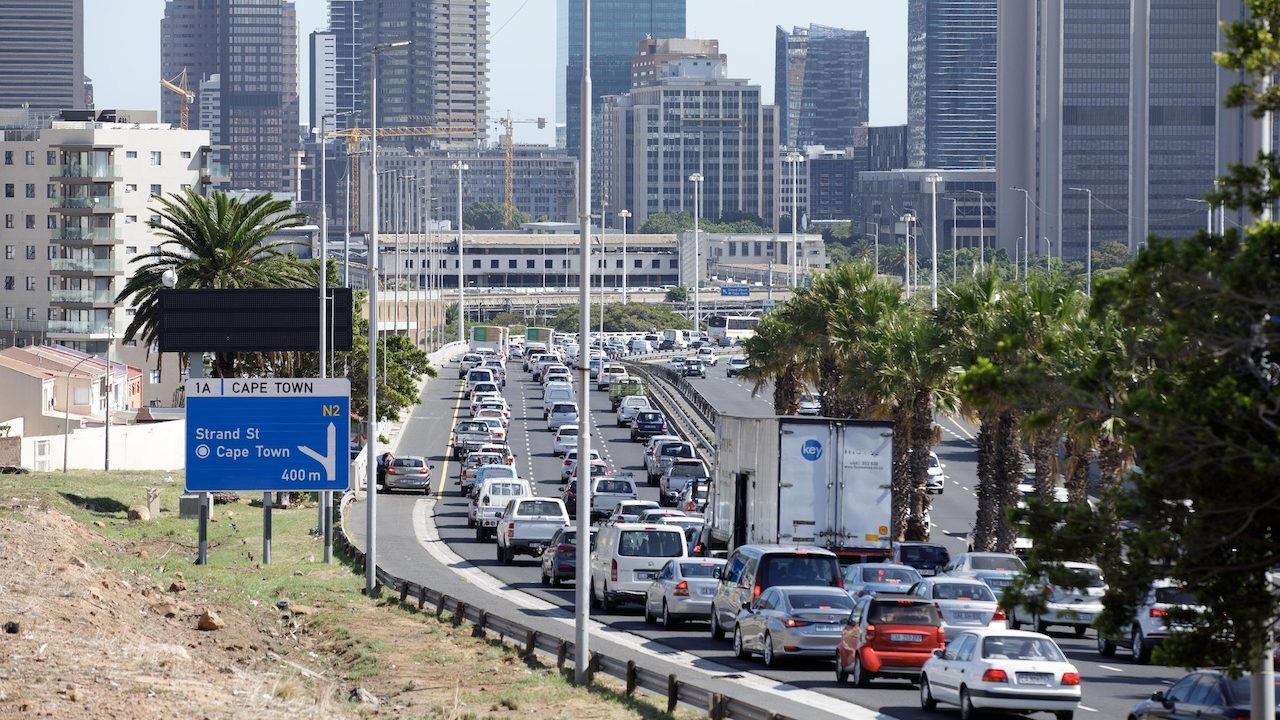
By Staff Writer: Cape Town’s growing stature as a sought-after international destination is increasingly being measured not only in tourism numbers and investment interest, but also in the daily strain on its roads — and a new global index is sharpening the spotlight on the city’s mobility crisis.
The Mother City has been ranked the sixth most congested city in the world in the newly released 2025 INRIX Global Traffic Scorecard, an outcome likely to intensify public pressure on authorities to accelerate transport solutions as population growth and urban development continue to expand.
The ranking places Cape Town ahead of several major global hubs, with congestion now officially worse than London’s. This means traffic congestion in the Mother City is worse than London’s, which followed at number seven. The top of the table is dominated by a mix of mega-cities and US metros. The top five spots are taken up by Istanbul, followed by Mexico City, and then three US centres – Chicago, New York City and Philadelphia.
While Cape Town’s traffic has long been a frustration for commuters, the new data suggests conditions are hardening rather than easing. The report – analysing traffic conditions across 942 urban areas globally – shows that the average driver in Cape Town lost 96 hoursdue to traffic delays in 2025.
This is an increase from 94 hours in 2024. Those hours — nearly four full days over the year — translate into lost productivity, increased vehicle operating costs, and pressure on households already grappling with the rising cost of living.
The City of Cape Town has in recent months mooted a range of proposals aimed at easing congestion, as the broader metro continues to densify and new developments extend commuting distances. The latest ranking, however, suggests that interventions will have to be implemented faster and at greater scale if they are to match the pace at which traffic volumes are rising.
Other South African cities also feature in the scorecard, though at significantly lower levels of congestion. Joburg was ranked 29th most congested city in the world, with the hours lost by motorists totalling 59. Pretoria fared slightly better with 48 hours. In KwaZulu-Natal the pattern was uneven, with the smaller provincial capital recording heavier delays. In KwaZulu-Natal, provincial capital Pietermaritzburg showed more hours lost than Durban, with 35 hours compared to 32.
INRIX’s analysis frames the problem as a structural imbalance between road capacity and travel demand. INRIX describes traffic congestion as what happens when demand for roadway travel exceeds the supply of roadways. “As vehicular traffic builds, drivers, freight movers and bus riders lose time and spend fuel unproductively” which of course translates into economic cost.