
Subtotal R0,00

News/06 February 2026, 07:03am/Mpho Mokoena
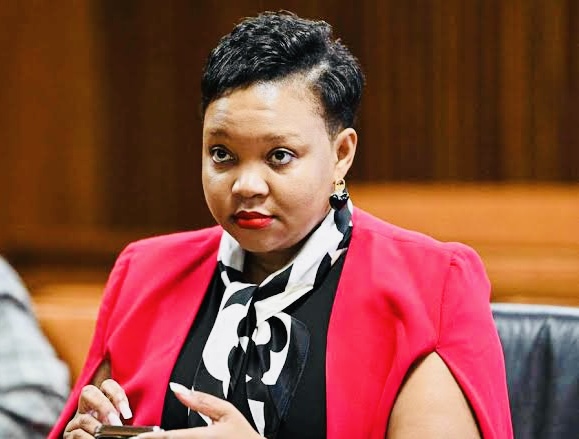
Moroadi Cholota: Image Supplied
By Mpho Mokoena: The Moroadi Cholota saga has swung from a corruption courtroom drama into something far bigger: a headline-grabbing test of whether South Africa’s justice system played straight with the United States — and whether that alleged misstep has now put one of the country’s most notorious corruption cases on even shakier ground.
Cholota, the former personal assistant to ex-Free State premier Ace Magashule, was hauled back to South Africa in August 2024 after an extradition request linked to the R255-million Free State asbestos corruption case. But the debate in court this week was not simply about guilt or innocence — it was about how the state got her back, and whether it had any right to do so at all.
That question exploded into public view after a 23 January 2026 ruling by the Constitutional Court (ConCourt) found that the extradition was unlawful because the National Prosecuting Authority (NPA) had no authority to initiate it. While the ConCourt concluded the extradition was unlawful, it sent the dispute back to the Free State High Court in Bloemfontein for further argument — a move that has now turned this matter into a referendum on the integrity of state conduct.
The stakes are towering. The high court already wrestled with Cholota’s special plea during a trial-within-a-trial, ultimately resulting in her release after Judge Phillip Loubser ruled in June 2025 that the court did not have jurisdiction to prosecute the case. Now, with the legality of the extradition process itself under the microscope, the ground beneath the state’s case is again shifting.
Arguing on Tuesday, Cholota’s legal representative, Loyiso Makapela, told the court that the state’s position is undermined by its own witness.
Makapela pointed to an affidavit by Hawks investigator and state witness Benjamin Calitz, who conceded that Cholota was charged after she declined to implicate Magashule in the asbestos scandal — a version the NPA disputes in its current application.
“The state cannot call into question the evidence that was presented by its own witnesses without having to call those witnesses either unreliable or untruthful because both things cannot be true at the same time,” she told the court.
But the defence’s sharper thrust was aimed at the story South Africa allegedly sold to US authorities — the portrayal of Cholota as someone on the run.
Makapela argued that the state falsely painted Cholota as a fugitive, even though she was living openly while studying at a university and was not evading law enforcement.
“She had changed addresses, not because she was on the run,” Makapela said.
According to the defence, Cholota was extradited despite being “never a fugitive to begin with”.
Makapela pushed back against any suggestion Cholota refused to return home, telling the court she had previously cooperated with South African processes — even at her own expense.
“We showed on the papers that when Ms Cholota was called by the Zondo commission, when she was in the USA, not only did she attend the commission, she did so by paying for her own flights.”
In a line that framed the extradition as punishment rather than procedure, Makapela said the process was unnecessary given how long Cholota was detained in both countries.
“There was never any need for this woman to suffer the way that she was made to suffer. No need whatsoever.”
The defence also attacked the state’s earlier claim that Cholota posed a flight risk due to alleged connections in Kenya. Makapela told the court Cholota was merely passing through — in transit, waiting for a connecting flight.
And Makapela dismissed the state’s explanation that references to Kenya in communications with the US were an innocent blunder, arguing the claim of a “bona fide mistake” did not hold water.
“They knew what they were doing. They knew what they were saying. They knew the implications and if they did not know because they are the state and are the National Prosecuting Authority, they ought to have known.”
Makapela told the court the extradition would not have been authorised if US authorities had known about the alleged misrepresentations.
Makapela further took aim at what happened at the South African Embassy in Washington, DC, during interviews in September 2021. She argued Cholota’s rights were breached when officials continued questioning her even after she requested legal representation.
According to Makapela, Cholota walked into that interview as a potential helper — but left “viewed as a suspect” because she would not implicate her former boss.
The state, however, insisted Cholota was never blindsided. Advocate Tammy McPherson said Cholota was warned over two days of interviews in September 2021 that she could become a suspect if she refused to answer questions.
“It has been the state’s submission from the very onset that at the point, there had already been evidence linking accused 17 to the crimes and offences that are before the court.
“However, she indicated that she was happy to help the country, yet when questioned to obtain the actual evidence that would help the country, mum became the word, and the assistance was no longer provided,” the prosecutor argued.
With the legal and political consequences rippling far beyond Cholota alone, Judge Phillip Loubser is expected to deliver his ruling on 18 February.







