
Subtotal R0,00


Free State/26 March 2026, 07:30am/ Linda Mgomezulu
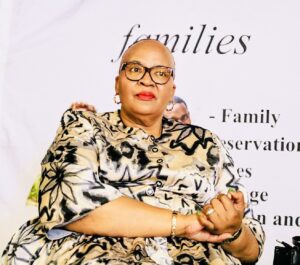
Mathabo Hlalele: Image Supplied
By Linda Mgomezulu: The Free State government is pushing for a new conversation around social assistance, one that shifts the focus from short-term relief to long-term opportunity for struggling families.
That message came through strongly at the ‘Generating Better Livelihoods’ Roundtable Conference hosted in Bloemfontein by Free State Department of Social Development MEC Mathabo Hlalele, where government departments, development agencies and private sector partners gathered to discuss how beneficiaries can be better supported to improve their lives.
Rather than treating social grants as the final answer to poverty, the conference positioned them as a possible starting point for greater economic participation, especially for Child Support Grant recipients.
Stakeholders explored how partnerships could create access to programmes, support systems and opportunities capable of helping beneficiaries build more secure livelihoods.
Among those attending the gathering were representatives from the National Department of Social Development, the office of the Presidency, the office of the Premier, DESTEA, the National Youth Development Agency (NYDA), Meals on Wheels, Harmony Gold Mine, the South African Revenue Service (SARS) and FinMark Trust. Their participation signalled a broad effort to connect government support with practical interventions from multiple sectors.
Presentations delivered during the roundtable focused on what each stakeholder could contribute to a wider partnership with the Department of Social Development. The aim was to identify opportunities that could be extended to beneficiaries, linking them with institutions and initiatives that may help them move towards self-reliance.
Hlalele used the platform to call for closer cooperation between public and private institutions, warning that fragmented efforts would weaken the province’s ability to tackle poverty effectively. “The public sector and private sector should operate in partnership, as we serve the same goal of serving the community,” she said.
She stressed that collaboration should replace territorial competition among institutions. “We need to complement each other, rather than compete, in order to achieve our goals. There is no province that can surpass us in progress.”
Expanding on that message, Hlalele said the province could not afford to measure development only through plans, meetings and internal reports. “Progress must have a human face. It must be felt in homes, seen in communities and recognised by the people we serve.”
She said real progress should be judged by ordinary citizens rather than by officials congratulating one another. “Whenever we talk about progress, it’s us discussing progress.
However, it’s our people who should be acknowledging that progress. The community should be the ones to say if there’s progress, and it should be evident on our streets.”
The MEC urged those present to use the resources already available to produce visible and meaningful change. “Our progress must be translated into the transformation of people’s lives.
It should not just be reflected in books, but should be visible on the streets. You must maximize what you have to make an impact and use the budget you have to change the lives of our people.”
She also challenged stakeholders to ensure that the conference would not end as another discussion without outcomes. “We are not gathered here for a ceremonial conversation. We are here to build solutions that can restore dignity, unlock opportunity and give our people a fair chance.”
According to Hlalele, the true value of the roundtable would be measured by what happens after it. “If this meeting ends in speeches alone, then we would have failed our people. But if it ends in action, partnerships and opportunities, then it will mean something in the lives of our communities.”
A pledge was later made by stakeholders and officials in attendance to invest in the progress of GBL, a step that gave added weight to the province’s stated commitment to improving livelihoods.
Closing the conference, Hlalele thanked those gathered and returned to the theme of collective responsibility. “Thank you for your contributions. No one can succeed alone; we can only succeed when we work collectively.”
She left delegates with a final reminder that the challenge ahead was not simply administrative, but deeply social. “Our responsibility is not just to manage programmes. Our responsibility is to change lives, and that requires all of us to move with urgency, honesty and purpose.”







