Subtotal R0,00

News/ 09 December 2025, 14:41pm/ Ayanda Shezi
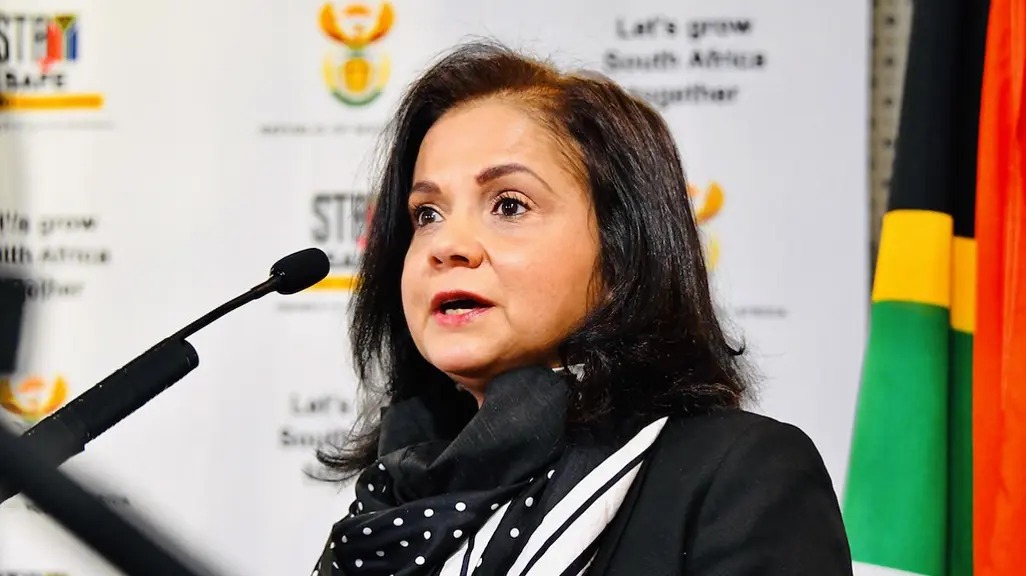
Batohi questioned over not reading case docket before withdrawing charges. Image Supplied
By Ayanda Shezi: National Director of Public Prosecutions (NDPP) Advocate Shamila Batohi has revealed that she did not personally examine the case docket that led to charges against former KwaZulu-Natal Hawks boss Major-General Johan Booysen and members of the Cato Manor Organised Crime Unit. Her admission came during testimony at the Nkabinde Inquiry, where she explained the reasoning behind her decision to withdraw racketeering charges against Booysen.
Batohi told the inquiry that she dropped both the racketeering charge and a separate murder charge against Booysen because the evidence presented to her did not justify pursuing prosecution. She maintained that her decision was based on the information available in reports prepared by her prosecutorial team, rather than on her direct study of the case files.
The inquiry is currently assessing whether Deputy Director of Public Prosecutions (DPP) Advocate Andrew Chauke is fit to hold office. As part of this process, the panel is scrutinising two major matters: the racketeering case involving the Cato Manor Unit and the withdrawal of murder charges against former crime intelligence head Lieutenant-General Richard Mdluli.
During her testimony on Monday, Batohi acknowledged that she did not personally review the 23 linked dockets associated with the Cato Manor case. Instead, she relied heavily on a memorandum compiled by Advocate Rodney de Kock when initiating disciplinary action against Chauke.
“I didn’t study the dockets,” she told the inquiry. “My answer now also relies on the evidence of a report of the DPP KZN.”
Advocate Tembeka Ngcukaitobi, acting on behalf of Chauke, challenged her decision-making process. He questioned how she could assert there was no case against Booysen without reviewing the docket herself.
“You say to the panel there was no case against Major General Booysen without ever having read the docket. Can I suggest that that is an astonishing proposition coming from the head of our prosecution service? I am going to tell the panel that, at the end, your evidence must be rejected as incredible because it is irresponsible to make such a claim without having read the docket,” he argued.
Batohi rejected the criticism, insisting that it is routine and accepted practice for an NDPP to depend on reports from senior prosecutors and investigative teams. She said national directors are not expected to personally sift through every piece of evidence in complex matters.
“There is case law that national directors are not expected to read every single bit of evidence and every docket in cases,” she said. “It is perfectly acceptable for a national director to rely on reports, to rely on presentations, to request aspects of evidence, and to take decisions on that basis. It is what is expected of a responsible national director.”
Ngcukaitobi pushed further, noting that the docket against Booysen consisted of only seven charges, not the extensive documentation Batohi had described. Batohi responded that her reference to large volumes of documents was meant to illustrate the general expectation of her role, not the specifics of this particular docket. She added that although 23 dockets existed, she was unaware of a dedicated racketeering docket for Booysen.
The panel also examined allegations that Chauke had improperly attempted to have the Acting KwaZulu-Natal DPP sign case dockets. Batohi clarified that this claim was not accurate. “It’s not our case that Advocate Chauke needed or asked the DPP to sign any case dockets. So this is clearly incorrect,” she stated. She acknowledged that the disciplinary charge stating Chauke supported prosecution without evidence was valid, but disputed allegations about attempts to secure signatures on dockets.
Throughout her testimony, Batohi continued to defend her reliance on summaries, presentations, and guidance from the prosecution team.
“It is permissible for a national director to consider evidence presented by a team, presentations, and to ask for specific aspects of evidence if required,” she said. “But it is certainly not expected that a national director should read every single docket in any context.”
Ngcukaitobi ended by suggesting that Batohi’s conclusion that there was no case against Booysen without reading the docket was “a grossly irresponsible thing.”