
Subtotal R0,00

News/25 March 2026, 07:34am/Mpho Mokoena
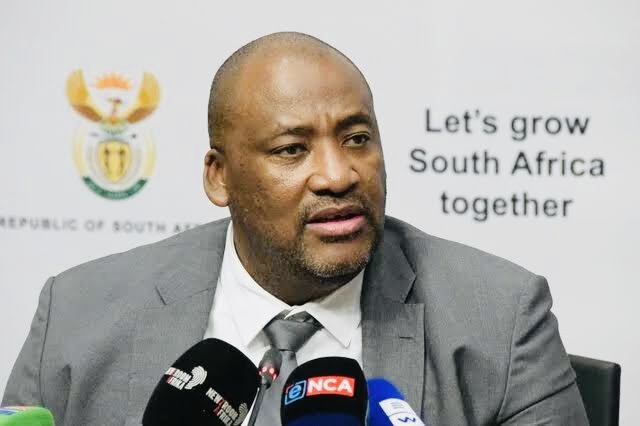
Gayton McKenzie: Image Supplied
By Mpho Mokoena: South Africa’s red carpets, jazz stages and festival grounds are being drawn into a fierce national debate after Sport, Arts and Culture Minister Gayton McKenzie threw his weight behind the high-profile LIV Golf tournament while some of the country’s biggest cultural festivals struggle for survival.
McKenzie, who championed LIV Golf’s South African debut this month, has already confirmed that the global event will return in 2027. It is set to take place from April 22 to 25 next year at The Club at Steyn City, after last week’s tournament pulled in 100,000 spectators. The Minister says the long-term vision is even bigger, with capacity targeted at as many as 250,000 spectators for the 2027 edition.
He has defended the investment as a bold economic strategy, saying the tournament is designed to shine a global spotlight on South Africa, stimulate tourism and inject serious money into the economy. According to McKenzie, the event could generate between R700 million and R800m in economic impact, with the potential to eventually bring billions into the country.
But while golf’s international stars are being welcomed onto pristine greens, artists and festival organisers say the country’s cultural backbone is being left out in the cold.
The South African Roadies Association (Sara) has launched a scathing attack on McKenzie, accusing him of turning the Department of Sports, Arts and Culture into his personal “fiefdom”.
Since 2025, McKenzie has faced growing criticism over changes to funding structures that have seen direct support reduced or withdrawn from some of South Africa’s best-known and longest-running cultural events. Among those hit are the National Arts Festival, Suidoosterfees, Klein Karoo Nasionale Kunstefees (KKNK), Woordfees, Innibos, Aardklop, Cape Town Carnival and the Cape Town International Jazz Festival.
Many of these festivals, according to reports, were told to seek support through the Department’s Mzansi Golden Economy (MGE) grant system. Yet many applications were either rejected outright or received no funding for 2025, leaving organisers under financial strain and the sector increasingly alarmed.
For critics, the optics are stark: local cultural institutions are tightening their belts while government enthusiasm and backing appear to be flowing toward a glamorous international sporting spectacle.
“The Minister is grandstanding and has turned the department into his own private company or fiefdom. He is abusing public power and public funds at the expense of youth empowerment, job creation, and arts development,” said Sara president Freddie Nyathela.
McKenzie, however, insists the calculus is simple: LIV Golf offers scale. He says the tournament draws elite international athletes, massive global media attention and high-value visitors, making it a far more powerful vehicle for economic return than smaller, localised events.
“The department is supporting this event strongly because it aligns with the government’s priorities of economic growth, job creation and nation branding. Where an opportunity exists to deliver measurable benefits at scale, it is appropriate for the government to play a supportive and enabling role,” he said.
He has also argued that the event is part of a wider strategy to use sport as an economic and diplomatic tool — one that can stimulate tourism, support local industries, create jobs and reinforce South Africa’s image as a world-class host nation.
Yet that argument has done little to calm outrage from those in the cultural sector, where frustration has been building for months.
The fallout is also rooted in a bitter dispute that has been simmering since July 2024 between McKenzie and Sara, amid allegations of sabotaged funding and public slander. Sara accused McKenzie and his department of intentionally blocking R43 million in funding committed for the 2024/25 financial year. Nyathela described the move as “sabotage” targeting the NGO’s youth-focused technical and stage projects.
The tension escalated after McKenzie allegedly made derogatory remarks during an SABC News interview, without naming Sara or Nyathela directly, claiming an unnamed individual had received R20m to renovate a building that remained incomplete.
Nyathela then approached the Public Protector, alleging that the department’s Director-General had misled Parliament by claiming Sara was non-compliant and had failed to account for previous funding.
Beyond the personalities and political sparring, the controversy has reopened a deeper question: what should count most in public spending — global prestige or grassroots development?
“While international events can boost the economy and visibility, there is an ongoing debate about whether sufficient resources are being directed toward grassroots development – particularly in rural and township communities. Investment in local sport, arts, and recreation is essential for talent development, social cohesion, and long-term sustainability of the sector.”
That concern is echoed by the United Society in Action (UCSA), which says it supports the Minister’s right to promote sporting events, but is deeply troubled by what it sees as his disregard for the cultural and creative industries.
UCSA said it “continues to be disgusted by his blatant disregard for our cultural and creative industry of our beautiful country”.
“His arrogance and assumed ‘hatred’ for our artists has not gone unnoticed, just as the damning quietness that is so loud by the sector itself, particularly those who present themselves as custodians of arts and culture in our nation”, said chairman Tebogo Sithathu.
He added that UCSA had begun talks with various cultural and creative organisations to assemble a strong delegation to the Minister’s doorstep.
Even in Parliament, concern is growing that the strategy may be too heavily weighted toward headline-grabbing international events at the expense of local creative ecosystems.
MK Party MP Gift Motaung, a member of the Committee on Sport, Arts and Culture, acknowledged that LIV Golf may help position South Africa as a global sporting destination and could unlock long-term partnerships and investment.
But, he warned, the approach inevitably raises hard questions about balance.







