
Subtotal R0,00

Disclaimer: The opinions expressed within the following content are solely the authors and do not reflect the opinions and beliefs of the Insider Chronicle or its affiliates.
Opinion Piece/07 May 2026, 09:21am/ Zamani Saul

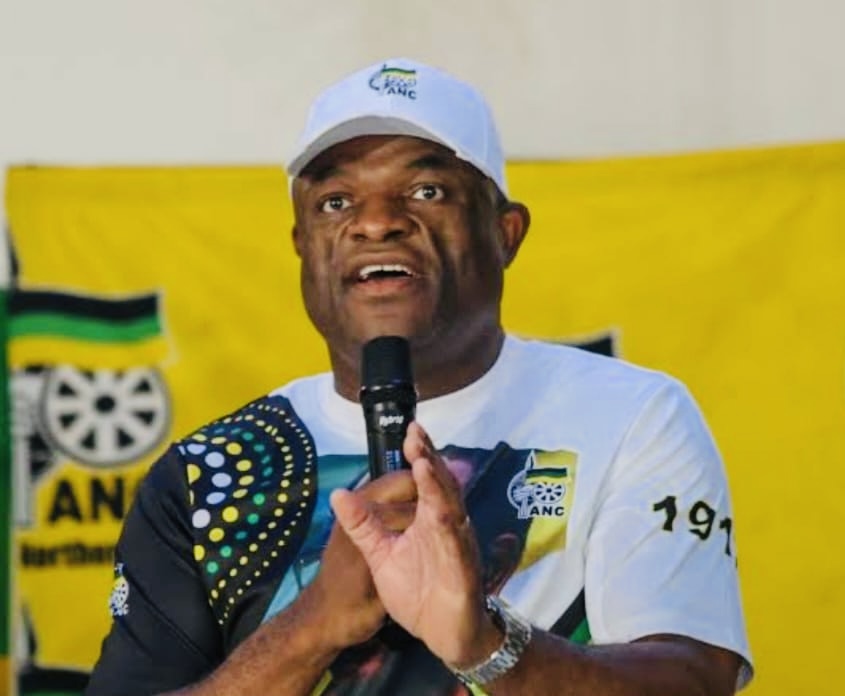
Zamani Saul:Image Supplied
By Zamani Saul: The reference to sea-lioning points to a concern that the current volatile engagements on the SACP’s decision to contest local government elections independently are driven almost entirely by sharp disagreement. This approach creates the wrong impression that there is no room for consensus on the way forward. It renders the engagements unproductive and distracts from the core issue. The core issue here is that the SACP is now, like all other parties that will appear on the ballot paper, an election rival to the ANC. It is, therefore, very unlikely that things will remain the same. This reality must be confronted soberly, with emotions and personal attacks put aside.
The decision creates a political conundrum that post-1994 SACP leaders avoided at all costs because the collective conscience of Alliance leaders was always to protect the revolutionary Alliance and to avoid anything that would put it in harm’s way. Differences within the broader Alliance movement were historically managed as internal contradictions.
These were regarded as non-antagonistic because, in the main, they were about the best approaches to strengthen and sharpen the struggle for liberation and, post-1994, for socio-economic transformation. As a result, despite being difficult, these differences could be resolved through persuasion.
Romanticising about this glorious history of managing internal contradictions in the Alliance will certainly not solve the current problem. If the revolutionary history of the Alliance has any value, lessons must be drawn from it to build consensus on the way forward and to stop bemoaning the SACP’s decision to contest elections independently.
Keeping the Alliance intact, with a common election campaign and shared electoral fortunes, was advanced and jealously guarded despite the major challenges it faced. These include the adoption of GEAR, labour brokers, privatisation, e-tolls, episodes of corruption scandals, the near collapse of organisational discipline in the ANC, factionalism, etc.
Some argue that the SACP’s decision to contest independently is a delayed outcome of the cumulative impact of these challenges, which led to mistrust between the different components of the Alliance. Some are of the view that the SACP is bailing on an ANC sinking ship, as the ANC is now at its weakest.
The SACP’s decision to contest independently was given due weight by the ANC NEC, as it reflected deeply on the matter at its first meeting in 2025, just a few months after the 2024 SACP Special Congress reaffirmed it. Distressed by this decision, the NEC instructed the Secretary General to convene an urgent meeting with the SACP to review its implications.
The ANC NEC had multiple concerns. First, the NEC was concerned that, taking into account the outcomes of the 2024 general elections, the decision to contest independently would further puncture and derail the prosecution of the National Democratic Revolution. Secondly, such a decision has profound implications for dual membership.
Thirdly, the decision risks consigning the Alliance’s glorious history to the annals of history and watering down the interdependence and interconnectedness between the ANC and SACP at both strategic and tactical levels. Fourthly, such a decision will generate divisions among COSATU affiliated unions, as they will have to choose between the ANC and SACP.
Lastly, it was the collective view of the NEC that, more than ever before, the unity of the Alliance is paramount and that disunity could set the stage for mutual annihilation.Raising these concerns was not tantamount to denying the SACP its independent existence as a strategic partner in the Alliance.
There was no instruction from the ANC that the SACP must change the decision. What the ANC did, correctly so, was to highlight the far-reaching implications of this decision. The ANC NEC has been extraordinarily patient in engaging on this matter, risking disenchantment among its members, as the decision fomented and sowed confusion within the ranks of the ANC.
In 2025, the resolution was discussed in three NEC meetings, culminating in discussions at the 5th National General Council in December of that year. This year, the matter was further discussed in two NEC meetings.Central to these discussions was the need to save the glorious Tripartite Revolutionary Alliance through constructive engagements to find consensus on the way forward.
Instead, the SACP has openly adopted a hostile attitude to the ANC. It has derided the ANC National General Council as “a waste of time and a big talk shop” and claimed that the ANC is “openly driving a neo-liberal agenda that hurts the working class”. It has also accused the ANC of having abandoned the National Democratic Revolution, which is the common programme of the Alliance on the social and economic transformation of South Africa.
All of these attacks are happening at a time when the elections are fast approaching, the SACP is actively putting in place its election machinery, the “red caravan”, and it is contesting some by-elections. This is a most consequential moment in the history of the Alliance. It would be grossly unfair to expect the ANC NEC to remain immobile and do nothing.
For obvious reasons, one of the far-reaching implications of the decision concerns dual membership. Inevitably, this is where the major fallout plays itself out. The ANC is a mass-based liberation movement, and the SACP is historically a cadreship-based vanguard party of the working class. Traditionally, and in most cases, SACP cadres are recruited from within the ranks of the ANC, COSATU, and the broader congress movement, which includes COSAS, SASCO, and the ANCYL.
The all-embracing political identity of the Congress movement is the ANC. Therefore, before all else, most SACP cadres are ANC members or individuals who actively identify with the ANC and, in all likelihood, cut their political teeth within the ANC. Their first encounter with Marxism-Leninism came through the work or initiatives undertaken by the ANC political education programme which, in the main, was designed and presented by SACP members who were also ANC members.
For many, the ANC political education programme served as the springboard for class consciousness and ultimately resulted in membership of the SACP. This dialectical relationship between the ANC and the SACP demonstrates that most comrades with dual membership are raised in the broader congress movement and trained to share equal revolutionary passion and commitment to both the ANC and the SACP. Asking them to make a choice is analogous to amputating one’s leg without sedation. This is an unenviable position that none of these members could have imagined in their lifetime.
Joining the SACP was not an abandonment of the ANC and its historic mission. It was a deeply dialectical process of engagement in the struggle through the Alliance as a common strategic platform. This platform also includes COSATU, a federation of both industrial and public service workers. During our days in COSAS, SASCO, and the ANCYL, when an ANC leader was introduced as also a leader of the SACP and COSATU, or any of its affiliates, we would look at such a leader with great admiration.
All of this was because these identities were reinforcing and not competing. In some instances, we would scream with great joy: “three in one”. That “one” was not the person, but the shared commitment to the National Democratic Revolution, which meant three organisations united in one common revolution.
For my generation, it is hard to find an ANC leader who, at some point, never took membership of the SACP or was not attracted to Marxism-Leninism and some Stalinism or Trotskyism. Dual membership is, therefore, intrinsic to the DNA of the ANC. The SACP’s decision to independently contest elections poses an intractable challenge to this DNA. This is because political party membership is not footloose. It comes with clearly articulated responsibilities. Dual membership is about members, not supporters.
One primary responsibility of a political party member is to campaign for the party during elections and ultimately vote for it. So what the SACP expects is for the ANC to allow SACP members into its election structures and war rooms, while those same members are also engaged in the SACP election campaign. This would be a political anomaly, as any party contesting an election will inevitably de-campaign its rivals.
The ANC NEC rejected this oddity with former President Jacob Zuma, namely that a person can remain a member of the ANC while, at the same time, being a member of another political party and campaigning and voting for it. This goes against the ANC Constitution, which prohibits ANC members from participating in an election campaign or from being candidates for other political parties. This constitutional injunction also applies to ANC members with dual membership.
ANC members are expressly, not implicitly, prohibited from participating in election campaigns of other parties, and that also includes the SACP.I am writing this mindful of the rebuke directed at the ANC NEC for invoking the ANC Constitution to respond to this political conundrum, as an ill-informed bureaucratic response to a political problem.
The ANC NEC’s decision that members must choose which political party campaign trail, planning, and strategising they will be part of is a practical response to a practical problem. This is not a political purging of communists. It is about protecting the ANC’s internal cohesion.
The SACP, and not the ANC, took the decision to contest independently. Therefore, it is impractical to have both when confronted with two incompatible options. One cannot campaign for both the ANC and the SACP simultaneously.The Party should have known that the decision had far-reaching implications.
Leaders should now collectively focus on mitigating the implications of this resolution and not embark on crude adventurism characterised by inflated egos and brinkmanship politics that might sink all the strategic pillars that serve as anchors to the existence of the Tripartite Alliance.
The independent contestation of elections by the SACP in no way means the end of the Alliance, but it does throw the Alliance off balance as we came to know and experience it. This sets the tone for a reconfigured Alliance. The immediate focus should be on areas of consensus as a point of departure, rather than on the directionless volatility generated by the failure to manage the Alliance’s internal contradictions.
The question remains: what do Alliance leaders agree on at a strategic level as a way forward to save this living heritage, the revolutionary Alliance? This question begs for answers and requires a commitment to move beyond disagreements towards seeking consensus on the way forward. The high political octane on both sides must be directed to finding a consensus on the outlook of the Alliance post-2026 local government.
Dr Zamani Saul is ANC Northern Cape Provincial Chairperson







