
Subtotal R0,00

Free State/04 August 2026,08:41am/GoodWill Mathebula
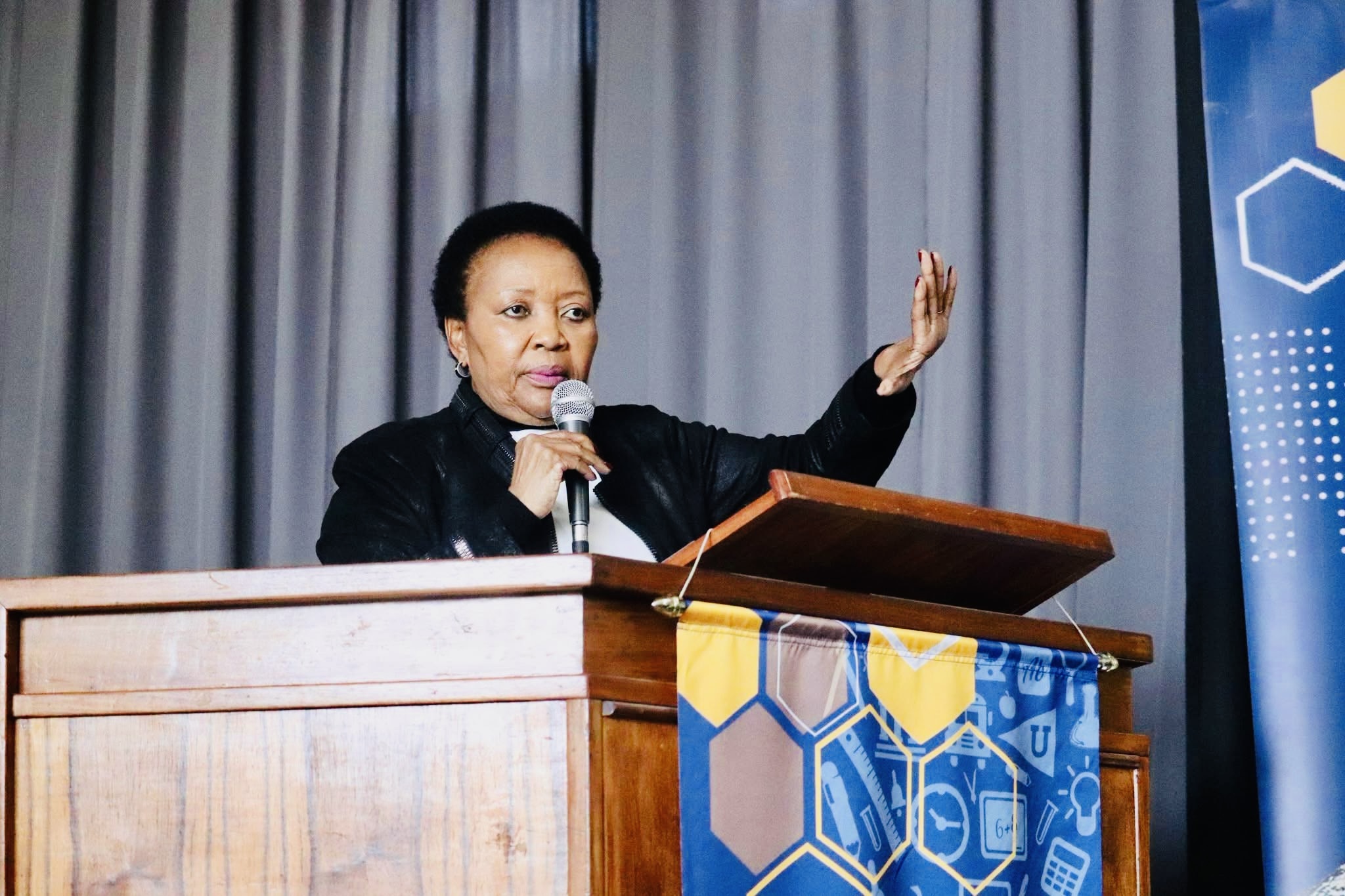
Dr Mamiki Maboya: Image Supplied
By GoodWill Mathebula: Free State Education MEC Dr Mamiki Maboya has called on schools across the province to turn outstanding individual performances into a lasting culture of excellence.
Maboya made the call during her pioneering per-term results announcement session, which brought together top-performing districts, schools and learner representatives.
The gathering was more than a results announcement. District Directors, Chief Education Specialists and their deputies, Circuit Managers, Subject Advisors and school Principals were invited to assess the latest outcomes and propose practical interventions to help the province achieve its targets of a 95% overall pass rate and a 55% Bachelor pass rate for the Class of 2026.
Mangaung Metropolitan Education District once again emerged as the province’s leading performer in the third-term results. The district produced most of the top-performing schools and learners, recording a 91.7% pass rate, a 55.3% Bachelor pass rate and 16.2% in distinctions.
It was also the only district to reach the provincial benchmark of 55% Bachelor passes.
Maboya urged education officials to look beyond the figures and use the results as a roadmap for improvement.
“In education, we often become preoccupied with the clock. We count terms, assessments, examinations and academic years. Yet the most important question is not how much time has passed, but whether we are moving steadily towards the future we seek to build.
The results we release today are not merely a record of marks achieved during the second term. They are a compass. They tell us whether we are moving closer to our destination, whether our interventions are yielding results and whether the aspirations we hold for the Class of 2026 remain within our reach.
More importantly, they remind us that the future is not something that arrives by chance; it is something that is built deliberately through hard work, discipline, leadership and collective effort.”
She said the purpose of the session was to ensure that the results led to action rather than simply being recorded and celebrated.
“Throughout the course of this morning, we have listened attentively to presentations, celebrated achievement and reflected on performance across our districts, circuits, schools and individual learners. We have heard percentages, rankings, distinctions, Bachelor passes and subject performances.
Yet if we leave this gathering remembering only numbers, then we will have missed the true purpose of today’s engagement. The purpose of these results is not merely to tell us where we are. Their purpose is to tell us where we must go next.
They must inspire us to move from analysis to action, from observation to intervention and from potential to performance.”
For Maboya, education extends beyond examinations and results. It is also about shaping confident, capable and responsible citizens.
“Education has always been about more than examinations. It is about preparing human beings for life. It is about nurturing character, developing talent and creating opportunities.”
The MEC said the province’s ambitious targets were designed to inspire focus and commitment, not fear.
“Every generation receives from history the responsibility of preparing the next generation for challenges it may never see itself. That is why education remains one of the most powerful instruments available to any extraordinary things. It is the foundation upon which nations build prosperity, innovation and social justice.
At the beginning of this academic year, I outlined what I referred to as our marching orders for the Class of 2026. Those marching orders were informed by a simple but ambitious conviction: that the Free State is capable of achieving a pass rate of 95 percent and a Bachelor pass rate of 55 percent. These targets were never designed to create anxiety. They were designed to create focus.
They were intended to ensure that every district, every circuit, every principal, every educator and every learner understood the destination towards which we are moving.
Great achievements have never been the result of low expectations.
Excellence begins when individuals and institutions decide that ordinary performance is no longer sufficient.”
Maboya described the latest results as both encouraging and instructive, showing where progress had been made and where urgent work remained.
She said Mangaung’s performance had challenged the belief that academic excellence was possible only in schools with abundant resources.
“This achievement carries profound significance because it challenges one of the most dangerous misconceptions in education: the belief that excellence belongs only to those with abundant resources. Qibing reminds us that while resources matter, they are not the sole determinant of success. Leadership matters. Commitment matters. Effective teaching matters. Discipline matters.
Most importantly, belief matters. When a school community believes that excellence is possible, remarkable things begin to happen.”
She challenged the province to move from isolated success stories to consistent achievement across all schools.
“The challenge before us therefore is not proving that excellence is possible. The challenge is ensuring that excellence becomes consistent across every district, every circuit and every school in the province. We must move from pockets of excellence to a province of excellence. We must ensure that the success stories we celebrate today become the standard by which all schools measure themselves tomorrow.”
School-Based Assessment was also highlighted as a critical area in the drive to improve results. Maboya reminded learners and schools that 25% of the National Senior Certificate mark is earned before the final examinations.
“One of the strategic areas that will determine whether we achieve our goals is School-Based Assessment. Too often learners focus almost exclusively on the final examination while underestimating the significance of the work done throughout the year. Yet twenty-five percent of the National Senior Certificate mark is determined through School-Based Assessment.
This means that one quarter of every learner’s final result is influenced before they enter the examination venue. Every test, every assignment, every project and every assessment task contributes directly towards final performance. Schools that manage SBA effectively place their learners in a stronger position long before the final examinations begin.”
The MEC paid tribute to the educators, principals, parents and learners whose commitment was reflected in the results.
“Behind every distinction stands a story of perseverance and sacrifice.
Behind every improvement stands an educator who stayed after school, a principal who provided leadership, a parent who offered encouragement and a learner who refused to surrender to adversity. These results are
therefore not merely academic indicators. They are reflections of human effort, determination and possibility.”
She praised educators for their long hours and sacrifices, while urging school leaders to continue providing focused and accountable leadership.
“To our educators, I wish to express my sincere appreciation. The work you do often takes place quietly, away from public recognition, yet its impact can be seen in every learner who succeeds. The long hours, the sacrifices, the extra lessons and the unwavering commitment you demonstrate continue to shape the future of our province. Your contribution remains invaluable.
To our principals and School Management Teams, I commend your leadership. Strong schools are built upon strong leadership. The results before us demonstrate that where leadership is focused, accountable and instructional, learner performance improves. Continue leading with courage, integrity and purpose.”
Maboya also appealed to parents and guardians to strengthen their support as learners approach the final months of the academic year.
“To parents and guardians, I appeal for your continued partnership.
Schools cannot succeed in isolation. Learners perform best when families, schools and communities work together. The final months of Grade 12 require supervision, encouragement and support at home.”
Addressing the Class of 2026 directly, she encouraged learners to treat the results as a measure of their current position—not a verdict on their future.
“Together, we can create an environment in which every learner has an opportunity to realize his or her full potential. To the Class of 2026, allow me to speak directly to you. These results do not define your future. They simply tell you where you stand at this moment.”
With Mangaung leading the way, the pressure is now on the province’s remaining districts to close performance gaps, strengthen School-Based Assessment and turn promising results into sustained success.
For the Free State, the journey towards a 95% pass rate and a 55% Bachelor pass rate has entered a crucial phase—and Maboya wants every school to be part of the province’s next success story.







