
Subtotal R0,00

Disclaimer: The opinions expressed within the following content are solely the authors and do not reflect the opinions and beliefs of the Insider Chronicle or its affiliates.
Opinion Piece/26 June 2026, 09:00am/ Edgar Legoale
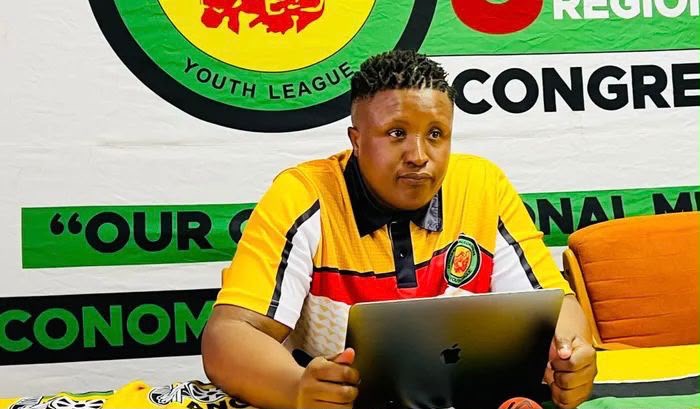
Edgar Legoale: Image Supplied
Rebuilding Ngwathe: A Five-Year Journey of Delivery, Dignity and Resilience Under ANC Leadership
By Edgar Legoale: When the Free State High Court ordered the dissolution of the Ngwathe Municipal Council in June 2025, many outsiders quickly concluded that our municipality was beyond redemption. The judgement found that Ngwathe had failed to meet its constitutional obligations and called for provincial intervention under section 139. Residents of Parys, Heilbron, Koppies, Vredefort and Edenville had long felt the heavy weight of historical neglect and collapsing infrastructure.
In February 2026 AfriForum celebrated what they called a “decisive win” and insisted that dissolution was non-negotiable. They painted a picture of a completely failed municipality. In my view, they used our community’s real struggles to advance a narrow agenda. Their activism often hides behind legal language, but as a proud resident of this region and a former leader of the African National Congress Youth League in Fezile Dabi, I know that they do not speak for the majority of our people.
I am speaking as a resident and activist who has watched our municipality fight its way back from the edge of collapse. The administration under Executive Mayor Comrade Victoria de Beer-Mthombeni and Municipal Manager Dr Futhuli Mothamaha — whom the municipality council appointed — inherited a local government in chaos. Basic services were failing across all five towns, senior posts stood vacant for years, financial records were in disarray, and community trust had almost disappeared.
Yet instead of retreating or looking for scapegoats, this administration got to work with determination. In the past five years, from 2021 to 2026, Ngwathe has implemented the most ambitious programme of infrastructure renewal, service restoration and governance reform in our recent history addressing issues the court highlighted. This opinion piece offers a detailed account of that progress. My aim is not to deny the real failures of the past but to celebrate the concrete strides made and to call on everyone — including critics — to acknowledge what has been achieved and to build on it for the benefit of all our people.
The Inheritance: A Municipality at the Graveyard
Before we celebrate the achievements, we must understand exactly what comrade de Beer-Mthombeni’s administration inherited. Municipalities placed under administration often suffer further collapse because appointed caretakers from outside take a long time to understand local conditions, political realities and community dynamics, and they often lack real accountability to the people on the ground.
When Victoria took office, Ngwathe was on the brink of total collapse. Streets were dark at night, water seldom flowed from taps, financial records were chaotic, and critical senior posts remained vacant for far too long. As one observer rightly noted, this administration “headed this Municipality when it was already at the graveyard” but still fought with everything they had to revive it. I take my hat off to them for refusing to surrender and for proving that visionary, committed leadership can still make a profound difference even in the most difficult circumstances.
The problems did not begin with this administration. They were the result of years of accumulated neglect, under-investment and weak governance that predated the current ANC-led council. This team took over a broken system and chose to confront it head-on rather than make excuses. That choice deserves recognition.
Water: Restoring Dignity Through Reliable Supply
Water is life, and for too many years our communities lived without reliable access to it. In Koppies’ Kwakwatsi area the municipality installed a 160 mm diameter Class 16 pipeline spanning 1.97 kilometres. This project is now nearing completion. Residents who had gone more than twenty years without running water from their taps shared their joy when clean water finally flowed again. This pipeline is not only about water — it directly supports better health, small-scale farming and the growth of home-based businesses by ending the daily reliance on unpredictable water tankers.
In Tumahole’s Mandela section the municipality launched a pilot borehole project that pumps clean “metsi pompong” directly to households. This delivered immediate relief to areas where the main reticulation lines had failed. The borehole project helped residents who had been without reliable supply since 2022, showing how the administration uses practical and innovative solutions to respond quickly to crises instead of waiting for perfect conditions.
These initiatives form part of a much broader and systematic push to rebuild water infrastructure across Ngwathe. New bulk water pipelines have reached 99 percent completion, with household connections now being finalised in priority areas. The larger bulk water supply pipeline linking Koppies to Edenville has advanced significantly despite earlier technical setbacks. In Vredefort, construction has begun on the upgrading of water treatment works together with a new 4 megalitre reservoir that will ensure sustainable supply for decades to come.
The Executive Mayor has emphasised that these investments restore dignity to communities that have endured water shortages for far too long and are essential to unlocking tourism, agriculture and small industry in our region. The Municipal Manager has ensured that each project is monitored closely for quality, accountability and value for money.
Five years ago, many residents in Mapetla section, Mokwallo and other areas still fetched water from rivers or waited for irregular tankers. Today, thanks to these focused interventions, water flows more reliably again in several previously neglected sections. By the time major treatment upgrades and remaining pipelines reach full completion, Ngwathe expects consistent supply across all five towns.
The administration did not stop at big headline projects. They also replaced 15 kilometres of old asbestos water pipes that posed serious health risks and refurbished the ageing Parys Water Treatment Works. In Koppies and Kwakwatsi they constructed a further 15 km of bulk water supply infrastructure and built a 1 km waterborne sanitation network that now connects 66 erven. These efforts show a municipality that is serious about both new infrastructure and the rehabilitation of existing systems.
Land Allocation and Housing
Land redistribution is central to the ANC’s transformation agenda. The municipality has been proactive in releasing land for housing:
* Land allocation programme. The mayor reported that the municipality allocated 143 sites to residents in Schonkenville Extension 8 in March 2025, after allocating hundreds of sites across the municipality during the previous year. Crucially, these sites are equipped with water and sanitation infrastructure. The municipality encourages beneficiaries to submit building plans and use the land responsibly.
* Housing units and provincial projects. The IDP acknowledges support from national and provincial departments in providing housing units and refurbishing schools and clinics. Working with other spheres of government ensures integrated service delivery.
Stable Leadership and Professionalisation
Instability in senior positions was another problem noted by the court. The current administration has addressed this.
* Appointment of municipal manager and senior directors. The budget speech announced the appointment of Dr Futhuli Mothamaha as Municipal Manager, along with a Chief Financial Officer and directors for Corporate Services, Technical Services, Planning and Local Economic Development and Community Services. These appointments fill all senior posts and bring experienced leadership to the municipality.
* Panel of legal professionals. A panel of legal experts has been appointed to support good governance and ensure that policies and decisions are legally sound. This will improve compliance with legislation and strengthen the municipality’s legal position.
* Performance management systems. The annual report notes that the municipality has implemented a robust performance management system to address material irregularities identified by the Auditor‑General. Quarterly performance reports are submitted to Council, and corrective measures are taken where targets are not met.
Electricity and Public Lighting: Turning On the Lights
Water is not our only basic need. Electricity and proper public lighting determine safety, economic activity and everyday dignity. Under this administration Ngwathe rolled out a municipality-wide programme to repair and restore street lights and Apollo high-mast lights across Parys, Vredefort, Heilbron, Koppies and Edenville.
Residents immediately welcomed the transformation. Streets that had been dangerously dark for years became well-lit, reducing the risk of crime and improving road safety for everyone, especially women and the elderly who must move around at night. Better lighting has also helped our towns present a more welcoming face to visitors and investors.
Beyond public lighting, the municipality invested directly in electrifying homes. Through the Integrated National Electrification Programme, 740 households received formal connections in Parys’ Abazimeli section, Tumahole Extension 5 and Extension 7, Mokwallo Extension 4 and Extension 7, and other priority areas.
To support further connections, the municipality replaced two 500 kVA mini-substations at the water treatment works. Later they received a donated substation with capacity to connect up to 2 000 additional households in Vredefort. These practical interventions mean that families who once relied on candles and paraffin can now switch on lights and power essential appliances safely.
The administration also revived the electricity department’s maintenance programme. Teams now respond more quickly to faults, keep high-mast lights functional and communicate planned outages clearly to residents. Prepaid electricity services were brought closer to the people through the reopening of the Tumahole municipal office, where residents can purchase electricity and pay accounts without travelling long distances. When storms damaged parts of the grid, the municipality worked with provincial partners to restore supply and installed new transformers in Vredefort Extension 7 and 8.
Roads, Bridges and Storm-Water: Fixing Our Streets
Decades of neglect had left Ngwathe’s roads full of potholes and many bridges unsafe or washed away. In direct response the administration rolled out extensive road and storm-water programmes. They constructed a bridge in Ward 1 together with two kilometres of paved access road complete with storm-water drainage. In Ward 13 they built one kilometre of paved road and drainage, while in Ward 5 a three-kilometre waterborne sanitation network now serves 66 erven. Additional roads were tarred in Vredefort and Koppies, and new pedestrian bridges now connect communities that were previously cut off during heavy rains. These roadworks create local jobs while reducing travel times for commuters, farmworkers, school children and small businesses.
Maintenance teams have been visible on the ground patching potholes, resurfacing priority routes and clearing storm-water drains to prevent flooding. With better roads, farmers can transport their produce more reliably, businesses can attract customers more easily, and taxis can operate safely. Access roads to schools and clinics are no longer mud tracks — a change that matters especially for women and children who use these routes every day.
Waste Management and Sanitation: Clean Towns, Healthy Residents
Clean streets and functioning sewer systems are essential to public health, dignity and the revival of tourism. Under the ANC-led council Ngwathe acquired new refuse compactor trucks and improved waste collection schedules. In Mokwallo and Vredefort a new compactor truck is now stationed permanently, cutting down on illegal dumping and ensuring more regular removal. Previously the municipality relied heavily on outsourced services for sewer suction trucks. To cut long-term costs and improve responsiveness, the administration purchased its own honeysucker truck, bakkies, a TLB, new cherry pickers and additional refuse removal trucks. These vehicles now allow municipal workers to clear blocked sewers quickly, collect waste on schedule and maintain power lines without waiting for external contractors.
The administration has also upgraded waste-water treatment works in Ward 15 and is constructing new oxidation ponds to increase capacity and protect our rivers from pollution. By investing in both equipment and treatment infrastructure, Ngwathe is steadily turning around a sanitation system that once posed serious health risks to our communities.
Traffic and Road Safety: Restoring Law and Order
For nearly a decade Ngwathe did not have a functioning Traffic Department. It had shut down in August 2016 due to lack of resources and vehicles. Motorists ignored speed limits, illegal parking went unchecked, and the municipality lost important revenue from fines. Since taking office, Mayor de Beer-Mthombeni has made the revival of this critical service a clear priority. In September 2025 the municipality unveiled a new fleet of traffic vehicles to bring the department back to life. The vehicles are properly equipped for daily operations, enabling officers to patrol high-risk areas, enforce road rules and respond quickly to incidents.
The mayor has explained that a revived traffic service will generate revenue that can be reinvested directly into infrastructure and improved public safety. The municipality also launched a Road Traffic and Law Enforcement Training Programme targeting 27 young people between the ages of 18 and 35. This one-year learnership is building a pipeline of trained officers while creating meaningful job opportunities for our youth. By investing in both people and equipment, the administration is restoring law and order on our roads and addressing unemployment at the same time.
Economic Development and Job Creation: Unlocking Opportunities
The ANC-led council understands that sustainable change requires real economic growth and job creation. Ngwathe’s strategy combines public infrastructure investment with strategic private-sector partnerships. The municipality has attracted major renewable energy projects. The Sedibe Solar PV plant is scheduled to begin construction in August 2025 and will create 2 780 jobs while producing clean energy for the grid. The Damlaagte Solar facility, a 97.5 MW plant developed by Sasol and Air Liquide near Parys, officially opened in October 2025 and created nearly 2 000 jobs, with strong emphasis on recruiting and training local community members.
On the broader economic front, the municipality is championing a major mixed-use development near Parys that includes a new retail centre, residential units and a solar plant. This project alone is expected to create more than 4 900 jobs and will provide both housing and shopping opportunities for residents. The larger Parys Mega Development along the R59 corridor will transform the Vaal de Grace area with a new hotel, truck stop, upgraded airfield, medical campus and school. The hotel will boost tourism and conference activity, while the airfield upgrade opens doors to greater corporate and investor interest in our municipality.
These are not vague promises. They are backed by a fully funded municipal budget for the 2025/26 financial year. This demonstrates both financial discipline and growing investor confidence in Ngwathe’s direction. The administration has also moved decisively to rebuild internal capacity. Within the first years they filled four of the six senior management positions and later completed the remaining appointments, bringing competent professionals into technical services, finance and planning. With skilled managers in place, the municipality can now plan, deliver and account for projects more effectively than before.
Supporting Small Businesses: Empowering Youth and Women
Economic growth must reach ordinary people in our townships and rural areas, not only benefit big investors. Through the Local Economic Development directorate, Ngwathe has rolled out practical programmes to support small, medium and micro enterprises. In December 2025 the LED team delivered equipment to three local SMMEs as part of a structured programme that supports ten SMMEs each quarter and forty SMMEs every year. Executive Mayor de Beer-Mthombeni has stressed that the goal is to empower youth and women so they can participate meaningfully in the local economy. Beneficiaries from Heilbron and Parys have praised the programme for providing tools and equipment they could never have afforded on their own.
Over the five-year period this consistent support has reached around 200 entrepreneurs, supplying equipment ranging from lawn-mowers and brick-making machines to sewing machines and other productive tools. The LED directorate also runs business compliance workshops, helps entrepreneurs register their companies properly and links them to provincial funding and support opportunities. These quiet but powerful initiatives are steadily transforming townships into hubs of small-scale economic activity and self-reliance.
Tourism and Cultural Revival: Putting Ngwathe Back on the Map
Ngwathe possesses natural beauty — the Parys riverfront, the Vredefort Dome and the Vaal River — that has long attracted tourists and day visitors. Service failures in previous years had scared many visitors away. The current administration recognised early that tourism is a powerful job creator and image builder. By improving public lighting, cleaning towns and maintaining roads and bridges, the municipality is actively marketing our towns as safe, clean and welcoming destinations. Well-lit streets reduce crime risks and allow visitors to enjoy evening activities. Improved waste collection keeps our riverbanks and parks pristine. Better roads make heritage and recreational sites more accessible.
As a direct result, event organisers have returned in strength. The Fezile Dabi Stadium, once a neglected and under-utilised facility, now regularly hosts soccer tournaments, music concerts and community celebrations after community leaders and the municipality worked together to clean and restore it. Mimosa Gardens along the Vaal River has become a sought-after venue for music festivals and family events. These venues, previously underutilised or vandalised, now generate revenue for the municipality and local businesses while nurturing community pride. The planned hotel at Vaal de Grace under the Parys Mega Development will further strengthen our tourism offering by providing quality accommodation and conference facilities. The municipality is also working with private investors to market the Vredefort Dome as a world heritage site and to develop linked tourist routes connecting Parys, Heilbron and Koppies.
Governance, Financial Management and Compliance
While visible infrastructure matters most to residents, good governance underpins everything. The current administration has stabilised the municipality by filling key senior management positions and strengthening internal controls and oversight. The municipality achieved a qualified audit opinion in 2023/24 and is working systematically toward an unqualified opinion. A fully funded budget signals that projected revenues realistically match planned expenditure — something many other municipalities struggle to achieve. This matters because unfunded budgets quickly lead to unpaid creditors, service breakdowns and loss of public trust.
The administration has focused on compliance and revenue enhancement. They revived the traffic department to improve fine collection, strengthened debt collection while protecting indigent households through proper registration, and improved by-law enforcement and credit control. On the water side, Ngwathe submitted its Blue Drop corrective action plan, and the Department of Water and Sanitation approved it, making Ngwathe one of only two municipalities in the Free State with an approved plan. This demonstrates a serious commitment to meeting national standards and protecting public health. The administration’s ability to secure funding and deliver on grant-funded projects has also improved markedly, with high grant performance and projects completed on time and within budget.
Community Participation and Social Programmes
Ngwathe’s turnaround is not a purely top-down exercise. The administration has prioritised genuine community participation through ward-based service plan meetings and regular progress updates to residents. People can now log faults, receive reference numbers and get realistic turnaround times for responses. The mayor and senior managers conduct regular oversight visits to project sites and report back openly to communities. This transparency builds trust and allows residents to hold leaders accountable in real time.
The municipality also supports non-profit organisations that do vital work on the ground. Mayor de Beer-Mthombeni regularly donates supplies and funds to local NPOs, including the Edgar Legoale Foundation which I chair. These contributions help sustain after-school programmes, soup kitchens, youth academies and SMME incubation efforts in Tumahole and surrounding areas.
In June 2026 the municipality launched a Disaster Management Volunteers Brigade under the theme “Rooted in Resilience and Driven by Dedication.” Fifty-one volunteers from all five towns participated and received Level 1 First Aid and disaster response training facilitated by the South African Red Cross Society. The initiative included proper uniforms and equipment so that volunteers can respond effectively during emergencies. The launch was attended by the mayor, municipal councillors and representatives from the National Disaster Management Centre and other partners. In her address, Mayor de Beer-Mthombeni emphasised that disaster readiness is now a necessity in our changing climate and urged residents to stay vigilant and prepared. By establishing this trained volunteer brigade, Ngwathe is empowering its own citizens to assist during floods, fires and storms, demonstrating how community-driven initiatives build real resilience and solidarity.
Why AfriForum’s Narrative Rings Hollow
Given this clear track record of delivery, it is obvious that the narrative pushed by AfriForum — portraying Ngwathe as irredeemable and beyond repair — does not reflect the reality on the ground. AfriForum went to court and successfully sought a Section 18(3) order insisting that the municipality be dissolved. They celebrated a “decisive win” and argued that only provincial intervention could restore service delivery. Yet the very court processes they initiated acknowledged that the municipality must develop a recovery plan, report quarterly and implement revenue measures — all of which this administration has been actively doing.
In my honest assessment, AfriForum’s agenda in this matter has been opportunistic. They moved in when our taps were dry and our streets were dark, then claimed to represent all residents. But where were they when the municipality replaced 15 kilometres of dangerous asbestos pipes, electrified 740 households, opened a fully funded R2.099 billion budget, and helped create over 2 700 jobs through major solar projects? Their court action may have succeeded in law, but it does not make them champions of our broader community. As someone who has worked closely with youth across party and organisational lines, I know that racialised and divisive narratives can tear communities apart. We cannot allow an organisation with a history of serving narrow minority interests to hijack our collective struggle for improved service delivery and economic transformation.
Addressing the Court Order’s Concerns
The High Court’s order cited failures in service delivery, leadership instability, by‑law enforcement and financial management. While those criticisms were valid at the time, the progress outlined above demonstrates that Ngwathe has acted decisively to rectify the problems:
1. Water quality and sewerage. The municipality has upgraded water and waste‑water infrastructure, replaced asbestos pipes, installed bulk pipelines and secured Blue Drop corrective action approval.
2. Electricity and service reliability. Electrification programmes have connected hundreds of households and the new Vredefort substation will connect 2 000 more. The municipal fleet expansion ensures faster responses to faults.
3. Governance. Permanent appointments of senior managers and legal advisors have stabilised administration and improved compliance. A fully funded budget and improved grant performance reflect financial recovery.
4. By‑law enforcement and public safety. The resuscitated traffic unit and appointment of security officers strengthen law enforcement.
5. Economic development and job creation. Renewable energy projects, mixed‑use developments and infrastructure upgrades are creating thousands of jobs. This growth will broaden the tax base and enhance municipal revenue.
Conclusion: Building on Progress and Protecting Our Gains
Ngwathe still faces real challenges. Financial constraints, ageing infrastructure and the deep legacy of past mismanagement will not disappear overnight. But it would be dishonest and unfair to ignore the significant progress achieved under the leadership of Executive Mayor Cllr Victoria de Beer-Mthombeni and Municipal Manager Dr Futhuli Mothamaha over the past five years. The municipality has:
• Replaced 15 km of asbestos water pipes, refurbished treatment works and built new bulk pipelines reaching 99 percent completion, including the critical Koppies to Edenville link and the 1.97 km Kwakwatsi pipeline.
• Installed boreholes and restored water to communities that had been without supply for decades.
• Upgraded waste-water treatment works, started new reservoirs and expanded sanitation networks.
• Electrified 740 households and installed new substations while restoring street and high-mast lighting across all towns.
• Purchased a full municipal fleet including refuse trucks, a honeysucker, bakkies, TLB and cherry pickers to improve response times and end over-reliance on outsourcing.
• Revived the Traffic Department after nearly a decade, unveiled new vehicles and created a learnership for 27 young people.
• Attracted major private investment including the Sedibe and Damlaagte solar projects and the Parys Mega Development with its hotel, truck stop and related infrastructure in the Vaal de Grace area, creating thousands of jobs.
• Supported around 200 local entrepreneurs through the LED directorate with equipment and business development support, with strong focus on youth and women.
• Presented fully funded budgets, filled critical senior management posts, improved financial oversight and achieved an approved Blue Drop corrective action plan.
• Launched a trained Red Cross-linked disaster management volunteer brigade and continued support for local NPOs including the Edgar Legoale Foundation.
These achievements are not just numbers on paper. They translate into real improvements in the daily lives of our people. Children in Tumahole now drink clean water without walking long distances. Young entrepreneurs in Heilbron and Parys have access to machines and start-up support. Elders in Parys can walk down well-lit streets at night with greater peace of mind. Job seekers in Mokwallo and Vredefort are training as traffic officers or solar technicians. These changes restore dignity, create hope and lay the foundation for a more prosperous future.
As a former ANCYL regional chairperson who has walked these streets for many years, I call on the provincial government, civil society organisations and all residents to defend and build on these gains. Yes, the court order must be respected and proper oversight must continue. But dissolution should never be allowed to erase or undermine the tangible progress made under legitimate, elected ANC leadership. AfriForum and others who claim to speak for Ngwathe should acknowledge what has been achieved and join us in strengthening these foundations rather than undermining them for narrow political or sectional interests.
With unity, continued accountability, community participation and sustained investment, Ngwathe can move from a story of struggle and failure to one of genuine rebirth, pride and shared prosperity. Let us keep the lights on, keep the water flowing, keep our streets clean and safe, and keep creating opportunities for our young people. The people of Ngwathe deserve nothing less.
Edgar Legoale
Former ANCYL Fezile Dabi Regional Chairperson
Chairperson, Edgar Legoale Foundation







