
Subtotal R0,00

Gauteng/29 May 2026, 11:23am/ Staff Writer
By Staff Writer: Johannesburg’s high-stakes inner-city “clean-up campaign” hit a legal turning point on Thursday, when the South Gauteng High Court ruled that structures erected at Marble Towers were unlawful — but also made it clear that the City of Johannesburg cannot simply move in and demolish them without following due process.
In a sharply worded judgment, Judge Leicester Adams dismissed an urgent application by Goldenrod Group (Pty) Ltd, the owners linked to the Rahima Moosa Street property, after finding that several container structures on the site had been erected without approved plans and in breach of building regulations.
Goldenrod had asked the court for an interim interdict to stop the city and its officials from “demolishing, removing, dismantling or interfering” with the disputed structures. But the bid failed, with the court finding the company had for years ignored repeated compliance notices and failed to regularise the buildings.
“There can accordingly be little doubt that the structures in question are illegal and that the City is entitled to enforce compliance with the law,” Adams said.
Still, the judgment delivered an important qualification to the city’s enforcement ambitions: while Johannesburg scored a legal victory on the unlawfulness of the structures, it was told it could not proceed with demolition without first obtaining the necessary legal authorisation, including a magistrate’s order.
The ruling lands at a politically charged moment, as Mayor Dada Morero ramps up a controversial inner-city enforcement campaign that the city says is aimed at restoring order, but which critics have branded “clean-up” politics and outright electioneering.
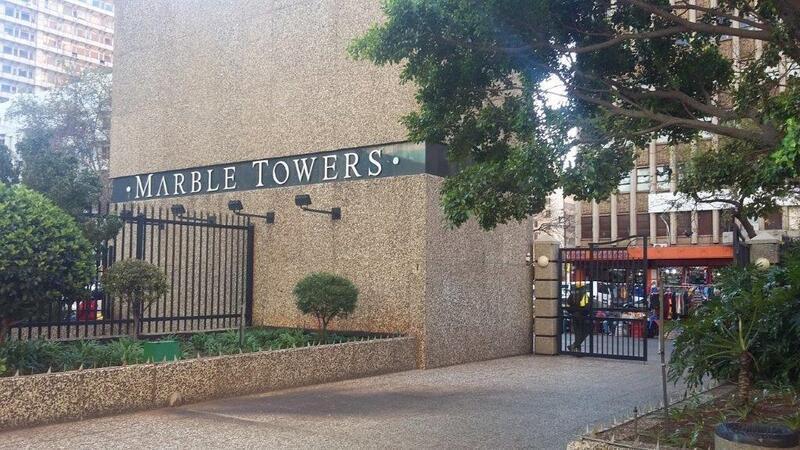
At the heart of the case is Marble Towers, a prominent Johannesburg CBD building that has become a flashpoint in the city’s broader crackdown on alleged by-law violations, illegal trading and unsafe structures. The matter followed days of courtroom battles between Goldenrod Group and the municipality over threatened demolition action.
The court heard that the city first launched enforcement proceedings in April 2022. From then on, municipal officials issued multiple contravention notices and directives ordering the company to remove unlawful structures and submit building plans for approval. According to the judgment, those instructions were repeatedly ignored.
One directive, issued in May 2025, gave the applicant 21 days to submit plans. That, too, was not complied with.
Judge Adams was particularly critical of Goldenrod’s conduct in bringing the matter on an urgent basis while omitting key facts about the long enforcement history.
“This breaches the duty of uberrima fides owed by an applicant in an application, especially one brought on an urgent basis,” the judge said.
The court also found that Goldenrod had failed to prove real urgency, with Adams concluding that whatever urgency existed was “self-created” after years of non-compliance.
In a further blow to the company, the court ordered Goldenrod to immediately halt any further construction or installation of structures at Marble Towers and to prevent occupation of structures already identified as non-compliant. It was also ordered to cordon off unsafe areas within 72 hours, remove structures encroaching on municipal property and submit compliant building plans within 20 days.
The legal clash has unfolded against the backdrop of highly visible city operations in the CBD. On 19 May, Morero, joined by Members of the Mayoral Committee and city officials, launched what was described as a high-impact service delivery intervention at Marble Towers. That operation was halted after the owners secured an urgent court interdict.
It followed an earlier operation on 12 May, when the Johannesburg Metro Police Department carried out by-law enforcement in the CBD, removing illegal traders and demolishing illegally built structures, including shacks in Small Street.
During virtual court proceedings on 22 May, the city’s lawyer, Mphathi Lebakeng, argued that the owners had repeatedly defied city intervention, continuing to erect structures despite notices, warnings and inspections.
Goldenrod, however, had maintained in its founding affidavit — deposed by Marble Towers building manager Grandy Malapane — that the structures were lawful, that the property was commercially zoned and that tenants operating legitimate businesses would suffer serious harm if demolitions went ahead.
But the court was not persuaded.
Judge L R Adams ultimately found that no approved building plans had ever been submitted for the structures, despite years of engagement by the municipality. That failure, the court held, rendered the buildings unlawful.







