
Subtotal R0,00


Free State/20 March 2026, 12:56pm/ GoodWill Mathebula
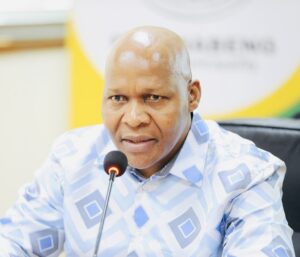
Thanduxolo Khalipha: Image Supplied
By GoodWill Mathebula: A new sense of urgency is sweeping through Matjhabeng Local Municipality, where leaders are shifting from promises to pressure in a determined bid to turn struggling sanitation infrastructure into a story of delivery, dignity and visible progress.
At the centre of that push is Executive Mayor Thanduxolo Khalipha, who led a high-level coordination meeting with key stakeholders and made it plain that while the municipality will fully support contractors appointed under the Ministerial Intervention, failure to perform will no longer be excused.
The meeting brought together the Department of Water and Sanitation, the Department of Cooperative Governance and Traditional Affairs (COGTA), Vaal Central Water, councillors and all contractors appointed to implement the intervention. But beyond the formalities, the gathering carried a sharper political and administrative message: Matjhabeng wants movement on the ground, and it wants it now.
Rather than framing the session as a routine progress review, municipal leaders used it to reinforce pressure on all parties involved in the recovery of sewer networks, pump stations and wastewater treatment works across the municipality.
The mood was one of urgency and accountability as officials assessed current work, confronted delays and reaffirmed a collective commitment to accelerating service delivery in communities that have long endured the consequences of failing infrastructure.
Khalipha set the tone with a firm and direct warning that residents could no longer be expected to wait while projects dragged on.
“The people of Matjhabeng have waited long enough for reliable sanitation services. We are giving our full support to every contractor on site, but let me be clear — non-performance will not be tolerated,” said Khalipha.
He went further, casting the intervention not simply as an engineering programme, but as a social and moral obligation to communities that deserve better.
“This intervention must translate into dignity for our communities, cleaner neighbourhoods, functioning infrastructure and visible progress that our residents can trust. Every stakeholder in this programme must understand the urgency of the task before us,” he said.
To tighten oversight and maintain momentum, the meeting resolved that progress meetings will now take place every Tuesday, backed by regular site visits to monitor not only the pace of delivery but also the quality of work being done. The move signals a tougher hands-on approach from the municipality as it seeks to prevent slippages and ensure that deadlines are matched by real performance.
An extensive progress report presented by Vaal Central Water suggested that, despite persistent challenges, the intervention programme is beginning to gather significant traction.
A total of 28 projects are currently at the detailed design stage, making up the largest portion of the present workload and forming a crucial bridge to future construction.
At the same time, 20 projects have already been completed, while 16 are actively under construction, indicating a growing footprint of work across Matjhabeng.
In Welkom and Thabong, the pace of implementation is continuing to demonstrate delivery capability, with one of the notable milestones being the Thabong Ext 3 sewer network project, which reached practical completion on 21 February 2026.
In Kutlwanong and Hennenman, more than 60% of the allocated refurbishment scope has already been completed, and most of the initial sewer network contracts in those areas are expected to be finalised by August 2026.
Fresh momentum is also being built through the launch of 11 new bulk sewer network projects in Flamingo Park, Naudeville, Bronville and Rheeder Park, where contractors are now finalising site establishment.
Beyond infrastructure improvement, these projects are expected to generate local economic opportunities through the appointment of Community Liaison Officers, local SMMEs and labour, broadening the impact of the intervention beyond engineering works alone.
There has also been immediate relief for residents through targeted repairs in some of the municipality’s hardest-hit areas. A total of 36 point repairs have already been completed across Welkom, Thabong, Hennenman and Kutlwanong, helping to address urgent sewer failures affecting homes, public institutions and businesses.
Among the most notable interventions were repairs near Bongani Hospital and the Central University of Technology, as well as in St Helena, where long-standing sewer challenges had been disrupting commercial activity.
The municipality is also reporting major progress in the rehabilitation and construction of pump stations, a critical part of restoring functionality to the sanitation system.
All 42 pump stations under the Directive have completed the design phase, with 20 already fully constructed, three nearing completion and 19 in pre-construction. This places the municipality in a stronger position to accelerate implementation during the next phases of the intervention.
Perhaps most significant is the progress recorded at the wastewater treatment works. Both the Kutlwanong and Thabong plants have now passed the 98% completion mark, bringing Matjhabeng closer to major gains in public health protection, environmental safety and improved sanitation reliability.
These facilities are expected to play a vital role in reducing sewer spillages, protecting water resources and laying the foundation for future economic growth.
Even so, the municipality acknowledged that electricity supply remains a serious obstacle, particularly in relation to final commissioning processes.
Engagements with relevant stakeholders are continuing in an effort to resolve those constraints and prevent power issues from undermining hard-won gains on the infrastructure front.
Representatives from COGTA, including Dr Ntili, joined Khalipha in reaffirming government’s commitment to ensuring that the objectives of the Ministerial Intervention are achieved efficiently and transparently.
For municipal leaders, the intervention has now entered a phase where public patience, political pressure and project implementation are all colliding, leaving little room for complacency.
Khalipha underscored that the broader aim is not merely to complete technical projects, but to rebuild public confidence in local government’s ability to deliver basic services.
“This is not merely a construction programme; it is a commitment to our people. We are determined to see every project through with transparency, urgency and accountability, because our communities deserve nothing less,” he said.







