
Subtotal R0,00

News/20 March 2026, 06:10am/Mpho Mokoena
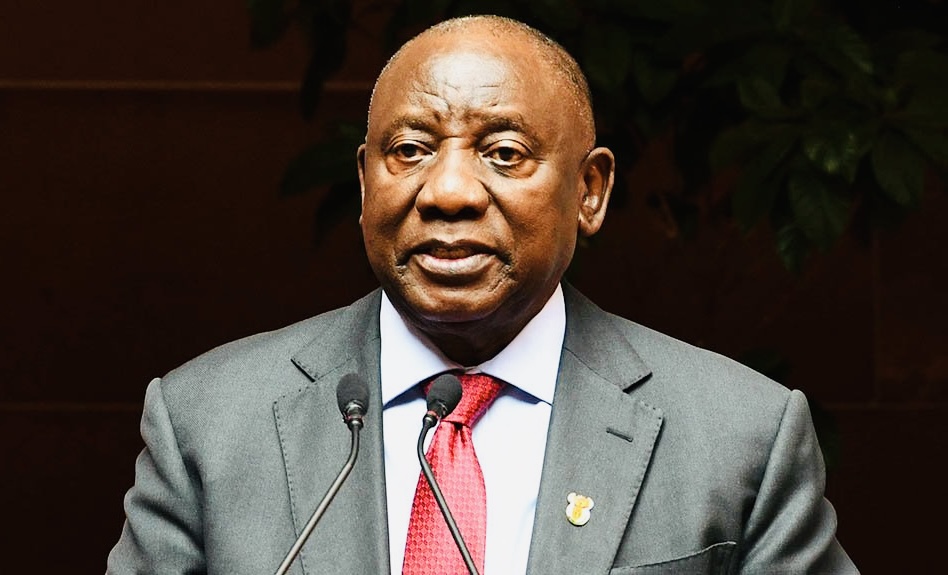
Cyril Ramaphosa:Image Supplied
By Mpho Mokoena: In a striking shift of emphasis, President Cyril Ramaphosa has framed the row over the disbandment of the Political Killings Task Team (PKTT) not simply as a political fallout, but as a deeper constitutional fault line over who truly controls policing in South Africa.
In written submissions to Parliament’s Ad Hoc Committee, Ramaphosa makes it clear he was unhappy, uninformed and unconvinced by the decision to shut down the unit — but equally adamant that he would not step into territory he says belongs to police leadership.
“I did not approve of this decision,” Ramaphosa says in an affidavit.
Rather than presenting himself as the central actor in the controversy, the President’s account paints a picture of a head of state kept at arm’s length from a major policing decision, then forced to respond after the fact.
According to Ramaphosa, he only learned around 1 February 2025 from National Police Commissioner General Fannie Masemola that Police Minister Senzo Mchunu had instructed the disbandment of the Political Killings Task Team. By then, the decision had already been set in motion.
That timing now lies at the heart of the political storm.
Ramaphosa says he was dissatisfied at not being consulted and stressed that dissolving the unit was not a matter for the minister alone. He adds that Masemola himself disagreed with the move. The President then met Mchunu on 13 February 2025 to confront the issue directly.
Yet, despite his displeasure, Ramaphosa insists he did not issue any order reversing the disbandment. His reasoning is central to the angle emerging from his submission: the Presidency may set broad policy direction, but it does not command police operations.
He says he was not informed in advance, only becoming aware of the disbandment through his engagement with the national commissioner. He also confirms he did not intervene directly, arguing that operational decisions within the South African Police Service fall outside presidential authority.
In that version of events, Ramaphosa is drawing a hard constitutional line — one that may now become the defining issue in the saga. He points to the distinction between policy and operations: the minister determines national policing policy, while the national commissioner controls and manages the police service.
That distinction may prove crucial in deciding whether the disbandment was merely controversial — or unlawful.
The President says he told Mchunu he was unhappy, especially about not being consulted, and expected to be kept informed of future decisions affecting the unit. But again, he says the matter remained within the commissioner’s remit and he did not instruct anyone to reverse course.
Ramaphosa also dismisses any suggestion that he had prior warning signs about dysfunction inside the task team. He says police leadership had given positive feedback on arrests and prosecutions linked to the unit’s work.
“According to my office’s records, no such report was provided,” he states.
That assertion is significant. It suggests the President saw no formal evidence of trouble in the Political Killings Task Team before learning it had effectively been shut down. He says he was not informed of operational details, budget concerns or internal complaints, and that on the information available to him at the time, there were no indications the unit was failing.
He further rejects allegations that the disbandment was part of an effort to sabotage sensitive investigations. Ramaphosa says he was unaware of any attempt to shut down probes, halt investigations or close case dockets, adding that such matters would in any case fall outside his direct involvement.
Instead, he points to two parallel processes now tasked with untangling the truth: Parliament’s ad hoc committee and the judicial commission of inquiry he established.
On the legal question, Ramaphosa stops short of making a final determination himself. He says whether the disbandment was lawful depends on the respective powers of the minister and the national commissioner — an issue he expects the commission to resolve.
The President also sheds light on when he became aware of investigations involving senior SAPS officials, including figures linked to crime intelligence. He says that only after the arrest of Major-General Khemal Khumalo did he receive briefings, in July and September 2025, from the National Intelligence Co-ordinating Committee through his national security adviser.
In other words, Ramaphosa’s submission projects a presidency insisting on institutional distance: informed late, involved carefully, and unwilling to publicly spar while formal inquiries continue.
“I have decided not to give a running commentary on what is said and alleged in the commission,” he states.
But if Ramaphosa’s version is one of constitutional restraint, KwaZulu-Natal Police Commissioner Lieutenant General Nhlanhla Mkhwanazi has responded in a far more political register.
After the President’s submission revealed that Mchunu did not consult him before moving against the task team — and that Ramaphosa was only informed in February, despite a directive that the disbandment should take effect on 31 December 2024 — Mkhwanazi delivered a blunt assessment of the minister’s future.
“I am an official … for me to start talking about a decision that the President must take might not be fair. However, having seen what we have seen and having read and listened to what has been presented to these two structures [Madlanga Commission of Inquiry and Ad Hoc Committee] – it’s clear that Minister Mchunu is no longer fit to run this department of police. I don’t know about other departments.”







