
Subtotal R0,00


News/ 04 March 2026, 07:34am/Sipho Gumede
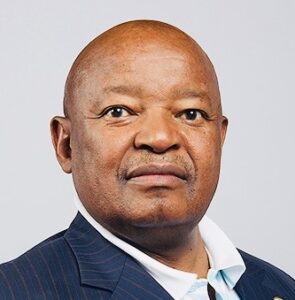
By Sipho Gumede: Mosiuoa Gerard Patrick “Terror” Lekota — anti-apartheid activist, former African National Congress (ANC) national chairperson, ex-minister of defence and a founder of the Congress of the People (COPE) — has died. He was 76.
Lekota passed away in the early hours of Wednesday in a Johannesburg hospital after a prolonged illness, closing the final chapter on a political life that stretched from student resistance and prison cells to Cabinet power and, ultimately, the punishing margins of opposition politics.
Born in Kroonstad in the Free State, Lekota left home to pursue his schooling and later studied at the University of the North (now the University of Limpopo). In the 1970s he was already making a name for himself — first on the football field, where his hard-running style earned him the nickname “Terror”, and then in student politics, where the name would stick for life.
His activism brought consequences. He was expelled from university for his involvement in student politics and the Black Consciousness Movement. But it also launched him into the centre of a national struggle that would define him.
In 1974, as an organiser for the South African Students’ Organisation (SASO), Lekota was arrested and sent to Robben Island on charges linked to “conspiring to commit acts endangering the maintenance of law and order”, after organising, among other activities, rallies celebrating Mozambique’s independence.
Robben Island changed him. It was there that he met Nelson Mandela and other political prisoners, and it was there that he moved away from a strict Black Consciousness posture and embraced non-racialism — a shift that would later align him more closely with the ANC’s broad-church tradition.
After his release in the early 1980s, Lekota returned to politics in a country surging toward mass resistance. In 1983 he was elected publicity secretary of the United Democratic Front (UDF). Two years later he was detained and later sentenced in the Delmas Treason Trial, one of the most important treason cases of apartheid’s final years. He was released in 1989 after the Appeal Court reviewed the sentence.
With the ANC unbanned and negotiations under way, Lekota entered formal party leadership. By 1991 he had been elected to the ANC’s National Executive Committee (NEC) and National Working Committee (NWC), later serving as the ANC’s chief of intelligence and playing a role in its election machinery ahead of 1994.
After South Africa’s first democratic elections, Lekota moved into government, serving as premier of the Free State from 1994 to 1996. He later became chairperson of the National Council of Provinces (1997–1999) and then minister of defence. In December 1997 he was elected ANC national chairperson — a powerful senior post he held until 2007.
But his later political identity was defined by rupture. A staunch ally of former president Thabo Mbeki, Lekota was among those who regarded the ANC’s 2007 Polokwane conference — which elevated Jacob Zuma — as a decisive break in direction. Following Mbeki’s resignation in September 2008, Lekota was one of ten ministers who submitted their resignations on 23 September.
Soon after, he became one of the principal figures who founded COPE in 2008, positioning it as a breakaway alternative rooted in constitutionalism and internal ANC dissent. For a time, the new party drew national attention, powered by prominent names and the shock of a split from the governing party.
But over the years, COPE struggled with internal instability and declining electoral support. Lekota, a father of seven, remained on the opposition benches, campaigning to rebuild the party’s relevance.
His political career effectively ended after the 2024 general elections when COPE failed to return to Parliament — a final campaign that became a bitter swansong, far removed from the dramatic decades that came before: organiser, prisoner, premier, minister, ANC chairperson, and founder of a party born from one of democracy’s biggest political fractures.
He is survived by his family. Funeral and memorial details have not yet been announced.







