
Subtotal R0,00

Politics/08 February 2026, 08:02am/ Mandla Nkosi
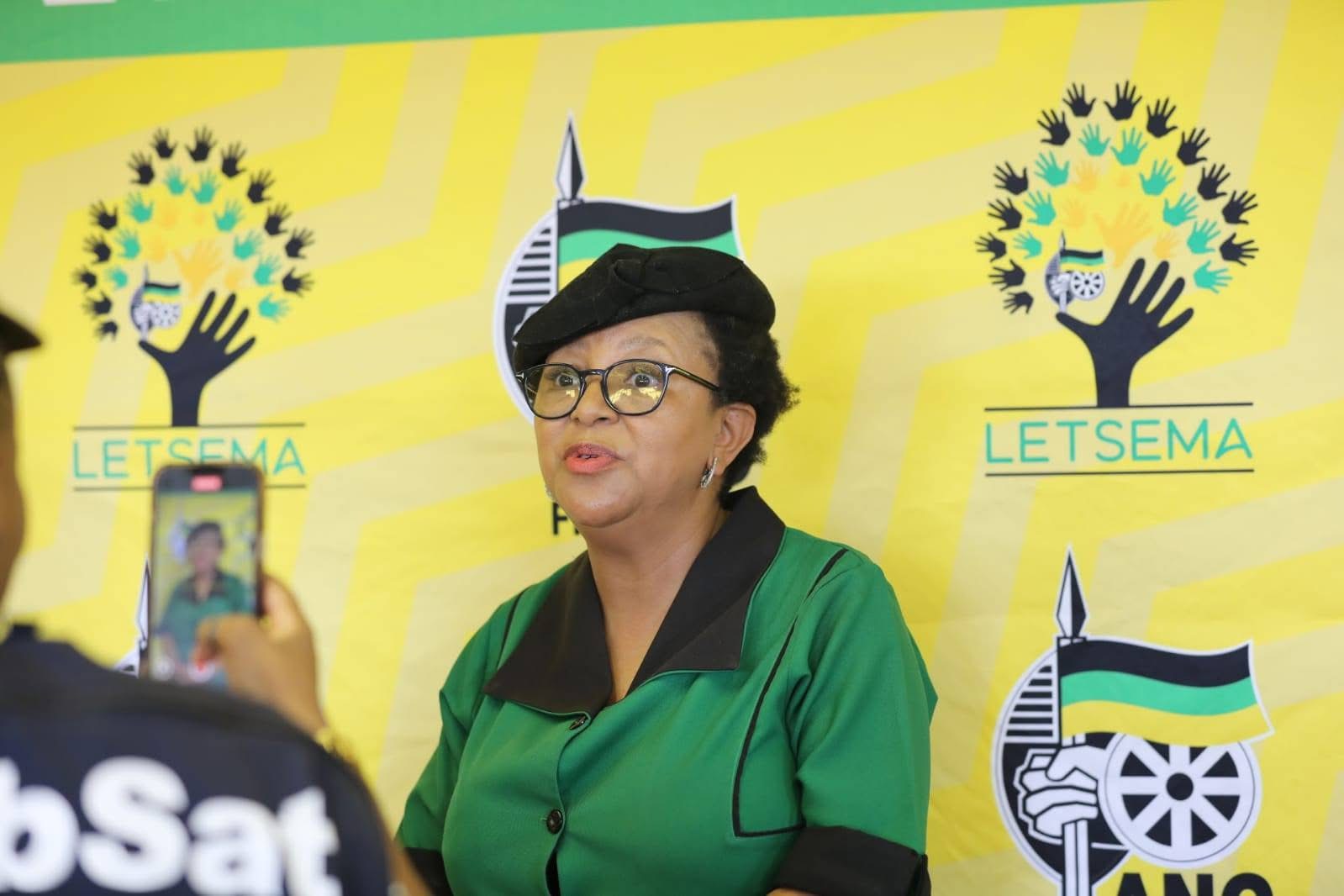
Free State Premier MaQueen Letsoha-Mathae: Image Supplied
By Mandla Nkosi: A storm is building inside the ANC in the Free State, with four of the party’s five regions now openly calling for the removal of Premier MaQueen Letsoha-Mathae, accusing her of “capturing” the province, collapsing service delivery, and using state resources to deepen internal divisions—claims that, if they intensify, could trigger one of the ANC’s most drastic interventions: the disbanding or “reconfiguration” of provincial structures.
The call comes from ANC members and structures in Fezile Dabi, Thabo Mofutsanyane, Xhariep and Lejweleputswa. The only region holding the line in defence of the premier is Mangaung, the political hub of the province—also the region where her husband, Lawrence Mathae, is the ANC regional chairperson and the Speaker of the Mangaung Metro Municipality.
Within the party, that detail is being whispered like an open secret and shouted like an accusation, depending on who is speaking.
“This is no longer leadership, it’s ownership,” said one ANC member aligned to a regional structure outside Mangaung. “People must understand: communities are suffering, but in meetings we are told everything is fine. We are being asked to lie with a straight face.”
“Service delivery is collapsing — and the ANC is paying the price”
Across the four regions, ANC members describe a province where basic expectations—roads, water stability, local responsiveness, and functional municipal administration—have become a daily complaint, and where communities are increasingly hostile to ANC leaders on the ground.
“When we go to the community, we are confronted. They say, ‘You only come when you want votes.’ We can’t defend this. Service delivery has deteriorated and the premier is acting like she is serving herself, not the community.”
In Thabo Mofutsanyane, frustration has hardened into something more dangerous for a governing party: cynicism.
“The trust is gone,” said an ANC member from the region. “People don’t believe us anymore because they see leaders fighting for positions while clinics, roads and water are neglected. The premier is divisive. The province is divided, and we are the ones who get chased out of meetings.”
In Xhariep, members say the premier’s leadership style is experienced as punitive and politically selective, with resources and attention allegedly distributed along factional lines.
“It feels like the province is being run as a weapon,” an ANC member said. “If you are not in line, you are isolated. If you question, you are treated like an enemy. That is not political leadership—that is control.”
In Lejweleputswa, members argue that internal conflict is no longer a side story but the story—because it is bleeding directly into governance.
“We are watching state resources being used to divide the province,” an ANC member alleged. “It’s like the government and the party are being used to settle internal scores. Communities don’t care about our factions—they just want services.”
Mangaung’s support for Letsoha-Mathae has become a lightning rod.
To members in other regions, it is not simply that Mangaung differs—it is why. The premier’s husband occupies two powerful positions in the region: ANC regional chairperson and Speaker of Mangaung Metro. Inside ANC circles, critics describe the arrangement as an “incestuous concentration of power” that makes Mangaung an automatic shield for the premier.
A member from one of the four opposing regions put it like this:
“Mangaung is not defending her because they see good governance. They are defending their centre of power. The rest of us are dealing with the consequences.”
But in Mangaung, loyalists insist the premier is being targeted for political reasons.
“People are manufacturing a crisis because they want positions,” said an ANC member in Mangaung. “The premier is being punished for being firm. When you stop certain people from eating, they call you divisive.”
The internal revolt has gained momentum after claims surfaced that Letsoha-Mathae allegedly attempted to sabotage the ANC’s January 8 celebration held at Trompsburg Stadium on Saturday 17 January 2026.
According to two PEC-aligned sources speaking on condition of anonymity for fear of reprisals, the premier allegedly orchestrated a funding and logistics freeze designed to embarrass the Free State in front of national leadership—particularly ANC Secretary-General Fikile Mbalula—and to create grounds for an intervention against the provincial leadership.
One source alleged the strategy was to engineer a collapse and then point the finger at provincial leaders.
“Mathae’s instruction was simple: don’t finance it so that it fails,” the source claimed. “The plan was that when it becomes a mess, Mbalula must come and blame Dukwana and Motsoeneng.”
A second source claimed the intention was to build a public narrative of chaos.
“They wanted it to look like the province can’t organise itself,” the source said. “If it looks chaotic, it becomes easy to say: ‘Disband them.’”
The claims, if proven, would represent an extraordinary act of internal political warfare: using a historic ANC calendar moment—intended to project unity and mobilisation—as a battlefield for factional advantage.
The bigger play: disband the province, install a convenor?
Beyond the alleged event disruption, sources link the Trompsburg drama to a larger internal project: pushing the ANC national leadership into dissolving or placing the Free State structure under administration—opening the door for the appointment of a convenor or task team leadership.
“Comrade MaQueen doesn’t have total control in the province,” a PEC-aligned source claimed. “So she is trying by all means to give Mbalula reasons to disband the Free State, so that she can be appointed as convenor.”
Within the ANC, “disbanding” or “reconfiguration” has historically been used as a crisis tool when provinces become ungovernable internally—often replacing elected structures with interim leadership. Critics say it can stabilise conflict; sceptics say it can also be abused to redraw power lines.
Perhaps the most politically explosive allegation is that Letsoha-Mathae allegedly interfered directly in fundraising by discouraging donors from supporting the January 8 programme—despite the party’s longstanding practice of blended fundraising and internal budgeting for large events.
A senior party insider alleged donors were warned off.
“January 8 celebration preparations was a mess,” the insider claimed. “MaQueen instructed ANC donors that they must not fund the programme because she is the one who is giving them business.”
The insider claimed the message was framed as leverage tied to access and opportunity.
“The message was: you know who gives you business,” the source alleged. “If you fund this programme, you’re funding people she wants to weaken.”
If that allegation were to gain traction, it would raise severe questions about the line between party activity, government influence, and patronage—an explosive mix in a province already struggling to convince voters it can govern cleanly and effectively.
For the four regions demanding removal, the key argument is not only internal governance but external survival: that the ANC is bleeding credibility, branch discipline is collapsing, and local leaders are being humiliated publicly.
A Thabo Mofutsanyane member described a party in retreat:
“The community doesn’t separate the premier from the ANC. They say, ‘You are all the same.’ So when she acts like the province belongs to her, we pay the price. We are losing people on the ground.”
A Lejweleputswa member went further, warning of electoral consequences:
“You can’t campaign on unity while you run government through division. People see it. They feel it. The premier is dividing the province and then expecting us to defend it at the taxi rank, at funerals, at community halls. We can’t.”
The internal pressure now sits uncomfortably with ANC provincial leadership dynamics, and the stakes are clear: a deepening regional revolt could force the party to either discipline dissent, negotiate a compromise, or escalate to national intervention.
For now, the Free State ANC appears headed toward a bruising confrontation: four regions demanding the premier’s exit, Mangaung standing firm behind her, and allegations of January 8 sabotage pouring petrol on a fire that was already burning.
One Xhariep member summed up the mood in a sentence that sounds less like a complaint and more like a warning:
“If the ANC doesn’t act, the people will act for us—at the ballot box.”







