
Subtotal R0,00

Politics/ 06 October 2025, 12:24pm /Sipho Gumede
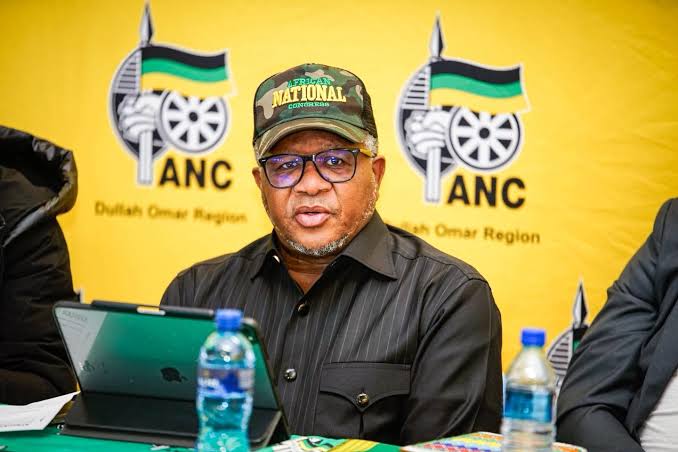
ANC Secretary General Fikile Mbalula: Image Supplied
By Sipho Gumede: The admission by the ANC that criminal cartels have infiltrated its ranks, articulated by secretary-general Fikile Mbalula, has intensified scrutiny of the party’s trajectory ahead of the 2026 municipal elections.
The remark came at a Thursday media briefing in Johannesburg, during which Mbalula declared that “our organisation is infiltrated by criminal elements and it extends to cartels.” The comment followed questions about the actions of Brown Mogotsi, a North-West businessman described as an alleged associate of Police Minister Senzo Mchunu, who stands accused of siphoning funds from Vusimuzi “Cat” Matlala to finance ANC activities.
In testimony before the Madlanga Judicial Commission of Inquiry, SAPS Crime Intelligence chief Lieutenant General Dumisani Khumalo testified that Mogotsi used Matlala’s funds to cover expenses for ANC members during this year’s January 8 statement celebrations in the Western Cape.
Allegations also claim that Mogotsi leaked SAPS classified documents to Matlala, while receiving payments tied to ANC events linked to Mchunu’s supporters. A letter attributed to Mchunu, ordering the disbandment of the Political Killings Task Team on December 31, 2024, was reportedly found in Mogotsi’s possession.
Roland Henwood, a political scientist at the University of Pretoria, framed the disclosure as not entirely novel, given the ANC’s longstanding battles with internal corruption and external pressures.
“Yes, the statement may impact the performance of the party during 2026 local government elections but what he said is not news to us,” he commented. He criticized Mbalula’s framing, suggesting it shifts blame outward rather than acknowledging internal shortcomings.
“What he is saying is that something from the outside infiltrated us and what he is not saying is that we did it to ourselves,” Henwood asserted, arguing that internal dynamics—leaders and members pursuing self-interest—are at the core of the party’s challenges.
He questioned the feasibility of self-correction within the ANC, calling such rhetoric hollow without concrete reforms, and urged a demonstration of tangible results, pointing to Gauteng’s governance as evidence of ongoing fragility. “Show us the results,” he said, challenging the party to restore public trust in light of Mbalula’s admission.
The Madlanga Commission continues to probe allegations of criminality, political interference, and corruption within South Africa’s criminal justice system. Mbalula sought to distance the ANC from Mogotsi, arguing that if he is implicated in siphoning money in the party’s name, he reflects poorly on the ANC. He noted that Mogotsi’s membership had expired and that he is no longer an ANC member.
“There are many such characters who have infiltrated the ANC. You can ask yourself, the person who is so low in the ANC: how does he have control and be accused of bigger things than what we are reading? That tells you a story that the ANC is infiltrated as a party,” he said.
Independent political analyst Zakes Moabelo characterized Mbalula’s remarks as accurate but belated.
“They woke up too late. Remember there were certain matters that (the party previously) did not allow, including using money to lobby, (but now this has) become a trend,” he observed, adding that many ANC cadres place personal interests ahead of the party’s well-being. “They love themselves more than the organisation,” he stated.
Moabelo noted that self-criticism is not new to the ANC and has resurfaced at multiple party conferences. He cited the Polokwane gathering in 2017, where Thabo Mbeki and Kgalema Motlanthe raised concerns about the party’s direction and integrity, only for cadres to celebrate a win without principled accountability.
“Mbeki asked ‘Where is the ANC? Where is the soul of the ANC?’ At the same conference Motlanthe asked whether the party was being bought by money. But the cadres there failed to answer that question because they were too excited at that moment that they were winning, forgetting that winning without principle will always be short-lived,” Moabelo recalled.
Asked whether Mbalula’s statement would restore public trust, Moabelo warned that it is unlikely to do so. “You cannot save a drowning person otherwise you will drown with them. At the moment they (the ANC) don’t have strong characters who can resuscitate the party,” he cautioned.
Seepe’s critique of the commissions’ non-binding recommendations—echoing concerns about past inquiries, including the Zondo Commission—was also cited, underscoring a pattern of dissonance between inquiry findings and policy action. Seepe pointed to the promotion of figures such as Gwede Mantashe and Zizi Kodwa despite damning recommendations, illustrating the ANC’s prioritisation of continuity over accountability.







