Subtotal R0,00

Free State/ 18 June 2025, 14:01pm/Mpho Mokoena
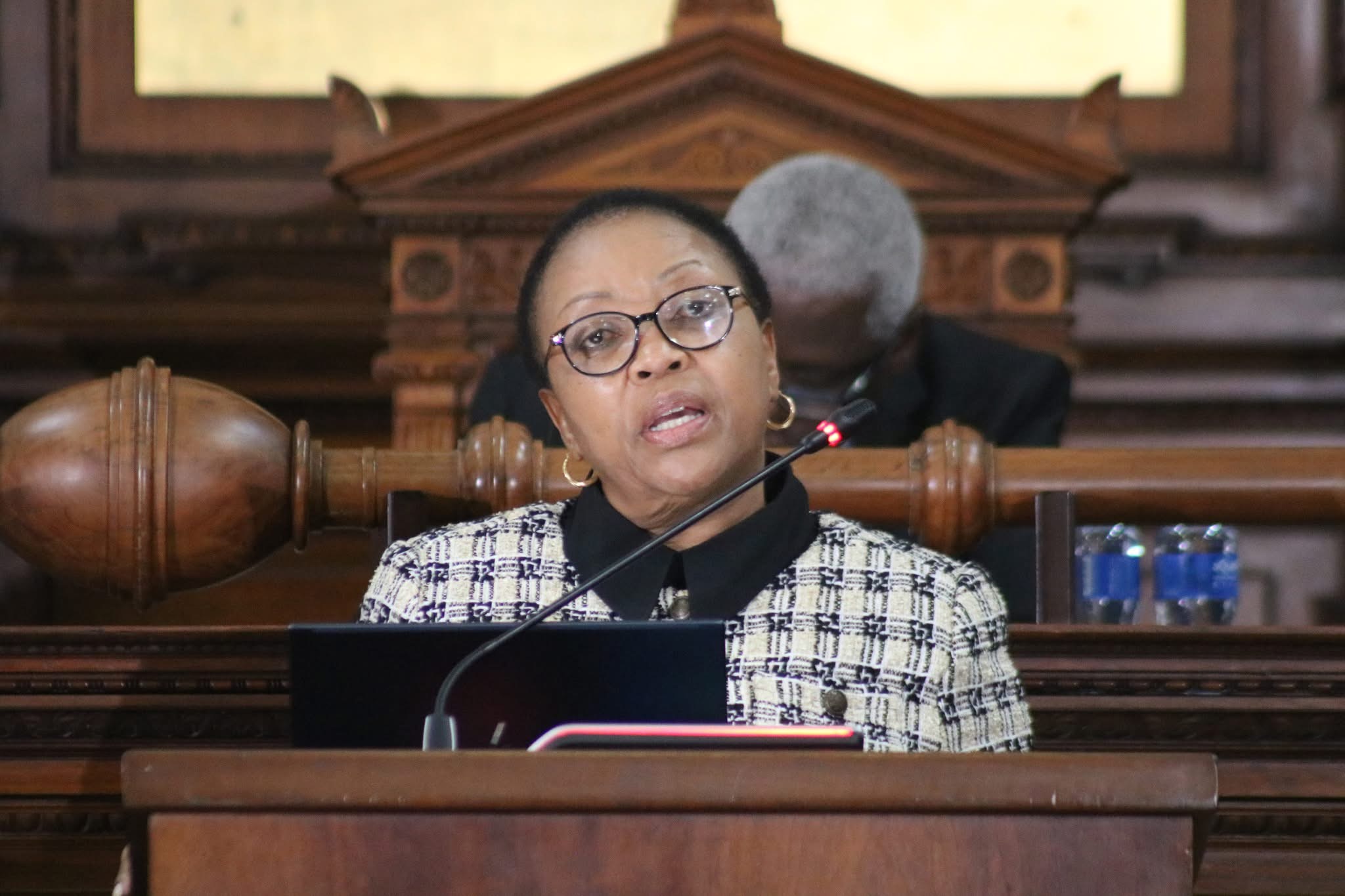
Free State MEC for Education, Dr. Mamiki Maboya: Image Supplied
By Mpho Mokoena: The Free State government’s proposed budget for the department of community safety, roads and transport for the 2025/26 financial year has sparked a fierce debate, with the MEC for Education, Dr. Mamiki Maboya, publicly defending its transformative agenda. Speaking passionately in the legislature on June 17, Maboya asserted that the R3.7 billion allocation to the Department of Community Safety, Roads and Transport is “not simply a fiscal line item—it is a statement of purpose and justice in action.”
Maboya’s strong stance came amidst mounting opposition from the Democratic Alliance (DA), which has challenged the department’s policy of reserving 30% of government infrastructure projects for local black-owned subcontractors. The DA’s Free State leader and spokesperson on community safety, Dr. Roy Jankielsohn, recently launched legal action against this subcontracting quota, seeking to have it reversed.
In response, Maboya accused the DA of attempting to dismantle a progressive policy aimed at redressing historic inequalities. “The Democratic Alliance of Honourable Jankielsohn is in court today seeking to reverse this policy because to them, anything that affirms the humanity of black people is an affront,” she declared. She emphasized that the budget’s focus on local empowerment is “not charity but justice; it is economic transformation in motion.”
The MEC highlighted that the new roads and safety initiatives are expected to create over 3,500 jobs, with 60% targeting women and nearly 2,000 designated for young people. “These are not just roads for cars; they are roads for commerce, for economic inclusion and for human dignity,” Maboya explained.
The strategic importance of the roads stems from the Free State’s central location, serving as a vital transport corridor connecting six provinces and Lesotho. Both Maboya and MEC Jabu Mbalula, who tabled the budget, underscored how this positioning demands a robust and well-maintained infrastructure network. “To have a robust and well-maintained road network in the province is not a luxurious exercise; it is a national duty,” Maboya asserted. Mbalula further emphasized the national significance, stating, “This is not a regular Budget Vote. It is the ANC at work, the ANC in action and a living pledge to construct a South Africa which is just, non-racial and free from underdevelopment’s shackles.”
The R3.7 billion budget is allocated across several critical areas, including:
R1.4 billion for special maintenance projects along key corridors such as Senekal–Lindley, QwaQwa roads, and Kroonstad–Henneman–Virginia.
R206 million for preventative and routine maintenance.
R77.9 million dedicated to township road revitalization.
R201 million for the Welisizwe Rural Bridge Programme, in partnership with the SANDF, to improve rural access.
Additionally, 670 kilometers of deteriorating roads have been transferred to SANRAL, a move praised as “strategic governance,” which optimizes resources and national capacity.
One of the standout initiatives is the Pothole Eradication Programme (PEP), developed in partnership with the Central University of Technology (CUT). The project, which received the 2024 SANRAL SAICE National Award, has employed over 600 young people through “Operation Vala Zonke,” providing them with technical skills and meaningful work.
Maboya lauded the project, saying: “This is the kind of innovation that has a lasting impact, science in the service of society.” She also highlighted the GIS Monitoring Tool developed with CUT, which enables real-time oversight of repairs, enhancing transparency and accountability.
Rural transport remains a key priority, with R356 million allocated to the Public Transport Operations Grant. This funding supports operators such as Itumele Bus Lines and Maluti Bus Service, which serve over 24,000 passengers daily. The department has also strengthened the Operating Licensing Board’s efforts, processing 1,377 applications last year and launching Operation Zivese to improve regulation and professionalism in the sector.
The Township Revitalisation Programme (TRP) is positioned as a catalyst for local economic growth, with eight projects already underway in towns like Bloemfontein, Botshabelo, and Thaba Nchu. Maboya emphasized that “by integrating this with the Expanded Public Works Programme (EPWP), the department is promoting skills transfer and sustainable income for township youth and small businesses.”
On safety and security, Maboya pointed to a 34.9% increase in crimes detected through police action in the third quarter of 2024/25 as evidence of “strategic, intelligence-led policing.” However, DA’s Dr. Jankielsohn criticized the current state of policing, revealing that detectives are handling an average of 395 dockets each—almost four times the ideal caseload. “These workloads are impossible for detectives to deal with and are one of the reasons for poor detection and conviction rates,” he stated.
The department’s efforts extend to combating Gender-Based Violence and Femicide (GBVF), with improvements made to Victim-Friendly Rooms at police stations and ongoing outreach campaigns. Maboya also highlighted recent successes against organised crime, including a R30 million counterfeit alcohol bust in Harrismith and the seizure of R12 million in illicit cigarettes in Rouxville.
Central to the department’s strategy is the promotion of black economic empowerment through procurement policies. Maboya reaffirmed that “we must ensure that black businesses, township entrepreneurs, women, youth, and persons with disabilities must not sit at the edge of development—they too must have a place at the dinner table,” emphasizing the importance of inclusive growth.
The department has procured 88 new vehicles and implemented a vehicle tracking system to improve accountability. Future plans include investing in green fleet technologies and enhanced training for transport officers.
As Maboya wrapped up her address, she called on the legislature to support the budget, framing it as a moral and practical imperative. “This budget is not merely about maintaining roads, it is about restoring direction. It is not only about policing streets, it is about protecting lives,” she declared.
Quoting legendary singer Miriam Makeba, Maboya concluded with an inspiring note: “Girls and boys, we are the ones we’ve been waiting for.” Her message was clear: the roads being built in the Free State symbolize more than infrastructure—they are pathways to dignity, opportunity, and justice. Any opposition, she argued, is a step backward in the ongoing fight for a fair and inclusive society.