Subtotal R0,00

International/ 15 November 2025, 08:32am/Staff Writer
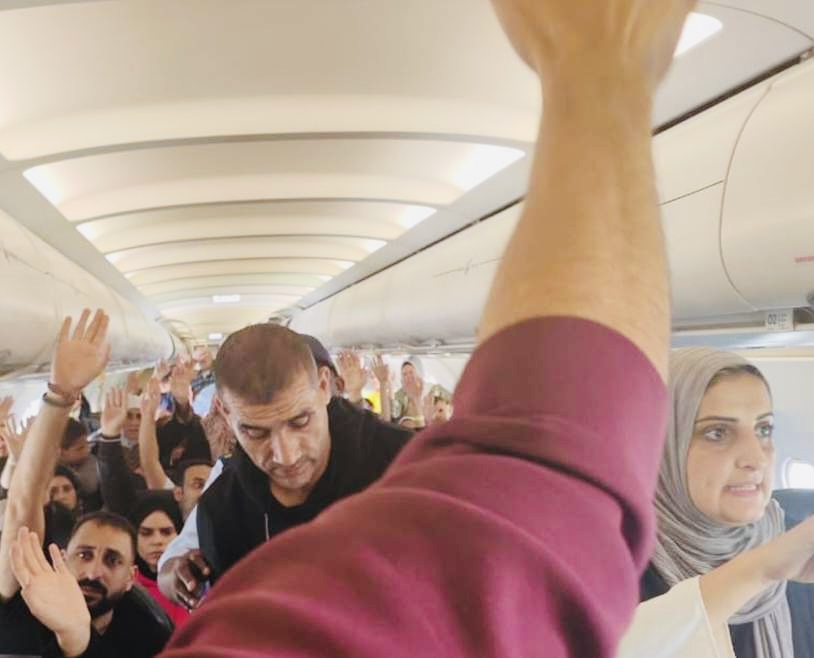
More than 150 Palestinian refugees allowed entry in South Africa: Image Supplied
By Staff Writer: More than 150 Palestinian passengers were allowed to leave a chartered flight after hours of delay on the tarmac at OR Tambo International Airport.
The decision marked a rapid shift in policy from stern immigration protocol to a humanitarian, if cautious, response that drew praise from aid groups while prompting questions about the handling of international arrivals.
The saga began when a chartered plane carrying 153 Palestinians landed shortly after 8 a.m. local time.
The passengers, who had travelled from Kenya, were initially kept on board by South Africa’s border controls after Immigration authorities said they could not verify essential entry details.
The Border Management Authority (BMA) reported that the group “did not have the customary departure stamps in their passports” and did not provide information on how long they planned to stay or where they would be accommodated.
“Following their failure to pass the immigration test and given that none of the travellers expressed an intention to apply for asylum, they were initially denied entry,” the BMA stated, outlining the procedural basis for the early holding pattern.
Yet the situation rapidly evolved when a local humanitarian organization stepped in to bridge the gap between security requirements and humanitarian responsibility.
Gift of the Givers, a Johannesburg-based NGO known for disaster relief and refugee work, committed to housing the visitors during their stay if needed.
On Thursday night, Home Affairs Ministry officials authorised the passengers to disembark, allowing a shift from detention to accommodation-based processing.
“Given that Palestinians are eligible for 90-day visa-exempt travel to South Africa, they have been processed as per normal and will be required to adhere to all conditions of entry,” the Border Management Authority said in a late-night update, framing the decision as a standard but flexible application of visa rules under exceptional circumstances.
By the end of the day, 130 of the Palestinians had entered South Africa, while 23 transferred onward to other destinations, according to the BMA.
The Government’s decision to permit disembarkation was hailed by humanitarian groups, who argued that the prolonged holding pattern would have amplified the trauma of people already fleeing conflict.
Insights from aid workers and observers have added texture to the incident. Imtiaz Sooliman, founder of Gift of the Givers, told the SABC that he did not know who chartered the aircraft and that a separate group of Palestinians had previously arrived on a different plane. He described distress expressed by families and suggested that some individuals had endured “two years of genocide.”
Sooliman also offered a broader interpretation of the episode, asserting that passport stamps—or the lack thereof—had become a deliberate tactic in a broader pattern.
“Israel deliberately did not stamp the passports of these poor people to exacerbate their suffering in a foreign country,” he wrote in a social media post reflecting his interpretation of the incident.
His comments align with a wider discourse surrounding accountability and the treatment of displaced Gazans in international travel.
Nigel Branken, a South African social worker who assisted the passengers, relayed accounts from Gaza-bound travellers who alleged they were told by Israeli authorities to abandon all belongings before boarding an unmarked plane at an Israeli air base.
Branken described the episode as bearing “very clearly all the marks of Israel involved in this operation to take people… to displace them.”
The broader political backdrop adds another layer to the narrative. South Africa has positioned itself as an outspoken advocate for Gaza in international forums, including urging investigations into alleged abuses and supporting prosecutions at international bodies.
The country’s stance has attracted both domestic sympathy for displaced Palestinians and international scrutiny of its border and immigration policies.
Questions remain about the pilots, the charter arrangements, and the long-term status of the arriving group.
The BMA indicated that the travellers would be subject to normal entry conditions and that the visa-exemption arrangement affords flexibility, especially in humanitarian contexts.
The precise status of those who arrived—whether they plan to remain for a short period, seek asylum, or pursue other opportunities—was not disclosed in official statements.
The incident has lit a spark of debate about how to balance national security with humanitarian obligations in an era of mass displacement.