Subtotal R0,00

Politics/ 19 February 2025, 09:48am/ Lijeng Moruthane
Calls for Transparency: MVC Challenges Political Party Funding Laws: Image Supplied
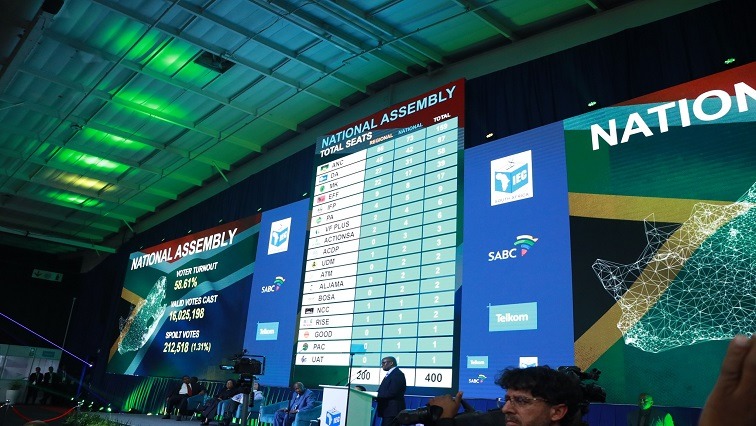
By Lijeng Moruthane: The Political Party Funding Act is facing renewed scrutiny, with concerns that loopholes in its current framework allow for undisclosed donations and potential financial manipulation.
The non-governmental organisation My Vote Counts (MVC) has launched a legal challenge seeking to close these gaps by requiring both political parties and independent candidates to disclose every donation they receive—regardless of the amount.
At present, the law mandates disclosure only for donations above R100,000, while the maximum a single donor can contribute annually is R15 million. However, MVC’s Money in Politics Lead, Joel Bregman, argues that these limits are easily bypassed.
“For example, if I am a wealthy individual, I can legally set up 100 different companies and use each one to donate R15 million a year. That completely undermines the spirit of the Act,” Bregman said.
Additionally, he pointed out that donors can split their contributions into amounts just below R100,000, allowing them to remain anonymous.
“I can donate R99,000 to 100 different entities, and no one will ever know my identity because each donation falls below the disclosure threshold,” he added.
While MVC insists that stricter disclosure is necessary for transparency and accountability, its legal challenge has been met with strong opposition from major political players, including the Democratic Alliance (DA), ActionSA, Parliament, and the Ministers of Home Affairs and Justice.
These parties argue that the focus should not be on changing the law but rather on ensuring compliance with existing regulations.
The DA, which was among the parties that received large donations in the IEC’s disclosure report for the 2024/25 financial year, has proposed the creation of an independent entity to monitor political party funding compliance.
DA representative on the IEC’s National Party Liaison Committee, Werner Horn, suggested that a specialised unit within the Independent Electoral Commission (IEC) be established to investigate violations.
“We are of the view that a sub-entity of the IEC, within the framework of electoral entities, could be tasked with these investigations. If you look at the possibility of entrusting one of the commissioners to head a unit that deals with complaints, similar to how the NPA is set up, that would be ideal,” Horn stated.
According to the DA, such a body would help identify and penalise parties that fail to disclose donations as required by law.
ActionSA has taken a different approach, arguing that the IEC should be empowered with direct access to political parties’ bank accounts to enhance accountability.
ActionSA Chairperson, Michael Beaumont, believes that the current system allows parties to hide funding sources too easily.
“That is why we have proposed amendments that would give the IEC real authority. Access to political party bank accounts would allow for proper accountability, which is fundamentally missing right now,” he explained.
ActionSA has also warned that MVC’s proposed changes could harm multi-party democracy by discouraging donations, which are essential for smaller parties to compete.