Subtotal R0,00

Economy/ 31 January 2025, 11:30am/ Lijeng Moruthane
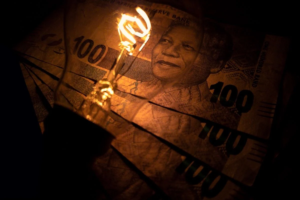
Eskom’s financial challenges continue as the utility faces a significant gap between its requested and approved tariff increases, amid ongoing issues with electricity theft and internal governance: Image Supplied
By Lijeng Moruthane: Eskom’s latest tariff increases were significantly lower than what the utility had requested, leaving a financial gap of nearly R250 billion, according to experts.
On 31 January 2025, the National Energy Regulator of South Africa (NERSA) approved a 12.7% increase in Eskom’s tariffs for 2025, effective from 1 April 2025. This increase is well above the current inflation rate, which stands at 3%, and is expected to average 4.5% for 2024. Additionally, NERSA granted a 5.36% increase for 2026 and a 6.19% increase for 2027.
However, Eskom had sought a much higher tariff hike, requesting a 66% increase over the period. For 2025 alone, NERSA reduced Eskom’s application by a significant 65%.
Roy Havemann, an economist from the Bureau for Economic Research, said the approved increases, though still substantial, would be beneficial for inflation and consumers, but a setback for Eskom. He pointed out that this decision leaves a gap of R246.6 billion between the amount Eskom claims it needs and what the regulator has approved.
“This does not necessarily translate into a shortfall, as Eskom often applies for more than it requires,” Havemann explained. “However, there is a pressing need for a new tariff methodology that strikes a better balance between affordability for consumers and Eskom’s financial health. Eskom will likely take this decision on review.”
In addition to the tariff adjustments, Eskom released its interim financial results for the six months ending 30 September 2024, reporting a profit of R17.8 billion before adjustments and R16.1 billion after. The profit was largely driven by a R21.5 billion surplus from the transmission division. However, Eskom’s generation division reported a loss of R4.3 billion, and distribution recorded a loss of R857 million.
“These results are unsurprising and highlight the reason Eskom is resisting the complete unbundling of the entity – transmission is the natural monopoly and will likely become the ‘crown jewel’ of the group,” Havemann said.
Despite the profit, Eskom’s financial situation remains concerning. A year ago, the utility reported a profit of R2 billion, buoyed by higher electricity sales during the winter months. However, Eskom is projected to incur a R55 billion loss by the end of the financial year.
Furthermore, the Auditor-General (AG) recently briefed the Portfolio Committee on Electricity and Energy, highlighting ongoing financial mismanagement at Eskom. The AG noted material misstatements in several account balances and disclosures and pointed out that internal control deficiencies had contributed to negative audit outcomes for the past five years. The AG also raised concerns about serious flaws in Eskom’s prepaid meter systems, which have facilitated illicit prepaid token creation and hindered accurate revenue collection.
“Simply put, weak financial management persists at Eskom,” said Havemann. “Improving governance, particularly addressing issues with prepaid meters, will be crucial for enhancing Eskom’s financial performance.”
Eskom also continues to grapple with significant electricity theft, with a reported 13.9 terawatt-hours (TWh) of electricity lost, resulting in a revenue loss of approximately R23 billion.