Subtotal R0,00

Politics/ 12 December 2024, 11:50am/ Lijeng Moruthane

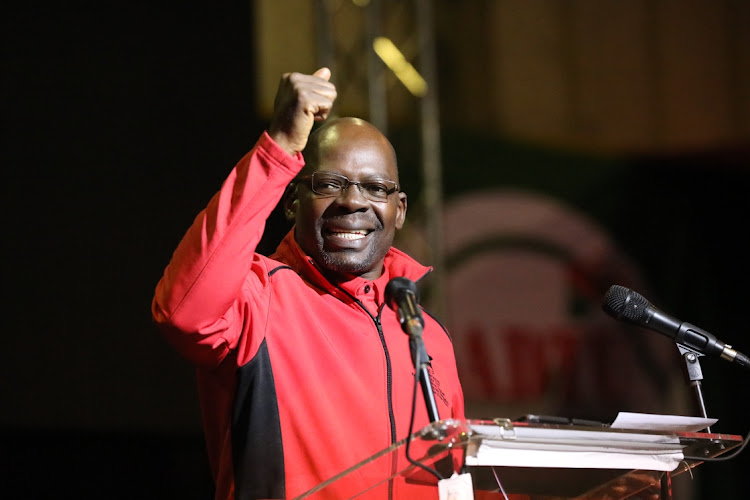
SACP General Secretary Solly Mapaila gives the party’s stance on the ANC-led Government of National Unity, ahead of the SACP’s special national congress in Boksburg: Image Supplied
By Lijeng Moruthane: The South African Communist Party (SACP) has once again raised concerns over the African National Congress (ANC) leadership and the controversial Government of National Unity (GNU), which it claims has betrayed the working class and the ideals of the liberation struggle.
The SACP’s criticisms come as the ANC prepares to send its Deputy President, Paul Mashatile, to represent the party at the SACP’s special national congress currently underway in Boksburg, Ekurhuleni.
In a media briefing on Wednesday, SACP General Secretary Solly Mapaila expressed the party’s dissatisfaction with the ANC’s decision to form a coalition with the Democratic Alliance (DA) in the GNU.
The SACP has long opposed the DA, labeling them as “capitalist racists” and “neoliberals,” and accused the ANC of abandoning the black majority and freedom fighters by aligning with the DA.
“The party that we said yes to was the Economic Freedom Fighters (EFF),” Mapaila said. “We said no to the neoliberalism of the DA and no to the party of state capture, the MK Party. We initially characterised MKP as the counter-revolutionary party.”
The SACP has made it clear that it has no formal relations with the MK Party, further distancing itself from factions within the ANC.
Mapaila’s remarks underline the deepening divide within the alliance, as the SACP continues to advocate for a more radical, left-wing approach to governance, in contrast to the ANC’s partnership with the DA.
The tensions between the ANC and SACP have been simmering for months, and Mashatile’s upcoming appearance at the SACP congress will likely add fuel to the fire.
Despite the ongoing disputes, the ANC confirmed that Mashatile will lead the party’s delegation to deliver a message of support at the SACP’s special congress.
The ANC’s statement emphasized unity and collaboration, reaffirming the commitment of the tripartite alliance to building a non-racial, non-sexist, and prosperous society.
However, with growing criticism from the SACP and other factions within the alliance, it remains unclear how the ANC will navigate these internal divisions.
The congress agenda includes discussions on the challenges facing the working class, the state of the alliance, and strategies to accelerate socio-economic transformation—issues that are at the heart of the ANC-SACP divide.
In a bold move, the SACP also announced its intention to contest the 2026 local government elections independently from the ANC, marking a significant shift in the party’s political strategy.
The SACP’s decision to go it alone underscores the party’s frustration with the ANC’s current direction and its growing commitment to charting its own path.
“There is no turning back on this move,” the SACP declared, emphasizing that it would no longer be beholden to the ANC or its controversial coalitions.