Subtotal R0,00

Economy/ 04 December 2024, 11:15am/ Lijeng Moruthane
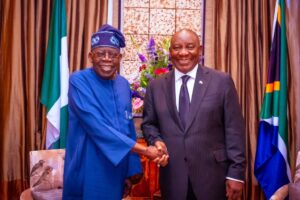
President Cyril Ramaphosa at the 11th session of the South Africa-Nigeria Bi-National Commission, where he announced relaxed visa rules for Nigerian businesspeople amid public backlash: Image Supplied
By Lijeng Moruthane: President Cyril Ramaphosa’s recent announcement of relaxed visa rules for Nigerian businesspeople has sparked fierce criticism across South Africa, with many citizens accusing the government of jeopardizing national safety and economic security.
During the 11th session of the South Africa-Nigeria Bi-National Commission on Tuesday, Ramaphosa reiterated the country’s commitment to strengthening trade and investment ties with Nigeria.
In his opening remarks, he expressed hopes of seeing more Nigerian products on South African shelves and emphasized efforts to improve the ease of doing business in the country.
“Our government continues with its efforts to improve the ease of doing business in South Africa. We want to enable investors to operate, trade, and pursue opportunities across various sectors,” he said, also highlighting the new visa rule.
“Qualifying Nigerian businesspeople can be granted a five-year multiple-entry visa to simplify trade and encourage Nigerian businesses to explore the South African market.”
However, this new visa policy has not been welcomed by many South Africans. The announcement has been met with anger and concern, with critics voicing fears that it could compromise the country’s safety and sovereignty.
On social media, South Africans accused Ramaphosa of prioritizing diplomatic relations over national security, with one user writing, “A 5-year visa deal? More like a 5-year disaster for South Africa. Ramaphosa is compromising our economy, safety, and sovereignty. Who gave him the right to gamble with our future for his personal benefit?”
Critics argue that the relaxed visa rules, which allow qualifying Nigerian businesspeople to easily travel to South Africa, could lead to an influx of people who may not have the country’s best interests at heart.
There is also growing concern about the potential strain on local resources and the job market, particularly as South Africa grapples with high unemployment rates and ongoing economic challenges.
Ramaphosa’s attempts to smooth the visa process for Nigerian tourists have also drawn skepticism. “Now, tourists from Nigeria can apply for a visa without submitting a passport. This raises even more concerns about who exactly is entering our country,” said one critic on Twitter.
Despite these growing objections, Ramaphosa insisted that the changes were part of a broader effort to foster economic growth.
“We look forward to seeing more Nigerian companies investing in South Africa. We are encouraged by the actions being undertaken under your leadership to further strengthen and foster a business environment in Nigeria that offers assurances to investors, including from South Africa,” he said.
Ramaphosa also reiterated the long-standing friendship between the two nations, citing Nigeria’s historic role in the fight against apartheid. “We are two countries united in purpose and vision,” he said.
However, as South Africa marks 30 years of diplomatic relations with Nigeria, critics argue that prioritizing foreign business interests over the safety and well-being of local citizens could be a costly misstep for Ramaphosa’s government.