Subtotal R0,00


News/ 27 November 2024, 16:50pm/ Lijeng Moruthane
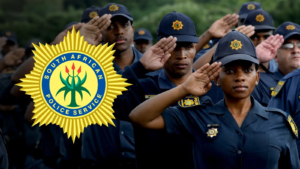
The South African Police Service continues to face a severe shortage of officers, with the force well below the required capacity to ensure public safety: Image Supplied
By Lijeng Moruthane: The South African Police Service (SAPS) continues to grapple with a severe shortage of officers, leaving the force significantly below the capacity needed to effectively address the country’s growing safety concerns. Despite recent recruitment efforts, the SAPS remains far from meeting its operational needs.
According to Major-General Leon Rabie, who updated the Portfolio Committee on Police this week, the SAPS requires 310,132 officers to ensure public safety and manage increasing crime rates.
However, as of September 2024, the force stood at just 185,196 officers—well short of the projected target.
“We’re well below that figure,” Rabie stated during his briefing, acknowledging the gap between the current workforce and the necessary numbers to ensure the country’s security.
The SAPS has faced a persistent challenge in maintaining its ranks due to high turnover rates. The force loses approximately 5,300 officers annually, a trend that has worsened over the years.
In the previous financial year, the force lost 6,430 officers, and the year before, the number climbed to 6,677. As of September this year, the SAPS had already lost 3,572 officers, with Rabie warning that this trend could push the year’s losses above the five-year average.
To address the shortfall, the SAPS has been actively recruiting new officers. In the past two years, the service recruited 20,376 entry-level officers, with 3,142 directed to the Detective Services Division.
For the current financial year, the SAPS is recruiting 10,017 officers, with the first batch of 4,517 already in training and a second batch expected in February 2025.
Of these recruits, 35% are earmarked for detective services, a critical department that has struggled to meet demand due to the overall shortage of skilled officers.
Rabie highlighted that while 20% of the police force should ideally be dedicated to detective services, only 15.1% of current officers are serving in this capacity.
This gap is exacerbating backlogs in investigations and delays in case resolutions, particularly in provinces like Limpopo and the Northern Cape, which report a 38% shortage of detectives.
The Western Cape and Free State are also facing critical shortages, with shortages of 35.5% and 33%, respectively.
The shortage of trained officers has had a direct impact on the efficiency of investigations. High caseloads are overwhelming existing detectives, and delays in processing vital evidence, such as DNA samples and ballistic analysis, are hindering the resolution of cases.
Rabie outlined several strategies to address the shortage, including internal promotions, the enlistment of 200 former trained officers, and an additional 4,669 officers being assigned to detective services.
“There is a significant lack of skilled police officers, including trained detectives,” said committee chair Ian Cameron.
“The lack of adequate staffing has led to significant backlogs and delays in solving cases, which continues to undermine public trust in the police force.”