Subtotal R0,00

National News/ 31 October 2024, 09:30am/ Viki Stuurman
Finance Minister Enoch Godongwana: Image Supplied
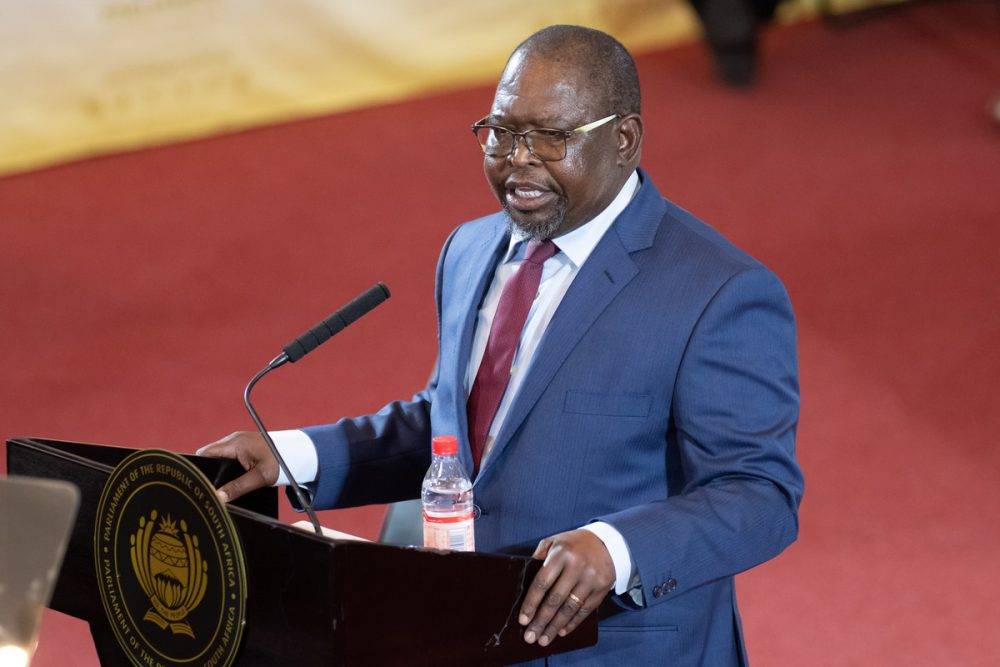
By Viki Stuurman: Finance Minister Enoch Godongwana presented the Medium-Term Budget Policy Statement (MTBPS) in Cape Town, expressing optimism for the future with a new government of national unity, a stable power supply, and improved economic confidence.
In the MTBPS, delivered to parliament on Wednesday, Godongwana introduced an early retirement plan aimed at curbing the government’s high wage bill.
The National Treasury has earmarked R11 billion over the coming fiscal years to incentivize early retirement for senior civil servants in non-critical roles. “Details will be laid out in the 2025 budget,” he stated.
Godongwana highlighted that the average public sector pay in South Africa “was well above that of many countries,” including the US and the UK.
He explained, “In order to lower government employment costs while maintaining essential skills and encouraging the entry of younger talent into the public service, the Cabinet has approved the early retirement program.”
He added that department heads and executive authorities will oversee early retirement requests, ensuring skilled personnel remain in critical roles.
Under the program, around 30,000 eligible federal employees will be offered voluntary separation packages without penalties, which Treasury Director-General Duncan Pieterse estimates could save the government R2 billion annually.
Treasury documents indicate the public sector wage bill could exceed R298 billion by 2027, according to the medium-term budget framework.
Meanwhile, wage negotiations between the government and public sector unions are underway for the 2025–2026 fiscal period. The government’s offer stands at a 4.7% increase, higher than the 3.8% inflation rate.
Talks, which began in early October, initially saw unions reject a 3% offer, demanding a 12% raise. The government countered with 4.7%, and facilitators suggested an additional 1.3% increase over six months to bring the total to 6%.
However, in a confidential pre-MTBPS briefing, Godongwana deemed this unacceptable, assuring MPs that negotiations should conclude before the main budget release in February 2025.
“It is anticipated that wage agreement negotiations will be completed in time for the 2025 budget, with talks scheduled to start in 2025/2026,” he said, emphasizing that the government is committed to a respectful collective bargaining process to set fair and sustainable public service remuneration levels.
Public sector workers also receive various benefits beyond base salaries, such as housing allowances, medical subsidies, pension support, and specific perks like uniform and danger pay.
“Public service remuneration is a complex issue that requires a delicate balance between attracting and retaining skilled personnel, ensuring fiscal sustainability, and promoting economic growth,” Godongwana said.
He underscored that reforming compensation is essential for aligning public sector pay with economic growth while addressing rising public service employment.