Subtotal R0,00

National News/ 13 September 2024, 09:45am/ Lijeng Moruthane
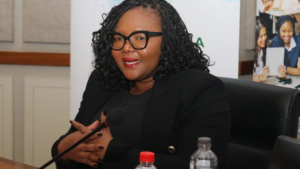
Basic Education Minister Siviwe Gwarube: Image Supplied
By Lijeng Moruthane: As the time neared for President Cyril Ramaphosa to sign the highly debated Basic Education Laws Amendment (BELA) Bill into law, Basic Education Minister Siviwe Gwarube announced on Friday morning that she would not attend the ceremony.
The signing was scheduled for 10:30 a.m. in Pretoria, according to a notice from the Presidency.
Reports indicated that Ramaphosa would sign the controversial BELA Bill at the Union Buildings, sparking backlash from other parties in the Government of National Unity, notably the Democratic Alliance (DA), which has threatened legal action.
The BELA Bill proposes changes to sections of the South African Schools Act of 1996 and the Employment of Educators Act of 1998 to address educational developments since the original laws were passed.
On Friday, Gwarube, a prominent DA member, reaffirmed her opposition to the Bill.
“I have taken note of President Cyril Ramaphosa’s expected signing of the Basic Education Laws Amendment Bill. I have always opposed the Bill in its current form and have asked the president to return it to Parliament for review under section 79 of the Constitution. I have also submitted reasons for why this is necessary,” Gwarube said.
She highlighted her concerns, particularly regarding the Bill’s constitutionality, focusing on the authority of school governing bodies to implement admissions and language policies.
She also advocated for a gradual rollout of Grade R as a compulsory component of basic education, stressing that provincial education departments, public schools, and early childhood development centers need the capacity to accommodate all learners.
“Parliament must fix the current flaws in the Bill to ensure that millions of students can access quality education for a better South Africa. In a Government of National Unity, compromises must reflect the people’s will,” Gwarube added.
“That’s why I’ve been in dialogue with the president on this issue. We need to address objections to the Bill and correct them to avoid lengthy, costly legal battles. I’ve informed the president that, given the current concerns, I cannot attend today’s signing. I am, however, ready to continue serving South Africa and ensuring that students can access quality education.”
On Thursday, it was reported that EFF national spokesperson Leigh-Ann Mathys expressed support for the BELA Bill, stating that it was necessary to combat inequality in South Africa’s education system.
“The BELA Bill introduces a range of changes to tackle systemic inequalities in basic education. The DA opposes the Bill due to its disdain for the African child,” Mathys remarked. She specifically welcomed the provision giving heads of departments the final say on admissions and language policies at schools, arguing that school governing bodies have used their authority to exclude African learners and foster racism.
“This power has been a tool for white supremacists to marginalize African languages and deny African children entry to previously white-only schools,” Mathys added.
The GOOD party, led by Minister Patricia de Lille, also supported the Bill. GOOD’s secretary-general, Brett Herron, criticized the DA’s opposition, calling it “mass hysteria.”
“Education is a serious matter, and there’s no room for political games and disinformation, especially from the DA, which now finds itself in the GNU. Their vague threats of instability reflect poor leadership,” Herron said.
He also emphasized that the Bill’s objectives are “largely sensible” and align with the Constitution and court rulings.