
Subtotal R0,00

Crime/13 November 2026, 11:34am/Dakalo Mulaudzi
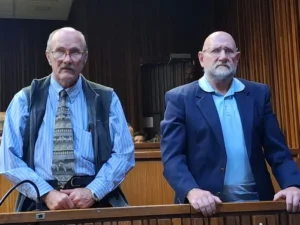
Former apartheid police Abraham Engelbrecht and Pieter Stander: Image Supplied
By Staff Writer: Almost four decades after student activist Caiphus Nyoka was gunned down in his bedroom, his family is facing a painful question: would an apology from the men convicted of his murder bring any comfort, or come too late?
The question emerged during sentencing proceedings in the Johannesburg High Court, sitting in Benoni, where former apartheid Special Branch police officers Abraham Engelbrecht and Pieter Stander face punishment for killing the 23-year-old Congress of South African Students (COSAS) leader.
Nyoka was shot at least nine times at his Daveyton home in 1987. On 2 December 2025, the two former officers were found guilty of his murder.
His older sister, Alegria Nyoka, told the court that the killing left wounds that have never healed. The family’s lives changed forever, she said, as did the mental state of their parents.
“Such cruelty that was done by the police- we will succumb to our graves, never having been healed,” said Nyoka.
She told the court that life imprisonment would be a fitting sentence for the men who murdered her brother, dismissing the suggestion that their advanced age should spare them time behind bars.
The proceedings have repeatedly heard about an absence of remorse from Engelbrecht and Stander. But Judge Mohammed Ismail raised the possibility of a conversation, asking Nyoka whether she or her family would be willing to speak to the convicted men if they requested it.
Her response reflected the family’s uncertainty about what such an approach would mean after so many years.
“An entire 40 years they had the opportunity; now we can’t tell if this is genuine or if they are trying to save themselves,” responded Nyoka.
Lawyers for Engelbrecht and Stander asked for more time to consult their clients about potentially speaking to the family.
The court has also heard arguments from the men’s legal teams that they are not medically fit to serve custodial sentences. Engelbrecht told the court he has a heart condition, while Stander said he faces mental health challenges.
Prison nurse Clementine Ramollo testified, however, that their conditions could be managed in prison and that medical services and referrals were available.
“There is a programme for a psychologist, if need be, there is annual X-Ray programmes in need. There is a programme for outside referral if we do not have any service on site.”
The State is expected to call further witnesses on Friday morning to testify about an appropriate sentence.
As the matter was postponed, Engelbrecht and Stander left the dock carrying Bibles and made their way to the court holding cells.







