
Subtotal R0,00

News/20 October 2026, 06:34am/Linda Mgomezulu
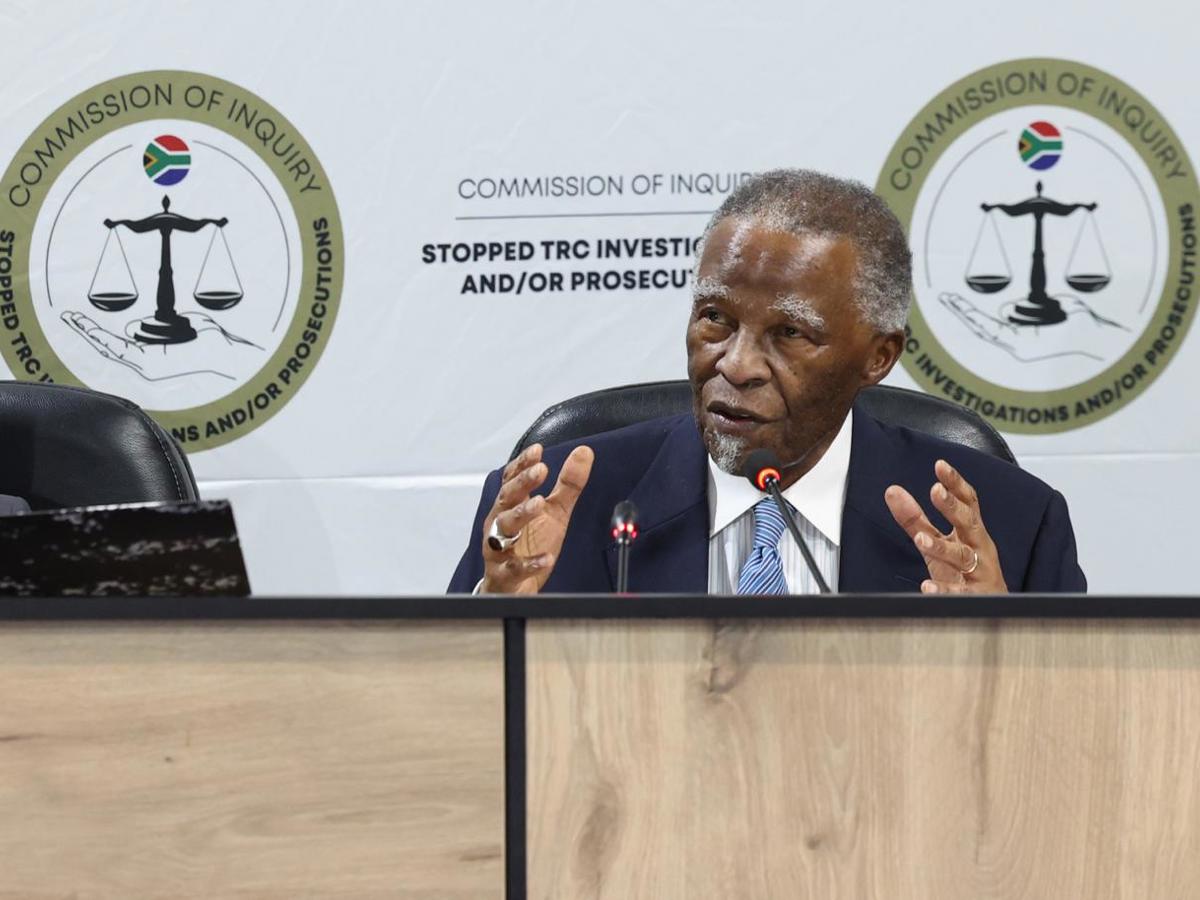
Thabo Mbeki: Image Supplied
By Linda Mgomezulu: Former president Thabo Mbeki has forcefully rejected allegations that he held behind-the-scenes talks with apartheid-era military and police generals aimed at shielding them from prosecution, telling the TRC Cases Inquiry that the claims were a “complete fabrication”.
Appearing before the inquiry on Monday, Mbeki denied that secret meetings were convened to devise ways of preventing former apartheid security force members from being held criminally accountable for atrocities committed under the previous regime.
“It’s a complete fabrication; there is no such thing, there were no meetings that took place,” Mbeki told the inquiry, which is chaired by retired Justice Sisi Khampepe.
The commission is probing explosive allegations that political interference derailed investigations and prosecutions into apartheid-era crimes — particularly cases referred for further action after the Truth and Reconciliation Commission’s amnesty process.
While dismissing the central allegation of secret negotiations to secure protection from prosecution, Mbeki acknowledged that a meeting did take place involving former generals of the South African Defence Force and the South African Police.
According to Mbeki, however, the gathering was not about avoiding accountability. Instead, he said, the generals complained that those who carried out orders were appearing before the TRC Amnesty Committee while the political architects of apartheid-era decisions had not been required to explain themselves.
The former generals, Mbeki said, argued that their political principals — including former president FW de Klerk and Cabinet members of the time — should also appear before the committee and account for the decisions that had led to abuses.
Mbeki said the proposal was rooted in the principle that accountability should not fall only on lower-ranking operatives.
The ANC, he testified, responded by deciding that its own political leadership should lead from the front by appearing before the Amnesty Committee and accounting for decisions linked to matters before it.
Mbeki also rejected claims that his administration had altered state policy or weakened the justice system in order to protect politically connected figures from prosecution.
“I’m saying it can’t happen,” he said.
The former president further disputed the interpretation of his April 2003 address to Parliament, delivered when government received the TRC’s final report. Critics have alleged that the speech opened the door to political intervention in prosecutions involving apartheid-era crimes.
Mbeki maintained that the address dealt with the formal conclusion of the TRC process and did not refer to alleged discussions with former apartheid generals.
The inquiry has heard evidence from former National Prosecuting Authority officials about the handling of cases involving people who did not obtain amnesty through the TRC. At issue is whether state mechanisms introduced during Mbeki’s administration created an alternative route to amnesty outside the constitutional framework of the commission.
In March, former NPA director of public prosecutions advocate Anton Ackermann told the inquiry that an Amnesty Task Team and a proposed amnesty Bill were intended to accommodate individuals who had not participated in the TRC process.
Ackermann argued that changes to prosecution policy for TRC-related matters effectively amounted to a further amnesty process and raised serious constitutional questions.
For the Khampepe-led inquiry, Mbeki’s appearance is a key moment in its effort to establish what decisions were made at the highest levels of government, what discussions took place and whether any political actions obstructed justice for victims of apartheid-era crimes.
Mbeki is expected to continue testifying on Tuesday as the commission examines the fate of cases referred to law-enforcement authorities during and after his presidency.
At the heart of the inquiry are claims that Mbeki initiated or participated in discussions with former SADF and police generals from 1998 to find a mechanism to avoid prosecutions arising from apartheid-era crimes — claims the former president has now emphatically denied.







