
Subtotal R0,00

News/01 October 2026, 07:39am / Linda Mgomezulu
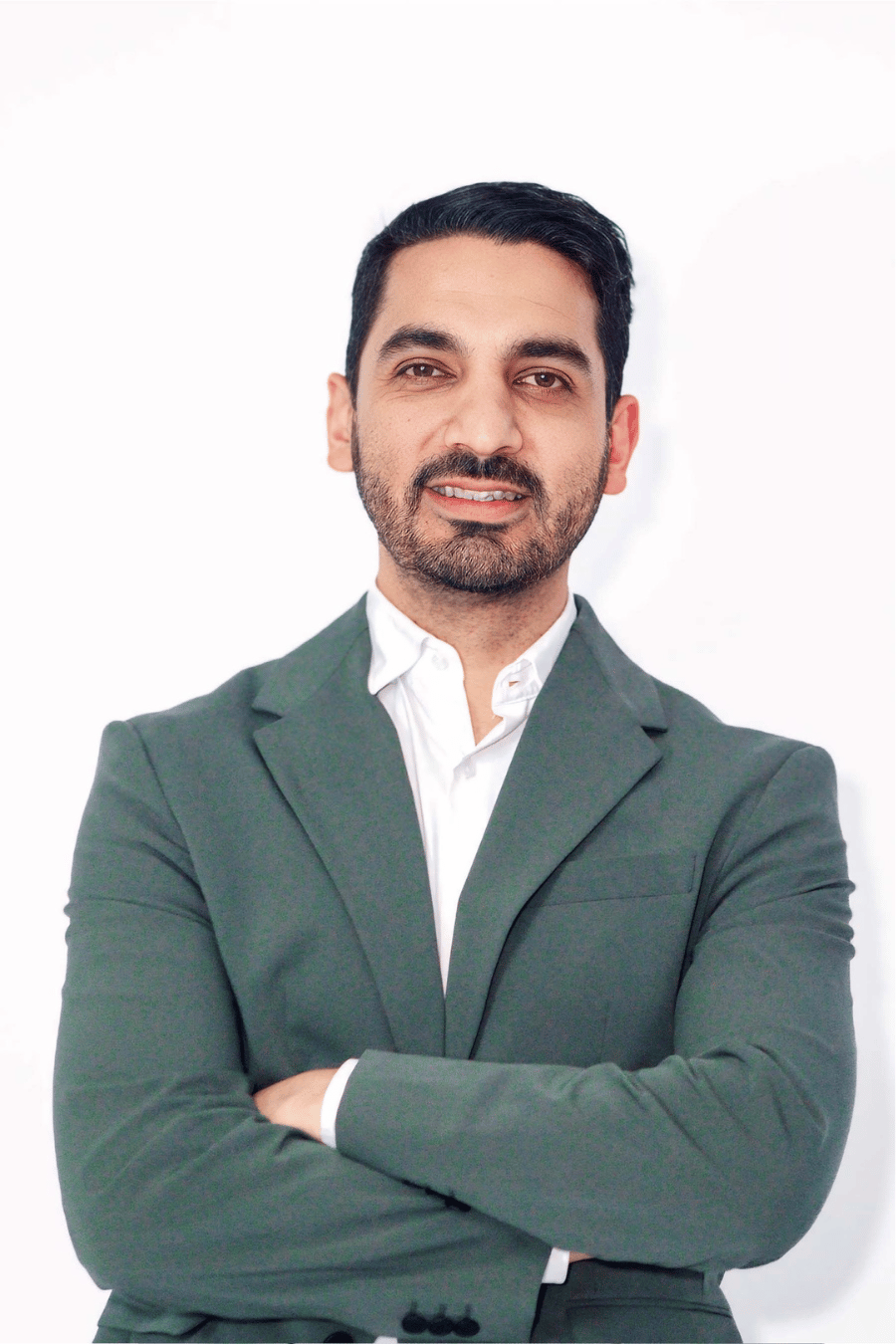
Waseem Carrim: Image Supplied
By Linda Mgomezulu: The incoming Road Accident Fund chief is betting on accountability, institutional stability and teamwork to rebuild an organisation whose unpaid claims have left accident victims waiting for years.
For accident victims still waiting for the Road Accident Fund to pay claims stretching back more than a decade, another change at the top offers no immediate relief. The real test will be whether a new chief executive can turn promises of reform into payments.
That is the challenge awaiting Waseem Carrim when he takes charge on November 1.
At 38, the former National Youth Development Agency boss arrives with a record of clean audits, experience of troubled public institutions and an unusually frank admission: his most recent assignment, at the National Student Financial Aid Scheme, has left him with regrets.
Now he is moving from an institution where students have struggled to secure allowances and accommodation funding to one where accident victims have endured years of uncertainty over compensation.
His message is that the RAF can be repaired. But his account of his public-service career also points to a harder lesson: a chief executive’s ambitions count for little without institutional stability, staff support and consequences for wrongdoing.
For those awaiting payouts, his immediate request is for time to assess the organisation before announcing a plan to address prolonged delays.
“Fix the fund, and ensure that there’s timely processing of claims,” he said.
“Allow me to get into the institution.”
A turnaround measured in claims, not slogans
The scale of the assignment is substantial.
RAF officials told Parliament’s standing committee on public accounts, Scopa, in October last year that the fund was structurally insolvent. Under its existing operating model, they said, it could not clear its backlog of unpaid claims, some dating back to 2014.
Carrim does not dismiss those difficulties. But he is wary of treating every part of a troubled institution as broken.
“I don’t think everything is bad in the organisation, but there are fundamental challenges,” he said.
“When you enter an organisation, you listen to what those challenges are and focus on the things that are working, because you don’t want to start breaking things that are working.”
His decision to accept the post was influenced partly by what he sees as renewed momentum in the broader transport sector, including changes under way at Transnet and Prasa.
“The RAF has always been an organisation that has had issues,” he said.
“I’m very interested in the theory of change and reform, and I think the organisation does need some of that.”
That interest in reform comes with an insistence that South Africa’s troubled institutions are not beyond repair. Pointing to the country’s experience with electricity shortages, Carrim argued that seemingly entrenched problems can be reversed.
“I believe anything can be saved in SA,” he said.
“I remember when we used to be in stage six, and it looked dystopian.
“Today we have a constant energy supply.
“It’s not perfect, but in SA there is nothing that is beyond redemption.”
Carrim’s first priority will be to meet RAF employees, introduce himself and create room for them to speak openly about the organisation.
“Your people are your most important thing,” he said.
“One man cannot do it alone. If you are able to bring the team with you, that’s how you build momentum for change.”
But his emphasis on listening should not be mistaken for leniency.
Carrim said anyone inside the fund implicated in fraud or corruption would face consequences, regardless of seniority. His warning extended beyond employees to those outside the institution who participate in wrongdoing.
“Citizens, the private sector and NGOs who are also willing to do wrong things should be aware that we will pursue them,” Carrim said.
“Our culture has led to a lack of consequences, and I think we have to be very strong on consequences.”
He has not committed himself on whether the RAF’s panel of outside law firms will return. He is, however, open to cooperation with business through the Government and Business Partnership, established by the Presidency and business leaders in 2023 to address electricity shortages, logistics constraints and crime.
“Government alone can’t be expected to fix all of the issues,” he said.
“We have to use the goodwill that exists in the private sector and civil society to address the challenges.”
The approach combines an invitation to help with a warning that cooperation cannot become a cover for misconduct.
‘I leave NSFAS with regrets’
Announced by Cabinet as the RAF’s new chief executive last Wednesday, Carrim leaves NSFAS with a mixed assessment of his tenure.
He became its acting chief executive in March 2025, shortly after the scheme emerged from administration.
“It was chaotic when I got there,” he said.
“Disbursements were not on time, and students were protesting all over the place.”
Carrim said the scheme stabilised during his 18 months there. He described the start of the 2026 academic year as widely regarded as the best in years, with few protests.
Yet the difficulties confronting students, landlords and the institution itself remained stark.
In May 2025, two months after taking the job, Carrim appeared before Parliament’s portfolio committee on higher education. MPs heard that students had gone months without allowances and faced eviction, while some accommodation providers were still waiting for payments dating back to 2023.
Only about 34,000 of more than 70,000 appeals by students refused funding had been finalised, the committee was told.
Carrim acknowledged that NSFAS was not operating in a perfect system and asked MPs for six months to turn it around.
Leadership upheaval subsequently complicated the assignment. On May 3, the NSFAS board appointed him permanent chief executive, hours after two board members resigned.
Higher education minister Buti Manamela said the resignations had left the board without a quorum and therefore unable to take lawful decisions. He placed the scheme under administration the following day.
On August 14, the Pretoria High Court suspended the administrator’s appointment and reinstated the board.
For Carrim, the repeated changes raised doubts about whether the institution would ever have the continuity needed to carry out its work.
“There were a lot of unfulfilled promises and a lot of dreams deferred from my tenure there,” he said.
“The decision to put it under administration again, and the court judgment which then restored the board, gave me a negative sense that there would never be stability at NSFAS.
“That makes it quite difficult to do your work as the acting CEO or the CEO.
“When I was approached about other opportunities, I decided it would be the better thing to take them up.”
The financial pressures were equally visible outside the boardroom.
Earlier this year, University of Cape Town students marched to NSFAS’s Cape Town offices and then to Parliament, demanding the removal of the R55,000 accommodation cap. They said it had left some students indebted and unable to register or graduate.
Accepting their memorandum, Carrim told them that state resources were not unlimited and that NSFAS was spending more on student accommodation than on tuition.
Despite his frustrations, he defended the scheme’s continued existence while arguing that its structure needed to change.
“The institutions can’t be both referee and player,” he said.
“There has to be a recognition that NSFAS has to be reformed, and there needs to be strong political will to execute on that reform programme.”
Carrim’s route to the RAF began with a professional choice that others warned could derail his future.
After studying accounting at the University of Pretoria, he remained at the university to serve part of his articles in its accounting department. He later completed his articles at KPMG, working with public-sector clients that included the Council for Scientific and Industrial Research and the NYDA.
He also earned a master’s degree in taxation from the University of Pretoria and completed an MBA in 2019.
In 2014, the NYDA, then seeking to improve its governance, approached him to become its chief financial officer. He was 26.
“A lot of people said, you’re committing absolute career suicide,” Carrim said.
“But the idea of public service was appealing to me.
“When you work in the private sector, you’re there to make money, and a career should have more than that.”
When Khathu Ramukumba resigned in 2017, Carrim took over on an acting basis. What was presented as a temporary assignment became a defining chapter of his career.
“He said, just six months,” Carrim said.
“I ended up being CEO for seven and a half years.”
When NSFAS announced his appointment in March 2025, it credited his NYDA leadership with nine consecutive clean audits and budget growth from R400m to R1.5bn.
Carrim is reluctant, however, to let those figures stand as an uncomplicated verdict on his time there.
“There were a lot of successes, and a lot of failures as well,” he said.
“I don’t want to paint it as just a positive picture, because SA still has that nagging sense of the high levels of youth unemployment.”
Professional recognition followed along the way. In 2016, he was named among the South African Institute of Chartered Accountants’ top 35 under 35. In 2018, he featured among the Mail & Guardian’s 200 Young South Africans.
“I’ve never been in it for the awards,” he said.
“I appreciate that my work was recognised, but that’s never been the basis of what you do.”
For someone whose career has been shaped by financial management, accounting was not the original ambition.
“I definitely didn’t want to be a chartered accountant,” he said.
“I really wanted to be a journalist, but my dad said ‘absolutely not’.
“He said I can go study accounting and then write for the newspapers later, which I actually ended up doing.”
Carrim eventually wrote a column for Independent Media for a period, fulfilling at least part of that early ambition.
His childhood, he said, was shaped most strongly by his grandfather. Watching him later develop Parkinson’s disease was difficult.
“He taught us a lot about independence and working hard and discipline,” Carrim said.
“It wasn’t always a lot of hugs and love, but we learned what independence is about.”
At school, Carrim was shy and introverted. Sport helped bring him out of his shell, and he moved to Gauteng in Grade 11 to complete his schooling.
He does not describe himself as having always been the brightest pupil. Instead, he remembers a strict maths teacher whose lesson about the way people approach difficulty stayed with him.
“He was a very harsh disciplinarian, but I always remember he used to say one thing to us,” Carrim said.
“If you keep telling yourself in life that something is hard, your body, your mind, your soul, everything will make it hard.
“If you tell yourself something is hard before you start it, you’ve already made no effort to resolve it.”
University brought another push beyond his comfort zone. Lecturing and tutoring required him to stand before students and work with people whose experiences differed from his own.
“It helped me build a lot of confidence,” he said.
“I think it was really there that I developed a love for working with young people, because I had to work with young people from very different walks of life.”
Away from public institutions and their competing demands, Carrim is married and has three children — two girls and a boy.
He said he and his wife decided that she would stay at home with the children to help the family balance the demands of his work.
“She’s been an incredible part of the support in my life,” he said.
“Having children humbles you quite a bit.
“It gives you a lot of empathy and it adds a lot of value to how you lead people and organisations.”
Reading, tennis and a daily morning gym session offer a break from work. At the gym, his phone stays well out of reach.
“I’ve given up football, and I’m much slower than I was 10 years ago,” he said.
“Keeping a healthy body and a healthy mind is something that’s quite important to me.”
From November 1, that discipline will be tested by an institution carrying both a financial backlog and the expectations of people who have already waited years.







