
Subtotal R0,00

News/01 October 2026, 06:56am / Linda Mgomezulu
Joe “Ferrari” Sibanyoni: Image Supplied
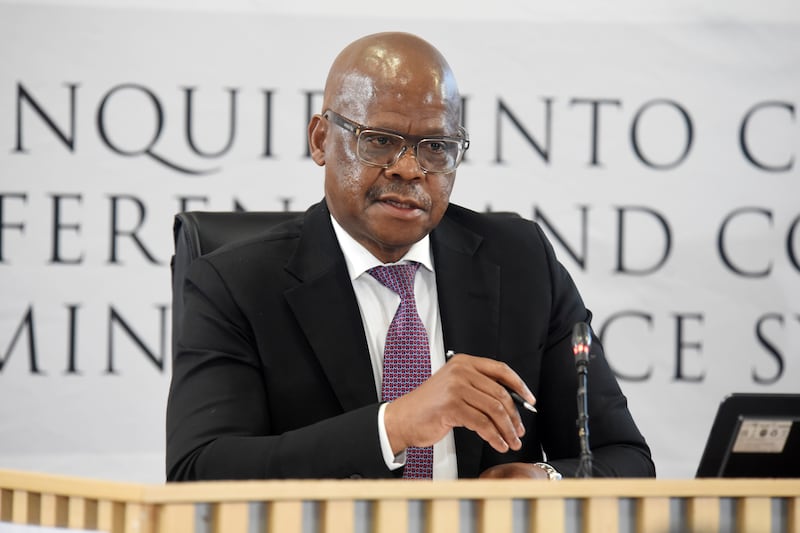
By Linda Mgomezulu: Taxi boss Joe “Ferrari” Sibanyoni has portrayed himself as a community-minded businessman championing local empowerment in KwaNdebele — but his calls for a 30% stake in major projects have drawn sharp scrutiny following the torching of 50 PUTCO buses and allegations of protection-fee demands.
The battle over who benefits from public transport and construction contracts in Mpumalanga has moved to the centre of the Madlanga Commission, where taxi boss Joe “Ferrari” Sibanyoni is fighting to separate his push for community participation from allegations of intimidation, extortion and violence.
At the heart of the controversy is Sibanyoni’s long-standing demand that local people receive a 30% share of business conducted in KwaNdebele — a demand he has described as “local content”, but which critics say was enforced through pressure and threats.
The issue returned to public attention after 50 PUTCO buses were torched in Mpumalanga on January 27, 2025, in a brazen attack that crippled operations and left workers injured.
Armed men allegedly stormed four PUTCO depots — Moloto, Wolwekraal, Siyabuswa and Vaalbank — where security personnel were reportedly tied up, employees assaulted and one worker shot in the leg. The attackers then allegedly used flammable liquids to set the buses alight.
The violence came after Sibanyoni had publicly warned President Cyril Ramaphosa and ANC chairperson Gwede Mantashe about possible disruption to PUTCO’s operations during an ANC campaign event in KwaNdebele in 2024.
“We want to play a role. We are busy engaging with Putco,” Sibanyoni said, referring to the bus company’s 40-year presence in the area.
“When you find someone wanting to interfere with the Putco business, you must know it’s us.”
He also urged the government to help local groups secure access to the company’s business, insisting that a 30% share belonged to the people of KwaNdebele.
“If they don’t follow that, we will fight for ourselves,” he warned.
Those words were replayed at the Madlanga Commission on Wednesday, where evidence leader Advocate Matthew Chaskalson SC questioned whether there was a link between Sibanyoni’s warning and the attacks that followed months later.
Sibanyoni rejected any suggestion that he or his group were behind the arson.
“It was not me, let’s not personalise this,” he said.
He told the commission that his discussions with Ramaphosa and Mantashe had dealt with lawful community concerns, rather than criminal threats or interference in business.
“My interaction with the president and a Cabinet minister was conducted in relation to legitimate public and community matters of which I had firsthand knowledge,” Sibanyoni said.
The PUTCO dispute is not the only matter in which Sibanyoni’s demand for local participation has surfaced.
His testimony also brought renewed attention to the R500 million Moloto Road project and a tender involving businessman Dr Thomas Ntuli. Ntuli accused Sibanyoni of demanding protection fees — an allegation the taxi boss disputed.
Sibanyoni argued instead that Ntuli, who was from Middelburg, did not qualify to carry out a tender in Kwaggafontein without accommodating local interests. He said Ntuli had to surrender 30% of the tender as part of “local content”.
In government procurement policy, local content generally refers to the proportion of labour, materials and manufacturing that must be sourced locally. The policy is designed to ensure local businesses, workers and industries receive a meaningful share of public spending and that projects create jobs in surrounding communities.
But the commission heard how the concept can become contentious when demands for local involvement are made by powerful individuals or groups outside formal procurement channels.
For Sibanyoni, the 30% principle is presented as a corrective to decades of exclusion. For his detractors, it raises the question of whether community empowerment has been blurred with coercive control over contracts.
Sibanyoni also used his appearance before the commission to distance himself from claims linking him to underworld networks, including the so-called Big 5 Cartel and alleged extortionists known as the Kwagga 20.
He denied having links to the groups and insisted that he opposed deadly violence within the taxi industry.
However, he conceded that he had paid legal fees for convicted hitman Gwabo Mahlangu, who was accused of killing a taxi marshal.
Sibanyoni said his decision to assist Mahlangu was not an endorsement of the accused man or his alleged crimes, but an act of compassion towards his family.
“His mother reached out to me and my assistance was based on that, not based on him personally,” he told the Commission.
Presenting himself as an honest businessman and development advocate in Kwaggafontein, Sibanyoni maintained that his involvement in major projects was rooted in community upliftment.
Yet the commission’s questioning has placed a sharper spotlight on the boundary between legitimate demands for local economic inclusion and alleged attempts to extract a share of business through intimidation.
For now, Sibanyoni denies any role in the PUTCO attacks, denies links to criminal networks and rejects the suggestion that his calls for 30% local participation amount to extortion. The Madlanga Commission’s task is to examine where community advocacy ends — and where unlawful influence may begin.







