
Subtotal R0,00

Politics/13 August 2026, 08:21am/ Mpho Mokoena

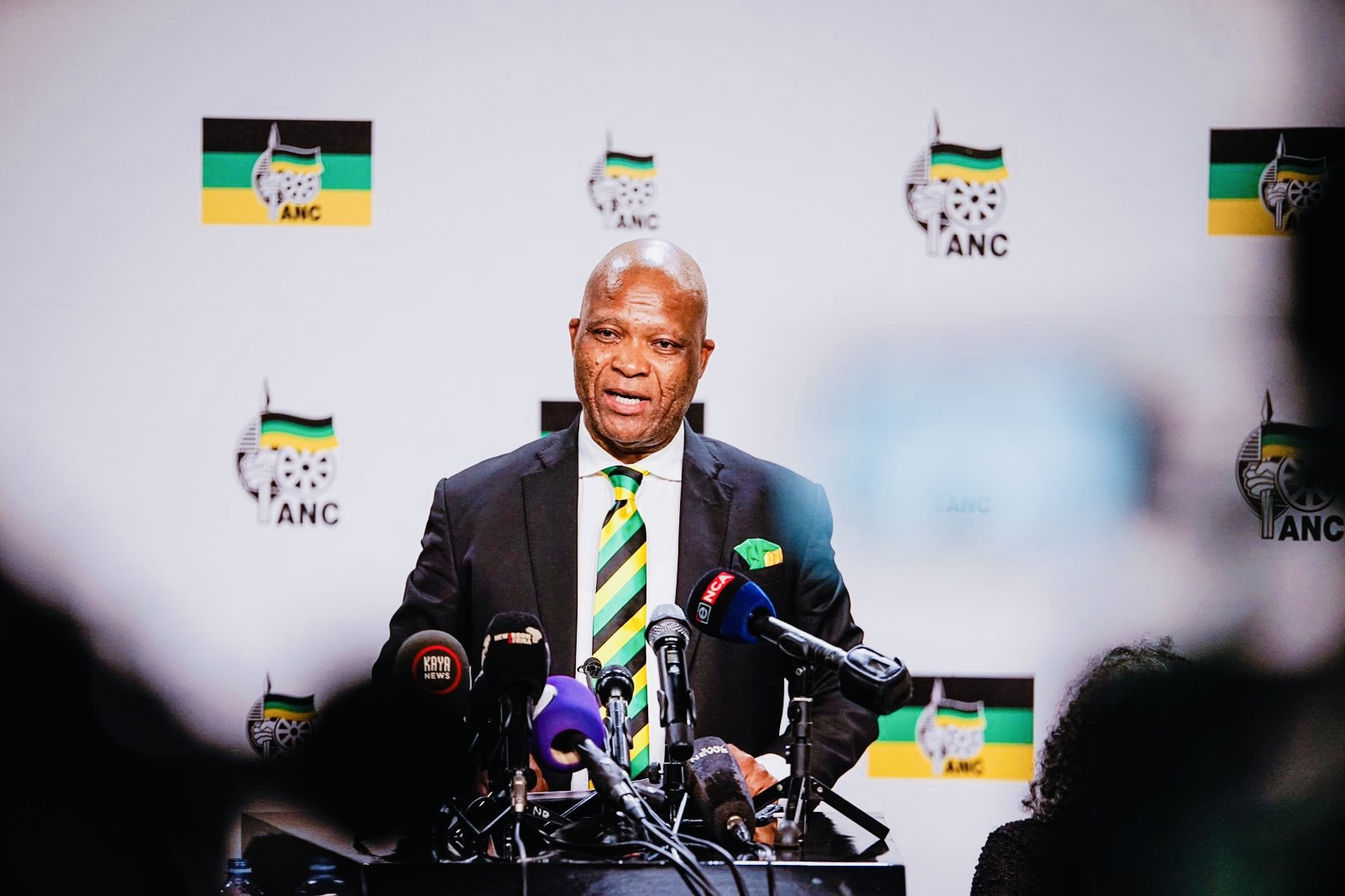
Dickson Masemola: Image Supplied
By Mpho Mokoena: As Johannesburg heads towards a high-stakes mayoral race, the ANC is asking voters for an outright mandate — but analysts say its promise to rescue the city will be tested by its own local-government record.
The African National Congress is making a direct appeal to Johannesburg voters: give the party an unfettered mandate and it will restore South Africa’s economic hub.
But as the city battles failing infrastructure, crime, corruption and deepening service-delivery frustrations, the ANC’s argument that it inherited much of the crisis from coalition governments is being challenged by political analysts who say the party must first prove it has a workable turnaround plan.
ANC national executive committee member and Deputy Minister of Co-operative Governance and Traditional Affairs Dickson Masemola says Johannesburg’s decline accelerated after 2016, when the ANC lost control of the metro and coalition politics took centre stage.
“The challenges here in Johannesburg and elsewhere in the country, where we have seen serious systemic constraints and difficulties, are not because of the African National Congress,” he said.
“I think the record speaks for itself to a large extent. Humbly so, with great humility and respect as we articulate this point. It’s not about arrogance; it is about historic records, but with humility.”
Masemola was speaking on Wednesday at a media briefing reflecting on the ANC’s 2021 Local Government Elections Manifesto and outlining the party’s preparations for the November 4 local government elections.
The party, under mounting pressure to reverse its decline in urban municipalities, has not yet announced its mayoral candidates. Its manifesto is scheduled to be launched on August 23, while its national executive committee completes its candidate-selection process.
Johannesburg is likely to be the most fiercely watched race. Veteran politician Frank Chikane has emerged as the frontrunner for the ANC mayoral candidacy, although the party has yet to confirm its choice. The incumbent mayor is Dada Morero.
Should Chikane be selected, he would enter a packed contest featuring DA candidate Helen Zille, ActionSA leader Herman Mashaba, EFF candidate Tlaleng Mofokeng, Patriotic Alliance candidate Kenny Kunene, IFP candidate Mlungisi Mabaso, Rise Mzansi’s Lukhona Mnguni, Build One South Africa’s Nobuntu Hlazo-Webster, Al Jama-ah’s Shireen Ebrahim, Land Party candidate Ntsiki Mazwai and African People’s Congress candidate Mo-Afrika Mandla Mokoena.
The stakes could hardly be higher for a city grappling with electricity and water outages, unreliable sanitation, potholes, decaying traffic and street lights, water losses, hijacked buildings, the spread of informal settlements, crime and allegations of corruption.
Masemola insists voters should assess the ANC not only on its recent challenges, but on its historical performance in Johannesburg and other major metros.
“If you look at Johannesburg, when mayor Masondo was the executive mayor of this place, and the progress that the ANC has been able to make, notwithstanding the fact that there could have been other difficulties at that point,” he said, referring to former Johannesburg mayor Amos Masondo, who led the city between 2000 and 2011.
He also pointed to former Tshwane mayor Father Smangaliso Mkhatshwa and the late Obed Mlaba, eThekwini’s first post-apartheid mayor.
“If you look at Durban and eThekwini today, when Obed Mlaba was the mayor of that city, Durban by then and eThekwini by now was extraordinary,” Masemola said.
Mlaba served as eThekwini mayor from 1996 to 2011.
“I think South Africans ought to, as we assess the performance of this great, glorious movement of the people of this country, not necessarily brush aside that historic record of performance of this great movement,” Masemola said.
For the ANC, the pivotal moment remains the 2016 local government elections. The party, which had governed Johannesburg from the end of apartheid, lost its council majority for the first time. Although it remained the largest party in council, Herman Mashaba — then a DA member — became mayor with the backing of opposition parties.
Masemola said the arrival of coalitions created instability and weakened municipal administration.
“The reality is, since 2016, when coalition politics began to find expression in municipalities, understandably so, together even here in Johannesburg, the people of this great city and elsewhere where there are coalitions are basically finding themselves in these difficulties as a consequence of the dislodging of the movement at the centre of governance and opening the space for coalition politics,” he said.
He argued that coalition governments had failed to meet expectations that they would bring stronger governance and improved delivery.
“With a greater sense of humility and respect to the voters of Johannesburg and all its jurisdictions, we are coming back to them once again and saying, for the past 10 years, from 2016 to date, we have seen how coalitions and the mismanagement of the interplay of different, diverging ideological expressions represented by these parties in their municipalities would have impacted negatively on governance, on financial administration and on the delivery of services,” he said.
According to Masemola, the core issue is leadership.
“Everything stands and falls on leadership,” he said, arguing that coalition arrangements had entrenched “permanent systemic problems”.
His message to Johannesburg, Tshwane, Nelson Mandela Bay, Buffalo City and other coalition-governed municipalities was blunt: return the ANC with a decisive majority.
“We want to restore this city. But we can only be able to do so if the people of greater Johannesburg give their organisation, the ANC, absolute authority without any hesitation,” he said.
Masemola said the party has the policy framework and administrative capacity to restore Johannesburg’s finances, maintenance systems and infrastructure programme.
“The necessary policies, including all that is required to get the city back to where it is actually supposed to be,” he said.
“We will be taking the power of governance, of good governance, better financial management, better systems, including maintenance, as well as infrastructure delivery,” Masemola said.
But independent political analyst Goodenough Mashego rejected the ANC’s contention that Johannesburg’s deterioration can mainly be laid at the door of the DA-led administration and coalition politics.
“The DA first governed Joburg when the mayor was Mashaba, and everyone who lived in Joburg will tell you that, for them, those were the years when they felt that Joburg was being given attention, that there was a certain level of rebuilding,” he said.
Mashego said Mashaba’s administration introduced targets for municipal entities and insourced workers. In his view, the city’s troubles were aggravated by the ANC’s response after it lost political control.
“It collapsed because when the ANC lost power, it kept refusing to be an opposition party,” he said.
Mashego dismissed the claim that the ANC merely inherited Johannesburg’s present-day problems.
“It’s not true that they inherited these problems,” he said.
He acknowledged that Masondo took office in a deeply unequal city still shaped by apartheid-era municipal structures.
“Masondo inherited a city that we can’t really say was quite functional because, at the time, it was coming from a dispensation where it worked for white people and it had to really be big and include other black communities,” Mashego said.
However, he said the city did not fall into severe disrepair during that earlier transition.
“At that time, Joburg was not rotting,” he told IOL.
Mashego said signs of decline became more visible under later administrations, including that of former mayor Parks Tau, before Mashaba took office.
“When Mashaba came, he actually steered the ship he built and he tried to stabilise Joburg,” he said.
The analyst said the ANC’s campaign would face a credibility problem unless it could show success in municipalities it already runs.
“The ANC is not going to win back power in Joburg, and they cannot turn it around because they don’t have a turnaround strategy. If they have a turnaround strategy, they can apply it where they actually have power,” he said.
Political analyst Solly Rashilo offered a more measured assessment, saying there was “some truth” in the ANC’s position that Johannesburg’s failures did not begin with the DA or coalition governments.
Yet he warned that an administration cannot escape accountability simply by pointing to the failures of its predecessors.
“Residents ultimately judge the government currently in office on measurable improvements in service delivery,” Rashilo said.
He said Johannesburg’s revival would require competent leadership, stable administration, financial discipline, sustained infrastructure investment and clear accountability.







