
Subtotal R0,00

News/08 June 2026, 07:24am/ Mpho Mokoena
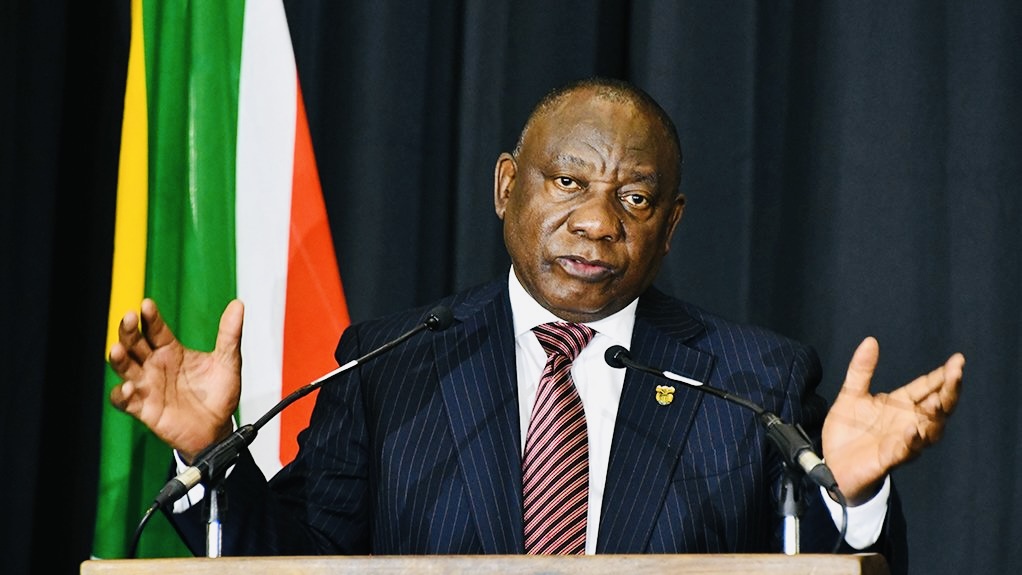
Cyril Ramaphosa: Image Supplied
By Mpho Mokoena: The Union Buildings had become the stage for one of the government’s sternest messages yet on illegal immigration, as President Cyril Ramaphosa announced a sweeping new enforcement drive that puts employers of undocumented migrants directly in the firing line.
In a nationally televised address from Pretoria, Ramaphosa shifted the spotlight from border jumpers alone to the businesses and individuals who, he argued, fuel the problem from within South Africa’s economy. With political pressure mounting, protests flaring in several provinces, and a nationwide shutdown planned for 30 June, the president adopted a firmer, security-focused tone — promising that those who profit from undocumented labour will no longer get off lightly.
At the heart of the announcement was a warning that penalties are set to become significantly tougher for employers found breaking immigration law. “We are going to increase the penalties, including imprisonment, for employers who violate the Immigration Act. We cannot have a situation where employers who, after being charged and found guilty of violating our laws, merely pay a fine and continue employing undocumented foreign nationals whom they exploit.”
The message signalled a clear change in emphasis: government is not only targeting undocumented migrants themselves, but also the labour networks, weak enforcement systems and corrupt channels that allow illegal immigration to persist.
Ramaphosa revealed that Cabinet has now adopted what he described as a comprehensive Migration Management approach, backed by the President’s Coordinating Council and involving national, provincial and local government. The plan is built around five pillars and is intended to tighten South Africa’s immigration controls at every level — from border posts to courtrooms, from labour inspections to digital identity systems.
The first phase will focus on an immediate enforcement blitz. The Department of Home Affairs, the Border Management Authority, the South African Police Service and other law enforcement bodies have been instructed to intensify operations to identify and deport undocumented foreign nationals living illegally in the country. According to Ramaphosa, the Border Management Authority blocked more than 450,000 attempted illegal border crossings in the past year alone, a figure likely to be used by government to underscore both the scale of the challenge and the urgency of the response.
To speed up removals, government plans to establish dedicated immigration courts, a move aimed at cutting through legal delays that often slow deportation processes. At the same time, inspections of businesses suspected of employing undocumented foreign nationals will be ramped up sharply. In support of that effort, the Department of Employment and Labour has already begun a phased recruitment drive for 10,000 labour inspectors during the current financial year.
The second pillar of the strategy turns to border security, with government pledging greater investment in personnel, infrastructure and surveillance technology. Ramaphosa also announced that refugee reception centres would gradually be moved closer to border posts, starting with the Tshwane centre later this year. The aim, he said, is to improve the processing of asylum applications and reduce administrative backlogs deeper inside the country.
The third front is aimed at the immigration system itself, particularly corruption. Ramaphosa acknowledged that document fraud and internal collusion within the Department of Home Affairs have helped sustain illegal immigration. Officials involved in such schemes, he warned, will face dismissal and criminal prosecution. Government is also moving ahead with an Intelligent Population Register that will contain biometric data for every person in the country, forming the backbone of a future digital identity system. In the same reform package, Home Affairs will announce a date for phasing out green barcoded ID books, while the Department of Transport is expected within three months to introduce regulations curbing the misuse of Traffic Registration Numbers as identity documents.
The fourth pillar shifts into the legislative arena. Ramaphosa said government has finalised the National Labour Migration Policy, which proposes employment quotas for documented foreign nationals and tougher action against employers who hire undocumented workers. Cabinet has also approved the Employment Services Amendment Bill for tabling in Parliament, where it would give the Employment and Labour Minister the authority to set sector-specific quotas on the employment of foreign nationals. Alongside this, government says it wants to formalise small and informal businesses while providing support to South African-owned informal enterprises through the Spaza Shop Fund.
The final pillar looks beyond South Africa’s borders. Ramaphosa said the country would engage regional and continental partners through the Southern African Development Community, the African Union and bilateral ties to address the deeper economic and political pressures driving migration. He also announced that envoys would be dispatched to several African countries to communicate the new measures being introduced.
Implementation of the strategy will be coordinated by the Inter-Ministerial Committee on Migration, with national and provincial security structures ordered to improve cooperation between law enforcement, intelligence and security agencies. Ramaphosa made it clear that the state is alert to the risk of unrest, saying government would not allow migration tensions to be manipulated to destabilise the country. Security forces, he said, stand ready to maintain law and order and protect key infrastructure.
The timing of the address was unmistakable. Coming after recent anti-foreigner protests in parts of Gauteng, KwaZulu-Natal and the Western Cape — and just weeks before the planned 30 June shutdown — the speech appeared crafted not only as policy direction, but also as a political response to growing public anger.







