
Subtotal R0,00

Free State/08 May 2026, 12:48pm/ Dakalo Mulaudzi
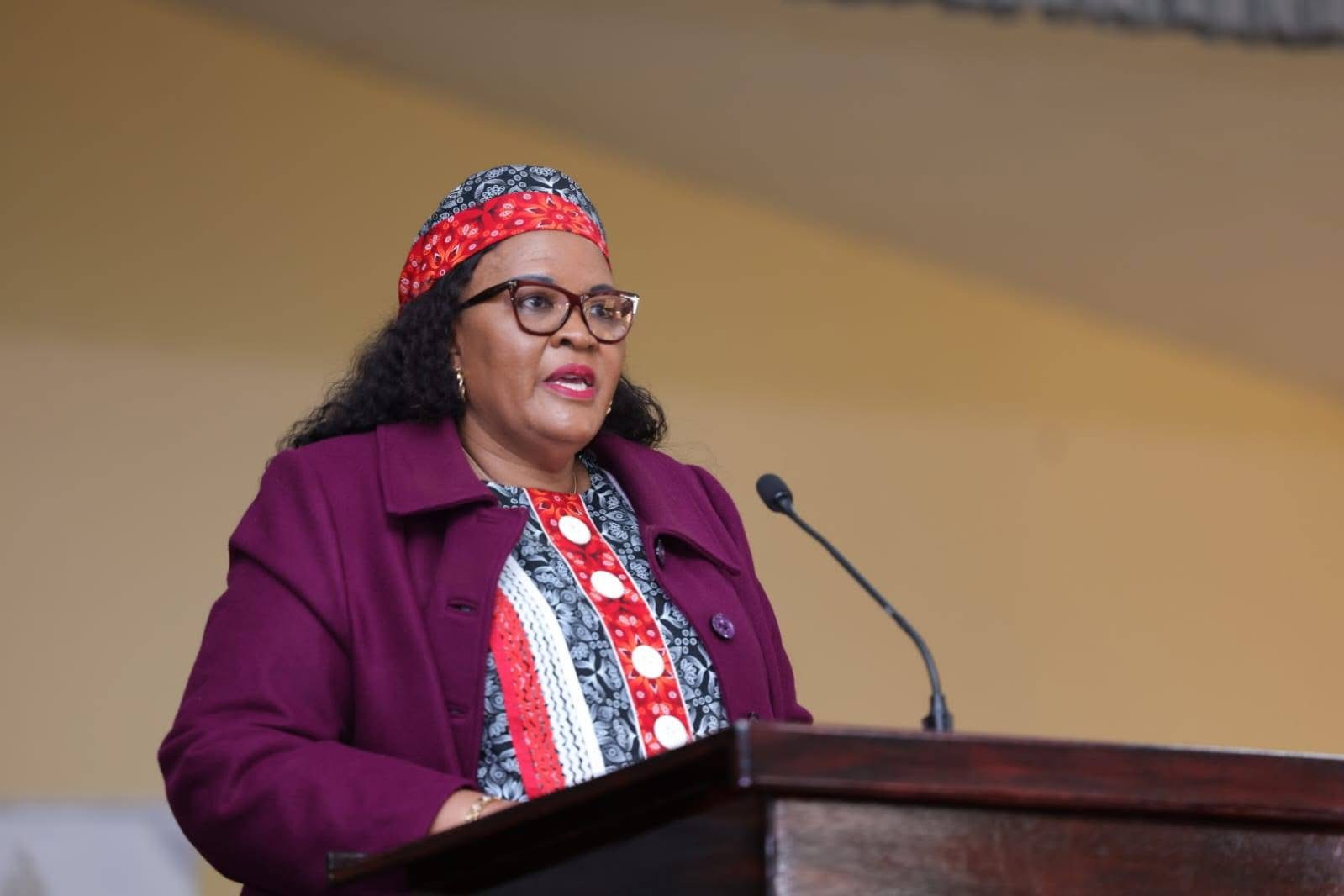
Mathabo Hlalele:Image Supplied
By Dakalo Mulaudzi: Free State Social Development MEC Mathabo Hlalele has tabled a R1.434 651 billion budget for the 2026/27 financial year, placing vulnerable families, children, older persons, people with disabilities, victims of gender-based violence, and young people affected by substance abuse at the centre of the province’s social development agenda.
Delivering the Department of Social Development’s Budget Vote 7, Hlalele said the budget was not merely about figures, but about responding to the daily struggles of Free State residents who continue to face poverty, inequality, unemployment, abuse, neglect and social exclusion.
“We present the budget Vote of Social Development, few days from the commemoration of a historic day of workers, known as May Day — a reminder that the dignity of workers, the rights we enjoy, and the freedoms we exercise were not given on a silver plate, but there are men and women who sacrificed their lives and fought for justice and equality,” Hlalele said.
She said the province acknowledged progress made in the recognition of workers’ rights, but warned that inequality, poverty and unemployment continued to confront many people, including workers.
“We also acknowledge that the challenges of inequality, poverty and unemployment are still confronting our people including workers,” she said.
Hlalele said the Budget Vote represented a continuation of the struggle for dignity and justice, but in a different form.
“This Budget Vote is therefore not just about numbers; it is about continuing that struggle in a new form. It is about ensuring that the freedom we celebrate is felt in every home, every community, and every village across the Free State,” she said.
“This Budget is about placing the people at the centre of development, ensuring that government works for them, and with them,” she added.
The MEC said the budget spoke directly to the daily experiences of ordinary residents, especially those living in poverty or facing abuse, neglect and social distress.
“This Budget is about your daily realities. It speaks to the mother who wakes up without an income, the young person searching for opportunity, the elderly who depend on care and dignity, and families struggling to make ends meet,” Hlalele said.
“This budget speaks to a young person who is troubled by Alcohol and Substance Abuse. It speaks to women and children who are being abused and needs a safe place and a shelter to host them whilst they wait for justice to prevail so that their dignity is restored,” she said.
Hlalele described the Department of Social Development as the point where government meets people at their most vulnerable.
“At the centre of this budget, is the work of Social Development. This is where government meets the people at their most vulnerable. Through social grants, early childhood development, support to persons with disabilities, and services for older persons,” she said.
She said the department was committed to building a caring state that protects vulnerable people, while also creating opportunities for self-reliance.
“We are building a caring state that protects the most vulnerable. But we are also going beyond relief — we are creating pathways to empowerment, self-reliance, and participation in the economy,” Hlalele said.
“This is how we restore dignity, not just through assistance, but through opportunity,” she added.
Hlalele said social challenges could not be addressed by one department alone, calling for stronger cooperation across government through the District Development Plan.
“The challenges confronting our people challenges all the department to work together through the District Development Plan because Social Ills will be reduced through creation of employment and the growth of the economy of our province,” she said.
The department’s R1.434651 billion allocation represents a 3.1% increase against an expected CPI inflation rate of 3.6%.
“Allow me to present the 2026/27 budget Vote 7. For the 2026/27 period the department has been allocated the amount of R1.434 651 billion. The allocation increased with 3.1% against the expected CPI inflation of 3.6%,” Hlalele said.
The budget is divided across five programmes: Administration receives R377.401 million, Social Welfare Services receives R269.471 million, Children and Families receives R336.580 million, Restorative Services receives R277.394 million, and Development and Research receives R173.805 million.
A major focus of the budget is the strengthening of the department’s social service workforce. Hlalele said social service professionals were central to the country’s developmental goals.
“The National Development Plan recognises the need for the country to appoint 55 000 social service professionals by 2030,” she said.
“Social workers, social auxiliary workers, community development practitioners, child and youth care workers, and probation officers are the frontline defenders of dignity and social justice,” Hlalele said.
During the 2025/26 financial year, the department appointed 109 social service professionals, including 34 social auxiliary workers, 73 assistant community development practitioners, and two child and youth care workers.
“During the 2025/26 financial year, we have appointed one-hundred-and-nine Social Services Professionals in the fields of 34 social auxiliary workers, 73 assistant community development practitioners, and 2 child and youth care workers,” she said.
Hlalele said the department had also filled key management and supervisory posts, including a Social Work Manager in Xhariep, a Community Development Manager in Fezile Dabi, Community Development Supervisors, and eight Social Work Supervisors.
“We have also filled the post of Social Work Manager in Xhariep, Community Development Manager in Fezile Dabi, Community Development Supervisors and eight Social Work Supervisors who will mentor social workers who were appointed in the previous years,” she said.
She added that 41 officials had been appointed under the Molo Makhelwane Household Profiling Intensification Project.
“We have also appointed forty-one officials under Molo Makhelwane Household Profiling Intensification Project, whose appointments have impacted immensely to community mobilisation,” Hlalele said.
However, she acknowledged that rising poverty, substance abuse, gender-based violence, child neglect and challenges confronting young people continued to place pressure on the department’s workforce.
“However, rising levels of poverty, substance abuse, gender-based violence, child neglect, and challenges confronting young people continue to place immense pressure on our current workforce,” she said.
“We will fill vacant posts of Social Service Professionals within the budget allocated to the department,” she added.
Hlalele said the department would prioritise the recruitment of social service professionals in rural and high-burden areas.
“During the new financial year, we will endeavour to recruit social service professionals across districts and institutions, with priority given to high-burden and rural areas,” she said.
“This expansion will improve caseload ratios and ensure that vulnerable individuals receive timely interventions and contribute to building safer communities and strengthen family support systems,” Hlalele said.
The MEC also highlighted progress in the employment of persons with disabilities within the department. She said the department had appointed 103 people with disabilities and had exceeded the minimum public service employment target.
“The department also appointed one-hundred-and-three people with disabilities, the reported percentage is above the minimum target of 3% for the employment of people with disabilities in the public service,” she said.
“We are presently on 5.2% and we are on track to achieve 7% by 2030 as announced by His Excellency President Cyril Ramaphosa during his 2026 State of Nation Address,” Hlalele said.
Hlalele said the department had also made significant progress in reviewing its organisational structure, which was last approved in 2013.
“The Organisational Structure of the departmental was last approved on 30 September 2013. During the previous financial year, the department made significant progress on the review of the organizational structure,” she said.
She said the reviewed structure would respond to policy and legislative changes, including amendments to the Children’s Act, and would provide for Child Protection Units.
“The reviewed structure caters for the fundamental policy and legislative shifts introduced by the amendment to the Children’s Act No. 38 of 2005 and is in accordance with the mandate of the Department,” Hlalele said.
“The reviewed structure caters for the establishment of Child Protection Units. The establishment of the child protection unit will strengthen prevention and early intervention services particularly child neglect, migrant children,” she said.
“We are confident that the reviewed structure will be finalised during 2026/27 financial years,” she added.
The MEC said the department had also conducted a comprehensive skills audit to identify gaps and strengthen service delivery.
“The professionalisation of the state is about creating competent, merit-based appointments, ethical conduct and ensuring that the right people with right skills in the right positions are appointed,” she said.
“In the previous financial year, the Department undertook a comprehensive organisational skills audit to assess competency levels, identify critical gaps, and align our human resources capacity with service delivery priorities,” Hlalele said.
“The skills audit was an analytical tool to strengthen service delivery outcomes,” she added.
Hlalele said skills development remained important for improving employability and reducing inequality.
“Skills Development is a game-changer for individuals, organisations and economies,” she said.
“Equipping people with in-demand skills boosts employability. A skilled workforce drives innovation, productivity and competitiveness, continuous learning enables workers to pivot in a changing job market. Skills development helps bridge inequality gaps,” she added.
During the previous financial year, 470 employees attended training interventions in areas including monitoring and evaluation, programme and project management, advanced management development, citizen-centred service delivery, ethics in public service, and supply chain management.
The department has also strengthened services at the Charlotte Maxeke Treatment Centre by appointing a sessional doctor to provide on-site detoxification services.
“The Department has taken a significant step to strengthen service delivery at the Charlotte Maxeke Treatment Centre by appointing a sessional doctor to provide on-site detoxification services, with a second sessional doctor to be appointed from May 2026 to further expand capacity,” Hlalele said.
She said the appointment would improve access to detoxification services and reduce reliance on external hospitals.
“The appointment of sessional doctors at Charlotte Maxeke Treatment Centre will not only improve access to detoxification services but will also ensure that critical medical interventions are provided promptly and efficiently within the Centre, thereby strengthening the continuum of care for service users,” she said.
“This intervention will also enable the Centre to admit more service users, as detoxification will now be conducted in-house, reducing reliance on external hospital services,” Hlalele added.
In the new financial year, the department intends to appoint sessional doctors at Secure Care Centres, including Thabo Mofutsanyana Secure Centre in Qwa-Qwa, Matete Matches Secure Care Centre in Kroonstad, and Winkie Direko Secure Care Centre in Bloemfontein.
“In the new financial year, we intend to appoint sessional doctors to the Secure Care Centres, namely Thabo Mofutsanyana Secure Centre in Qwa-Qwa, Matete Matches Secure Care Centre in Kroonstad, and Winkie Direko Secure Care Centre in Bloemfontein,” she said.
“Secure Care Centres accommodate children and youth in conflict with the law, many of whom present with complex behaviour, psychological, and health needs,” she said.
“Sessional Doctors will enable the department to provide medical assessments of children in conflict with the law upon admission and minimise referrals to hospitals where necessary,” Hlalele added.
The MEC also reaffirmed the department’s commitment to the rights of persons with disabilities.
“In South Africa, the rights of persons with disabilities are firmly protected by our Constitution, which upholds dignity, equality, and freedom for all,” she said.
“These rights are further reinforced through key policy frameworks such as the White Paper on the Rights of Persons with Disabilities,” Hlalele said.
She said the policy was aimed at mainstreaming disability and removing barriers that perpetuate exclusion and segregation.
“This policy is not only aimed at protecting rights, but also at ensuring the mainstreaming of disability in all sectors of society, and the removal of barriers that continue to perpetuate exclusion and segregation,” she said.
During Disability Rights Awareness Month, the department engaged more than 1,500 people from organisations providing community-based services and protective workshops.
“During Disability Rights Awareness Month, we engaged with over 1 500 individuals from organisations providing community-based services and protective workshops,” she said.
Hlalele said key concerns raised included limited work opportunities, lack of accredited skills training, and insufficient support to access the open labour market.
“Key concerns raised included limited work opportunities, lack of accredited skills training, and insufficient support to access the open labour market,” she said.
In response, the department developed a Protective Workshop Exit Strategy in partnership with the Department of Economic, Small Business Development, Tourism and Environmental Affairs.
“In response, the department developed a Protective Workshop Exit Strategy in partnership with DESTEA to strengthen income-generating,” Hlalele said.
“A successful seminar was held to introduce this initiative and 150 people with disabilities attended,” she added.
She said the department was making progress in delivering community-based care services for persons with disabilities.
“We are making steady progress in delivering Community-Based Care Services, which play a crucial role in promoting inclusion,” she said.
“These services ensure that persons with disabilities are not isolated, but are actively supported within their families and communities, where they can thrive with dignity and independence,” Hlalele said.
She added that integrated programmes within protective workshops would help empower people with disabilities and promote their social and economic inclusion.
“We are also implementing integrated programs within Protective Workshops as part of a broader strategy to empower individuals with disabilities and promote their social and economic inclusion,” Hlalele said.
“By focusing on skills development, enterprise initiatives, and sustainable business opportunities, we aim to foster independence and enable persons with disabilities to participate meaningfully in the economy,” she said.
“Additionally, we will provide accredited training programs to enhance skills and improve access to employment opportunities,” Hlalele added.
The department will also continue to advocate for disability rights, albinism awareness and improved access for the deaf community.
“The department will continue to advocate for disability rights, raise awareness about albinism, and equip social workers with basic sign language skills to improve access for the deaf community,” she said.
Hlalele said previous engagements had shown that many persons with disabilities possessed talents that deserved broader support and recognition.
“During previous engagements with persons with disabilities, remarkable talents were displayed ranging from handmade accessories to performing arts,” she said.
“These talents deserve to be scaled up and given broader recognition,” Hlalele added.
The MEC also placed strong emphasis on the protection and care of older persons, describing them as important pillars in families and communities.
“Older persons play a crucial role in families and society as a whole,” she said.
“They pass cultural values, traditions, and life experiences to younger generations. Many provide childcare, support their grandchildren, and help maintain family unity,” Hlalele said.
“They keep community history alive and contribute to shaping identity and resilience. Older persons also advocate for their rights to dignity, safety, care, and participation in society,” she added.
To strengthen care and protection for elderly residents, the department has partnered with 36 non-profit organisations providing 24-hour residential care to 800 older persons.
“To strengthen care and protection for the elderly and reduce abuse and violence against them, the Department has partnered with 36 non-profit organisations providing 24-hour residential care for 800 older persons,” Hlalele said.
She said the department had also partnered with 153 NPOs delivering community-based care and support services to 4,464 older persons.
“[The department has partnered] with 153 NPOs delivering community-based care and support services to 4 464 older persons. This initiative ensures appropriate care and protection within communities,” she said.
Hlalele said R2.5 million would be invested to support 200 older persons in the National Active Ageing Programme.
“We will invest R2.5 million to support 200 older people in the National Active Ageing Programme,” she said.
“This funding will cover uniforms, transport, and accommodation. Our goal is to encourage active ageing and help older persons to stay engaged in activities that enhance their health and social life,” Hlalele said.
The department is also continuing to provide relief to families affected by malnutrition, disasters, fires and severe economic hardship.
“Many people who needed support during disasters and fires were supported through the partnership,” Hlalele said.
“An amount of R1.7 million was spent reaching 1010 family in distress,” she said.
Hlalele said the department would continue providing immediate assistance to households affected by disasters or difficult economic circumstances.
“We will not stop with provision of assistance to a person or household affected by a disaster or where the prevailing economic circumstances at home warrants the provision of immediate assistance and support,” she said.
“Assistance can be provided in a form of material support e.g. food parcels, cooked meals, school uniform, blankets or other forms of relief,” Hlalele added.
“Failure to provide such relief of distress would cause undue hardship,” she said.
For the 2026/27 financial year, the department has allocated R1 million for social relief of distress.
“A total budget of R1 million is allocated for the 2026/2027 financial year,” Hlalele said.







