
Subtotal R0,00

News/06 May 2026, 06:00am/ GoodWill Mathebula

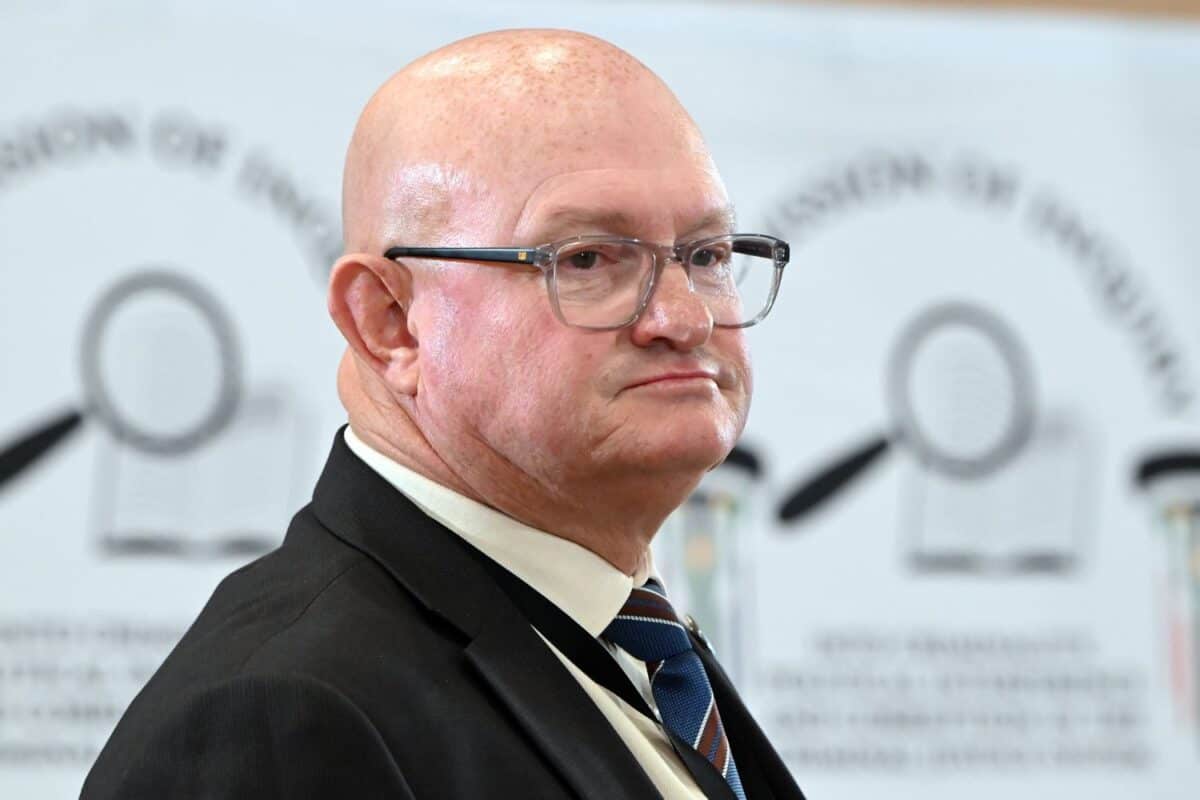
Hendrick Flynn: Image Supplied
By GoodWill Mathebula: The disappearance of 541 kilograms of cocaine from a Hawks facility in Port Shepstone is no longer being viewed simply as a high-profile drug theft.
At the Madlanga Commission, it emerged as something even more damaging: a case study in how weak safeguards, lapsed contracts and failed security systems can place major criminal investigations at risk.
In a sharp shift of focus, the commission opened a new stream of testimony examining not only drug busts by law enforcement agencies, but what happens after the seizures are made and the evidence is handed to the state for safekeeping.
At the centre of that scrutiny is the June 2021 seizure of cocaine worth an estimated R200 million, discovered in a shipping container at the Isipingo Depot, south of Durban, after the Hawks acted on intelligence about a suspicious shipment.
The drugs were removed and stored at the Hawks’ premises in Port Shepstone. Five months later, all 541 kilograms had vanished.
Major General Hendrick Flynn, the Hawks’ head of serious organised crime investigations, became the first witness to address the theft before the commission. His evidence suggested that the disappearance was not merely the result of criminal audacity, but of a system that had been left exposed.
Flynn said there was no 24-hour security at the facility when the cocaine was stolen in November 2021. He also revealed that the alarm system was not functioning properly and had not been regularly maintained.
“It is unclear when the theft occurred because the alarm system fitted at the premises was not working properly,” Flynn testified. “In addition, there were no armed response services because the contract with the private security company was not renewed, having expired on 31 March 2020.”
Those details have intensified concerns about how evidence linked to organised crime is protected once it is taken off the streets and placed in official custody.
The commission also heard that the perpetrators used a grinder to gain entry and appeared to have specific knowledge of where the drugs were stored — a detail likely to deepen suspicions that the theft may have involved inside information.
Preliminary investigations had already pointed to poor security at the Hawks facility, fuelling fears that the theft may have been an inside job. Flynn’s testimony added weight to that concern, painting a picture of a site where vulnerabilities were glaring and oversight was lacking.
At the same time, the commission heard that the long-running investigation has finally begun to move.
In a pointed exchange, evidence leader Advocate Lee Segeels-Ncube asked Flynn: “There were only real developments after your [2024] appointment as component head. Is that coincidental?”
Flynn replied: “I don’t know if it’s coincidental, but I can confirm there is substantial progress in the investigation.”
That answer may prove one of the most politically charged moments of the hearings so far. It hints not only at fresh progress, but at the uncomfortable possibility that the case languished for years before gaining momentum under new leadership.
Nearly five years after the original drug seizure, the issue before the commission is now far bigger than the fate of a missing cocaine haul. The testimony has turned the spotlight onto the state’s ability to preserve crucial evidence, protect sensitive crime exhibits and prevent its own facilities from becoming targets of organised criminal networks.
Two additional witnesses are expected to testify this week as the inquiry continues to probe how one of KwaZulu-Natal’s biggest cocaine seizures ended in one of its most troubling security failures.







