
Subtotal R0,00

Free State/05 May 2026, 16:35pm/ Linda Mgomezulu
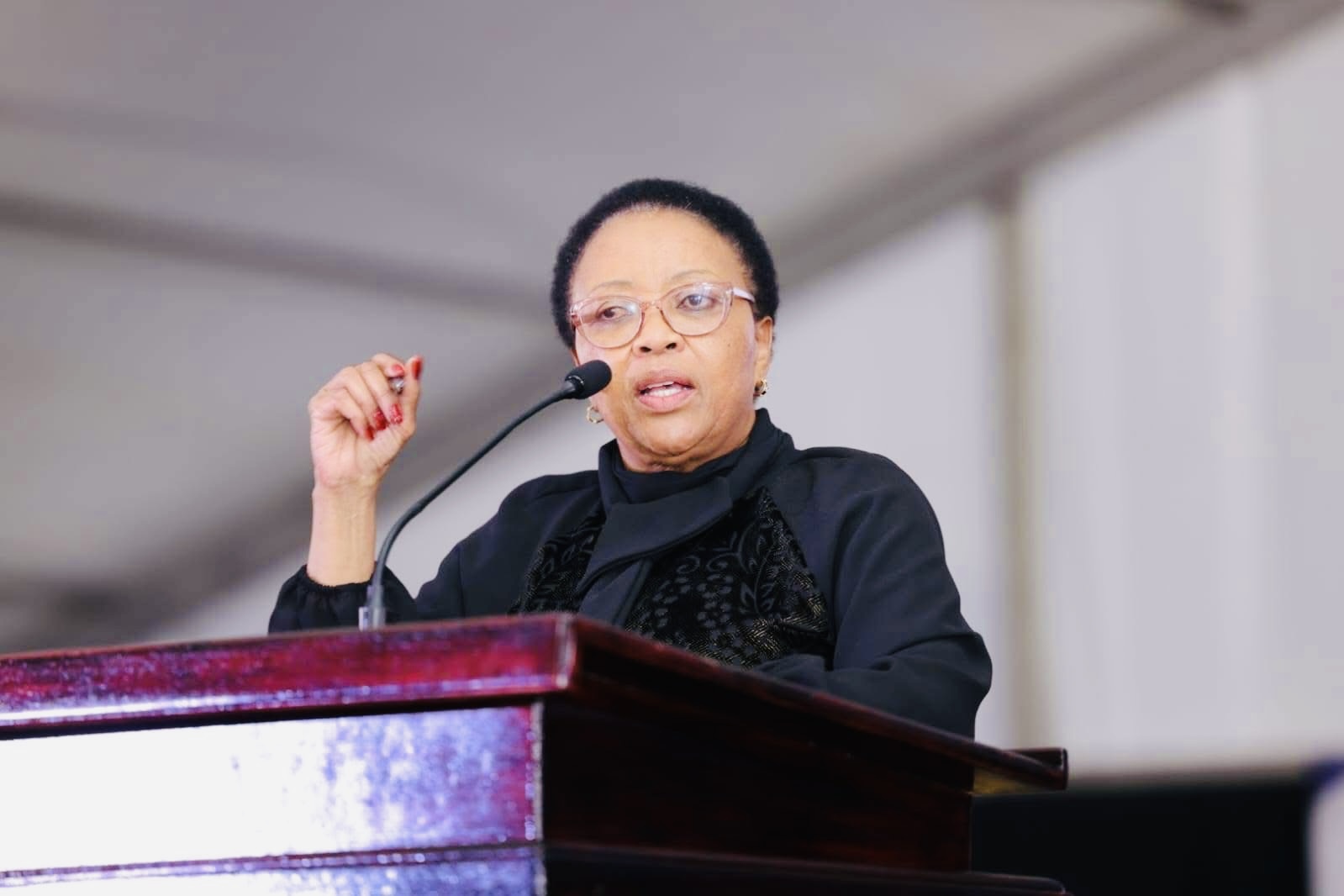
Dr Mamiki Maboya: Image Supplied
By Linda Mgomezulu: Free State Education MEC Dr Mamiki Maboya has unveiled a massive R20.056 billion budget for the 2026/2027 financial year, promising a stronger push for better schools, early learning, infrastructure, skills development and inclusive education across the province.
Tabling the budget in the Free State Legislature, Maboya opened with a powerful message of duty and commitment.
“Honourable Speaker, it is with a deep sense of accountability, revolutionary humility and untiring commitment to the people of the Free State that I stand before this Honourable House to table the Budget Vote of the Free State Department of Education for the 2026/2027 Financial Year,” she said.
The budget forms part of a wider three-year R62.8 billion education package, which the MEC described as one of the province’s boldest plans yet.
Speaking during a year of major national anniversaries, Maboya linked the budget to South Africa’s long struggle for freedom and justice.
“Honourable Speaker, we deliver this Budget Vote in a year of profound historical reflection as we commemorate seventy years (70) since the 1956 Women’s march, fifty (50) years since the 1976 Youth Uprising and thirty (30) years since the adoption of the Constitution of the Republic,” she said.
Her message was clear and firm: “Education must liberate, and never subjugate.”
Quoting struggle icon O.R. Tambo, Maboya added: “The fight for freedom must be waged on many fronts, but education remains its most enduring weapon.”
The MEC praised the province’s progress, especially the 89.3% matric pass rate, saying the Free State is focused on improving itself, not competing with others.
“The Free State does not compete with other provinces; we compete with ourselves,” she said.
She added: “This is not mediocrity – it is systemic strength, rooted in leadership, stability and continuous improvement.”
Budget Highlights
- Public Ordinary School Education: R14.658 billion
- Early Childhood Development: R949.5 million
- Infrastructure Development: R1.087 billion
- Maths, Science and Technology Grant: R53.3 million
- Equalisation of Grade R remuneration: R3.5 million, rising to R11.9 million by 2028/29
Grand Total for 2026/2027: R20.056 billion
A major part of the budget will go to early childhood development.
Maboya said the department plans to increase the number of children in Early Learning Programmes to 103 500, while the number of ECD centres will rise to 1 720.
“For the 2026/27 financial year, we will increase the number of learners accessing Early Learning Programmes (ELPs) to 103 500 and the number of ECD Centers to 1 720,” she said.
The department will also run quarterly awareness campaigns in all five districts to encourage parents, caregivers, communities and municipalities to support ECD enrolment.
During Nelson Mandela Month, 10 unfunded ECD programmes will also receive support with learning materials, play equipment, utensils, blankets and mattresses.
A total of R9.4 million has been set aside for the ECCE programme.
Plans include:
- Training 1 500 practitioners on the National Curriculum Framework
- Upskilling 200 practitioners to NQF Level 4
- Giving maths stimulation training to 500 practitioners
- Buying learning resources for 300 ECD centres
- Running awareness programmes for 1 500 parents
- Strengthening the National Parenting Skills Programme for 2 000 parents
- Holding three sessions for 300 young women in the ECCE sector
- Training 350 ECCE matrons on financial management
The MEC said the department will continue strengthening Grade R and the foundation phase.
This includes:
600 practitioners trained in perceptual skills
650 practitioners upskilled in numeracy
300 teachers empowered in ECD centres
Qualified Grade R practitioners will also receive progressive stipend top-ups over the next few years.
Furniture and learning materials will also be expanded to every Grade R classroom.
Maboya said schools must prepare learners for a changing, technology-driven world.
“Education today must prepare learners not only for the present, but for a rapidly evolving and technology-driven future that demands adaptability, creativity, and innovation,” she said.
The department’s plans include:
- Mobile science labs for 60 primary schools
- Coding and Robotics kits for 60 schools
- Technology kits for 90 technical high schools
- PAT support for 32 technical and 26 agricultural schools
- A Provincial Skills Competition involving 545 learners and 113 teachers
- Intensive Maths and Science support for 100 secondary schools
The support for maths and science will include centralised marking, teacher learning communities, weekly classes, assessment training and maths kits for 40 schools.
The budget also gives attention to inclusive education.
A total of 2 058 teachers and 189 officials will be trained on the SIAS policy.
The department has set aside R6.1 million for assistive devices and specialised learning and teaching materials.
Learner transport for special schools now reaches 1 030 learners, with the MEC saying the allocated budget was spent 100%.
The department has also deployed 48 Education Change Agents for Teaching and Learning across the province.
Even with the progress, Maboya warned that more work still needs to be done.
“Honourable Speaker, even as we celebrate our progress, we must remain mindful of the surmountable obstacles that still stand in the way of delivering the quality education that every child deserves,” she said.
Still, her closing message was one of determination and hope.
With billions now committed to schools, teachers, young children and special-needs learners, the Free State has made it clear that education remains at the centre of its future.
And in Maboya’s own words, the mission remains simple but powerful: “Education must liberate, and never subjugate.”







