
Subtotal R0,00

News/ 26 March 2026, 08:41am/ Dakalo Mulaudzi
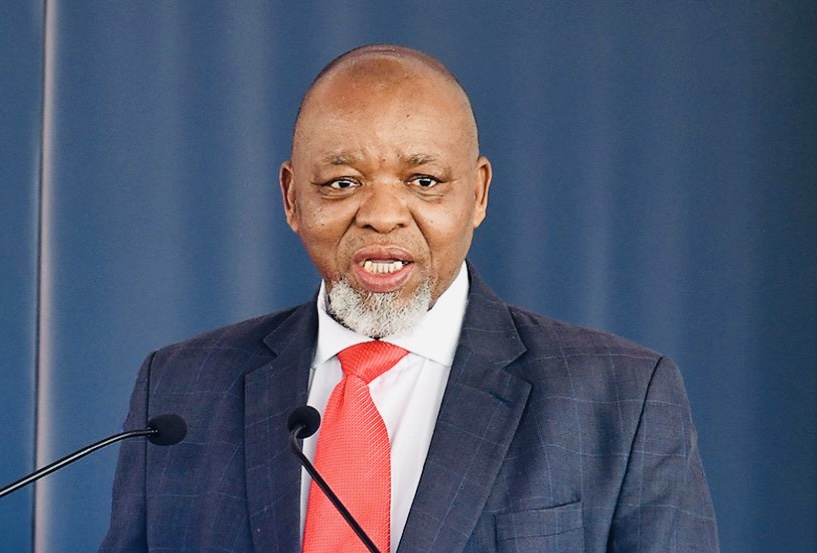
Gwede Mantashe: Image Supplied
By Dakalo Mulaudzi: South Africans anxious about a possible fuel crisis were given a firm message in Parliament this week: do not panic yet.
Mineral and Petroleum Resources Minister Gwede Mantashe moved to calm fears in the National Assembly on Wednesday, insisting that ships carrying fuel and cargo bound for South Africa are still moving through the Strait of Hormuz without disruption, even as war involving the United States, Israel and Iran sends shockwaves through global energy markets.
His remarks come as households, motorists and businesses brace for what could be a punishing jump in fuel prices next week, with forecasts pointing to steep increases across petrol, diesel and illuminating paraffin.
Responding to ANC MP Fasiha Hassan’s question on whether South Africa’s petroleum supply security arrangements could survive sustained external disruption caused by the conflict, Mantashe sought to shift the national mood from alarm to caution.
“You will see that the question reflects panic. And as a mineworker, one thing I learnt early in life is that panic kills. Despite the heightened geopolitical risk, including the disruption to the Middle East shipping routes, the Republic’s current petroleum supply security arrangement remains robust.”
At the heart of government’s reassurance is the Strait of Hormuz, one of the world’s most critical oil chokepoints. According to Mantashe, South Africa’s fuel-bound cargo is still being allowed through.
“I am sure if you monitor the news, you will appreciate that the Strait of Hormuz allows cargo that goes to South Africa without interruption. So that means we have a chance to maintain a stable supply for a long period of time. There should be no panic in South Africa; panic kills.”
Yet while the minister tried to steady nerves, he also made it clear that South Africa remains deeply exposed to global oil shocks — and has limited power to stop the pain if prices continue climbing.
“There are things we can do and things we can’t do. If cargo cannot reach us from the Middle East, then come 1 April, you can expect a price increase. The only way that SA could mitigate the risk of oil price shocks would be for it to develop its own petroleum resources.”
That warning lands heavily as the latest forecast suggests motorists may soon face one of the sharpest fuel price blows in recent memory. If current projections hold, the increases expected on 1 April are:
Petrol 93**: Increase of R5.07 per litre
Petrol 95**: Increase of R5.62 per litre
Diesel 0.05%**: Increase of R9.37 per litre
Diesel 0.005%**: Increase of R9.50 per litre
Illuminating paraffin**: Increase of R11.00 per litre
Mantashe also revealed that Iran has imposed two conditions for countries wishing to continue operating through the strait, while South Africa engages its Brics partners on the implications of the conflict.
“In the Strait of Hormuz, there is one requirement they want, you can go through if you are not a partner or in alliance with the US and Israel. If you are not in alliance with those, you are allowed through. The second requirement is that you will pay Iran in rial, not dollars.
“That is a political decision taken by Iran,” Mantashe told MPs. “All cargo coming to South Africa is allowed through. There is no fear of this. Unless you want to identify yourself with [the US] and Israel.”
But beyond the immediate crisis, Mantashe used the moment to sharpen his long-running call for South Africa to exploit its own oil and gas potential, arguing that domestic production is the only real shield against foreign wars and supply shocks.
“The only way is to drill, drill, drill and produce our own petroleum. If we don’t do that, we will not overcome the risks of war. Every time we drill, we are taken to court. If we could have special courts dealing with those cases, it would go a long way to solving that problem. If we have our own sources of energy, we can mitigate,” Mantashe said.
Outside Parliament, however, anxiety is already becoming real. In the Cape Peninsula and along parts of the Garden Route, residents and businesses are reportedly beginning to feel the strain, with concerns over fuel rationing and delayed diesel deliveries, especially in the agricultural sector during a crucial period in the farming calendar.
The pressure does not stop at the pump. Rising diesel costs are also pushing up the price of farm inputs such as fertiliser, raising the threat of wider inflation in food production and transport.
According to the Central Energy Fund’s latest March data, the warning lights are already flashing. The figures show severe under-recoveries linked to the conflict:
- 93-octane petrol: under-recovery of 507
- 95-octane petrol: under-recovery of 562
- Diesel 0.05% sulphur: under-recovery of 937
- Diesel 0.005% sulphur: under-recovery of 950







