
Subtotal R0,00

News/ 09 March 2026, 08:45am/Sipho Gumede
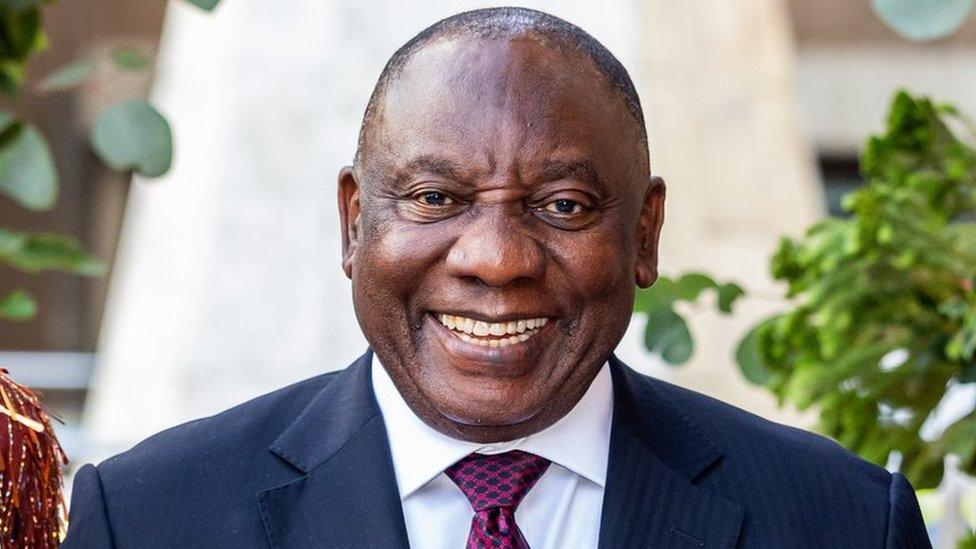
President Cyril Ramaphosa: Image Supplied
By Sipho Gumede: A fresh political storm is gathering in Parliament — not only over what was said before the Ad Hoc Committee, but over what it may reveal about the hidden influence of private players in South Africa’s criminal justice system.
Analysts and the uMkhonto weSizwe Party (“MK Party”) have raised alarm after attorney and certified fraud examiner Sarah-Jane Trent delivered testimony that, in their view, points to troubling ties between private actors and senior figures linked to President Cyril Ramaphosa.
The committee is probing allegations made by SAPS KwaZulu-Natal provincial commissioner Lieutenant-General Nhlanhla Mkhwanazi. But as Trent took the stand, the focus shifted sharply toward the role of individuals outside the state who appear to have inserted themselves into sensitive criminal and political matters.
Her appearance came after her former boss, fraud examiner Paul O’Sullivan, concluded his evidence following his recent walkout.
At the heart of Trent’s testimony were revelations about O’Sullivan’s relationship with President Cyril Ramaphosa’s adviser Bejani Chauke — a detail that has now intensified scrutiny from both political observers and opposition voices.
MK Party national spokesperson Nhlamulo Ndhlela said the pattern emerging from the conduct of Trent and O’Sullivan could not be dismissed.
“This admission raises serious concerns about the motives, methods and accountability of private individuals who appear to exercise disproportionate influence in criminal matters involving political figures and public representatives.
“This past week, former Member of Parliament Vincent Smith was sentenced to seven years’ direct imprisonment in a case that originated from charges laid by Ms Trent.
“While the courts have pronounced themselves on that matter, it remains legitimate to interrogate the broader environment in which certain individuals repeatedly position themselves as aggressive pursuers of some public figures while seemingly acting as defenders of others,” Ndhlela said.
The MK Party pointed to Trent’s admission during cross-examination in the trial involving Duduzile Sambudla-Zuma that, when she laid criminal charges, she was acting on behalf of the organisation Forensics for Justice.
For the party, that disclosure opens a bigger debate: who gets pursued, who gets protected, and who gets to shape the direction of criminal complaints in politically charged cases.
Ndhlela sharpened that argument by drawing a contrast with the long-running controversy around Andile Ramaphosa and Bosasa.
“The contrast is glaring because when Andile Ramaphosa reportedly received approximately R2 million over twelve months through his company Blue Crane Capital from Bosasa in relation to an allegedly corrupt contract, and later a further R500,000 linked to the CR17 campaign of President Cyril Ramaphosa, the same actors who present themselves as relentless corruption fighters, adopted a very different posture.
“Instead of laying criminal complaints with the same zeal demonstrated in other cases, Ms Trent, Mr O’Sullivan and their associates reportedly worked vigorously to advance arguments defending Mr Ramaphosa’s innocence,” Ndhlela said.
He added:
“While the Constitutional Court ultimately found that President Ramaphosa did not deliberately mislead Parliament regarding the CR17 payment, the MK Party notes that the conduct of private actors in the lead-up to such matters raises legitimate questions.
“The selective activism displayed in these cases creates a dangerous perception that certain individuals are pursued with extraordinary aggression while others are shielded with equal determination. For the MK Party, this pattern cannot be ignored,” Ndhlela said.
The party has now signalled possible legal action.
“The MK Party is seeking legal counsel regarding the legality of Ms Sarah-Jane Trent and Paul O’Sullivan’s actions, as well as avenues to pursue criminal charges. We stand firmly with all those who have experienced what increasingly appears to be politically motivated persecution masquerading as justice,” Ndhlela said.
Political analyst Professor Sipho Seepe said the relationship between Ramaphosa and O’Sullivan raises red flags of its own.
“What has emerged is that O’Sullivan targeted certain individuals in law enforcement under the pretext of fighting corruption. In doing so, he would engage in what looks like extortionist techniques that border on blackmail.
“At the same time, he seemed willing to ensure that the favourites are exonerated. O’Sullivan’s word seems to carry weight,” Seepe said.
He argued that the handling of allegations involving Andile Ramaphosa reflected this uneven pattern.
“After stating that he found nothing amiss with Andile Ramaphosa when it relates to Bosasa, that was the end of the story. There was no appetite by law enforcement agencies to investigate further.
“O’Sullivan’s questionable methods have not prevented him from being a trust go-to person by those close to Ramaphosa,” Seepe said.
Professor André Duvenhage echoed those concerns, saying public evidence against senior ANC leaders has often failed to trigger meaningful prosecutorial action.
“This is evidence that is available in public, but is not acted on by the public prosecutor. The fact that they are not found guilty has nothing to do with their innocence, but it has a lot to say about the underperformance coming from the criminal justice system at large against individuals of political status, profile and influence.”
The Presidency, however, is keeping its response tightly procedural. Spokesperson Vincent Magwenya said:
“The president has received detailed questions from the Ad Hoc Committee. Issues arising from the Ad Hoc Committee will be responded to directly with the Ad Hoc Committee.”







