
Subtotal R0,00

Free State/24 February 2026, 09:15am/ Mpho Mokoena
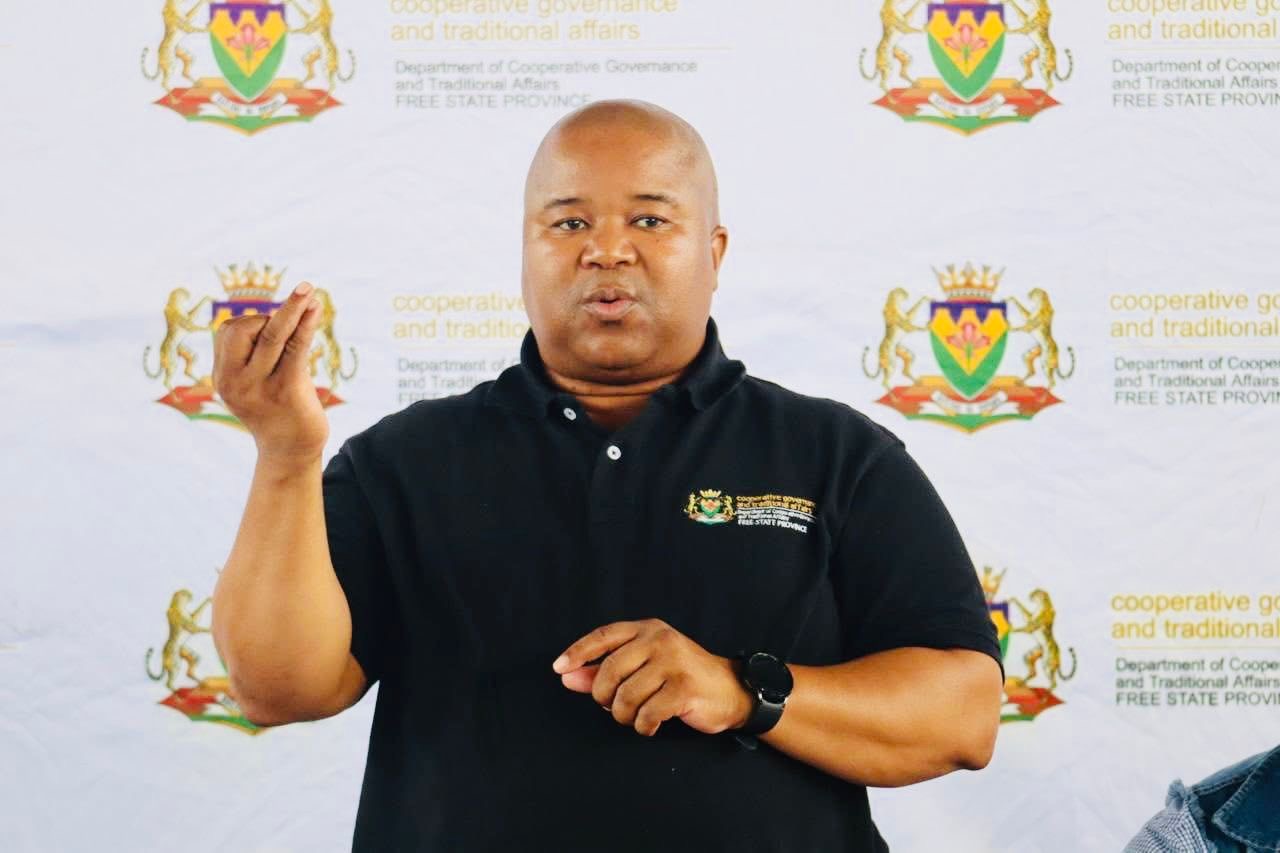
Free State Human Settlements MEC Saki Mokoena: Image Supplied
By Mpho Mokoena: The sound of ululation, clapping and neighbours calling each other by name carried through Vogelfontein as Free State Human Settlements MEC Saki Mokoena officially opened 42 new houses in the area, before moving on to Extension 8 in Bohlokong where two more homes were handed over. But beyond the ribbon-cutting, the handover marked a policy signal that many residents say they have been waiting to see: a deliberate push to prioritise middle-aged beneficiaries and include people living with disabilities in a way that is visible, practical and dignifying.
The total of 44 homes across the two sites may look like a figure on paper, but on the ground it translated into 44 households stepping out of uncertainty and into permanence. For some, it meant the end of renting back rooms; for others, it meant no longer sharing overcrowded yards, and no longer building temporary “add-ons” that leak in rain and become unsafe in winter. For beneficiaries living with disabilities, it meant a safer base from which to manage daily life.
One of the most emotional moments came from Ntate Mthandeki Vilakazi (48), a beneficiary living with a disability, who said the house represented more than a structure — it represented recognition.
Residents and local stakeholders said what stood out was not only the delivery itself, but the category of people receiving keys. In many communities, middle-aged applicants have spent years watching lists move slowly, while their responsibilities grew — children, caregiving, unstable work, rising rent and shrinking space. For those living with disabilities, the strain has often been compounded by mobility challenges, medical needs and dependence on safer living conditions.
Community members at the event described the day as a shift away from “promises” and toward something they could touch: a door, a roof, a yard and a name attached to a property.
Mokoena used the handover to outline what he described as a change in approach — one that is less about ceremony and more about correcting patterns that have left some groups waiting far too long.
He said the department’s commitment is not only to build houses, but to build a system that recognises the lived reality of beneficiaries — particularly those who have been waiting for years and those who face daily barriers, such as persons with disabilities.
“Housing is not a favour and it is not a reward,” Mokoena said. “It is a constitutional promise, and it must be delivered in a way that restores dignity. When we speak about human settlements, we are speaking about how people live, how they raise families, how they stay safe, how they access services, and whether they can plan their lives beyond the next month’s rent.”
Mokoena said the department is increasingly focused on ensuring that the beneficiary selection and delivery outcomes reflect fairness, time waited and vulnerability — not volume and visibility.
“For a long time, our people have carried a feeling that they are stuck in an endless queue,” he said. “You meet a person who applied years ago and they tell you the same story: they updated their details, they checked again, they were told to wait. Meanwhile life moved on — people got older, families grew, health changed, income changed. When we say we are ‘flipping the script,’ we mean we are changing the centre of the story. We are saying the people who have waited long, especially middle-aged applicants, must not be treated as invisible.”
On disability inclusion, Mokoena said the department must actively consider what a house means for a person whose daily life already involves navigating obstacles.
“If you are living with a disability, your home is not just where you sleep,” he said. “It is where you manage your health, where you need safety, where you need dignity, where you need space that does not put you at risk. A poor living environment can make a disability harder. A stable home can make life easier — for the individual and for the family supporting them.”
He added that prioritising people living with disabilities is also about acknowledging how quickly unstable housing becomes dangerous — especially in informal structures, overcrowded rooms, and unsafe yards with limited privacy and security.
“We cannot speak about dignity while people are still living in conditions that expose them to risk,” Mokoena said. “A proper house changes the whole direction of a household. Children can study. Families can plan. People can look for work and come back to a secure place. Older people can live without fear that the roof will not survive the season.”
Mokoena also stressed that government’s responsibility does not end at handover day.
“Today we hand over keys, but the work continues,” he said. “We must ensure quality. We must ensure that the settlement functions. We must ensure that people know how to report defects and that the department responds. We must ensure that communities take ownership and protect these assets, because these houses belong to the people.”
He further called for cooperation between the department, local structures and residents, saying that projects are often undermined by vandalism, illegal occupation, and disputes that delay rightful beneficiaries.
“When a house is invaded, it is not just government that loses,” he said. “It is the rightful beneficiary — the mother, the father, the gogos, the person living with a disability — who loses. That is why we must work together to protect the process and protect the homes.”
Ntate Mthandeki Vilakazi, 48, stood outside his new home with the kind of smile neighbours describe as “light.” A beneficiary living with a disability, Vilakazi said he felt his life had changed in a single day — not because his struggles vanished, but because the foundation beneath him had finally become firm.
“This is a big day for me,” he said. “I am happy. I am relieved. I have been waiting. Sometimes you lose hope because you don’t know if your turn will come. Today I can say: it came.”
Vilakazi said stable housing means he no longer has to structure his life around uncertainty — uncertainty about rent, about space, about safety, about whether he will be moved again. He described the house as a form of respect.
“When you are living with a disability, you need a place that is safe and gives you peace,” he said. “This house is peace. It is my own. I can sleep without worrying all the time. I feel like I am whole — like I am a full person in the community.”
He said he is looking forward to making the home comfortable and personal, adding that the simple things others take for granted — a secure door, a private space, a predictable routine — carry huge meaning when you have lived for years without them.
Departmental officials confirmed the figures announced at the event:
- 42 houses were officially opened in Vogelfontein.
- 2 additional houses were handed over in Extension 8, Bohlokong, Bethlehem.
Residents said the delivery would ease pressure on overcrowded living arrangements and help stabilise families who have moved repeatedly due to rental costs or lack of space.
In conversations after the official programme, beneficiaries and neighbours spoke about what comes next: bringing in furniture, planting gardens, improving yards, and finally investing in a home without fear of being told to leave.
Some residents said the handover also brings a new responsibility to keep the area clean, protect the houses, and ensure that the settlement remains safe for children and vulnerable households.
Mokoena said the department will continue to roll out housing delivery as part of the broader human settlements programme, while urging beneficiaries to use the proper channels to report defects and administrative issues.







