
Subtotal R0,00

Gauteng/24 February 2026, 08:30am/ GoodWill Mathebula
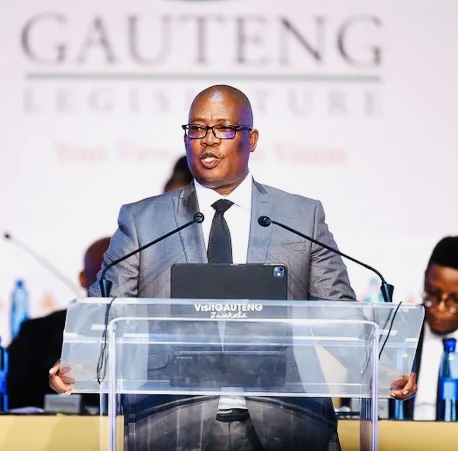
Panyaza Lesufi: Image Supplied
By GoodWill Mathebula: In a sweeping plan aimed at turbocharging service delivery and luring investment, the Gauteng government has announced it will be creating a bulk infrastructure agency that will centralise all major projects in the province under one roof—effectively a new command centre for the pipes, power, and mega-builds that keep the province moving.
The agency will also incorporate capital infrastructure projects from the 11 municipalities in Gauteng, bringing scattered municipal build programmes into a single provincial pipeline—an intervention framed as both a fix for delays and a signal to investors that Gauteng is serious about speed, coordination, and delivery.
Premier Panyaza Lesufi made the announcement during his State of the Province Address (SOPA) at the Nasrec Expo Centre, in Johanneburg, on Monday, positioning infrastructure as the make-or-break foundation for economic recovery and growth.
With Gauteng competing for business against other provinces and regions, Lesufi said the province cannot afford to stumble on the basics—especially when investment decisions can turn on whether a factory has stable water pressure, whether a development can be connected to electricity, or whether sanitation systems can cope.
“If we can’t make water, electricity and sanitation available immediately to investors, investors will leave us and go to other areas that can provide these services. So, to this end, Gauteng will establish a bulk infrastructure agency that will coordinate and manage the provision of bulk infrastructure in the province.”
The bulk infrastructure agency, as outlined, is expected to act as a central coordinator—pulling together planning, budgeting, prioritisation, and delivery of high-impact infrastructure, while also aligning municipalities and the province under one implementation umbrella.
Among the flagship projects highlighted was the Gauteng-Limpopo speed train—an idea long discussed in transport and development circles, now presented as moving closer to reality, with private interest already gathering.
Lesufi said there are 30 investors lined up for the Gauteng-Limpopo speed train, which will be one of the province’s major infrastructure projects, should it come to fruition—suggesting that the province sees the project not just as mobility infrastructure, but as a growth corridor connecting labour markets, families, and economic activity between Gauteng and Limpopo.
“This dream of having a speed train between Gauteng and Limpopo will indeed now be realised in our lifetime. This intervention will ensure that the backlog that we have between Gauteng and Limpopo during weekends and long weekends will start to be history. So that the people can come in the morning and go back to Limpopo in the evening.”
If delivered as envisioned, the speed train would target one of the province’s most visible pressure points: weekend and long-weekend congestion as thousands travel between Gauteng and Limpopo—often at high cost in time, road safety risk, and productivity.
Infrastructure talk quickly turned into street-level realities as Lesufi addressed water supply, noting that several areas, including Midrand, now have full access to water. He highlighted significant progress in other major townships, though some localised issues remain—suggesting that while system-wide improvements are being made, certain nodes still require urgent technical intervention.
Soweto, he said, has seen major gains, with specific exceptions where supply is still disrupted.
“Another area that was saved was Soweto; we have now made great progress except for Meadowlands Zone 3 and Zone 4, and areas receiving water from the Doornkop reservoir,” Lesufi stated.
“Soweto has now been restored with water. Our engineers have assured us that in areas that still have problems, they are working around the clock to rectify this situation.”
For residents and businesses, water reliability is more than a convenience—it is a daily determinant of health, schooling, commerce, and dignity. By putting these service-delivery outcomes into the SOPA spotlight, the province is tying its credibility to the ability to stabilise systems that have repeatedly buckled under rising demand and ageing infrastructure.
Shifting focus to economic development, Lesufi announced the establishment of a new Special Economic Zone (SEZ) in the Vaal area—an intervention framed as a decisive step after years of discussions regarding an SEZ in the Johannesburg South region focused on mining and energy beneficiation.
The Premier confirmed that a gazette has already been published for public comment regarding the development—signalling a move from discussion to formal process.
“The Vaal SEZ is expected to contribute over R10 billion to the Gauteng economy and create a new city in the Vaal,” said Lesufi.
“It will ensure that the Vaal becomes independent and participates actively in the economy of our province.”
An SEZ, typically designed to attract industry through targeted incentives and streamlined administration, is often marketed as a job-creation engine—drawing manufacturers, processors, logistics firms, and investors into a defined zone where infrastructure and policy are aligned to reduce friction and accelerate growth.
Taken together, the proposed bulk infrastructure agency, the push for a Gauteng-Limpopo speed train, the water restoration updates, and the Vaal SEZ announcement form a single storyline: Gauteng wants to move from fragmented infrastructure delivery to a coordinated build programme that can keep services stable, unlock new investment, and reshape key regions of the province.







